  30+ years of personal finance
  1. Home
  2. /Save
  3. /7 Ways You May Be Sabotaging Your Bank Accounts
  • Sign up
  • Sign in
Money Talks News
  • Popular
  • Latest
    • Ask Stacy
    • Make
    • Save
    • Borrow
    • Grow
    • Live
    • More
  • Deals
    • Automotive
    • Clothing & Accessories
    • Computers
    • Electronics
    • Everything Else
    • Financial Services
    • Gaming & Toys
    • Health & Beauty
    • Home & Garden
    • Movies, Music & Books
    • Office & Supplies
    • Special Occasion
    • Sports & Fitness
    • Store Events
    • Travel & Entertainment
  • Podcasts
  • Solutions
  • Academy
  • Subscribe to our newsletter
  • Follow us on Facebook
  • Follow us on Instagram
  • Follow us on X
  • Search our site
Costco Wholesale building sign15 New Products at Costco in September 2026
Older man putting money in piggy bank13 Things Frugal People Never Do
Costco store8 Things Costco Members Can Get for Free

7 Ways You May Be Sabotaging Your Bank Accounts

We're all guilty of behavior that puts our accounts at risk. Avoid these mistakes and you'll keep your money safe.

By Nancy Dunham

January 27, 2017 • Advertising Disclosure

Share on Facebook Share on X Share by Email Printable version available to members PDF version available to members
  Add as a preferred source on Google
fizkes / Shutterstock.com

Pop quiz: What do JP Morgan, eBay, Yahoo and Target all have in common?

That’s right! They’ve all had security breaches in the past few years. Many of us devour news of these headline-making horrors that result in the misappropriation of email addresses, passwords, bank account numbers and other personal information.

What we don’t realize, though, is that we often sabotage the safety of our own banking accounts.

While there are a lot of institutional safeguards in place, you hold some of the keys to protecting your banking accounts. Consider these seven no-nos that you might be committing that put your accounts at risk – and our tips for correcting them:

1. You let your guard down while working online
Iurii Stepanov / Shutterstock.com

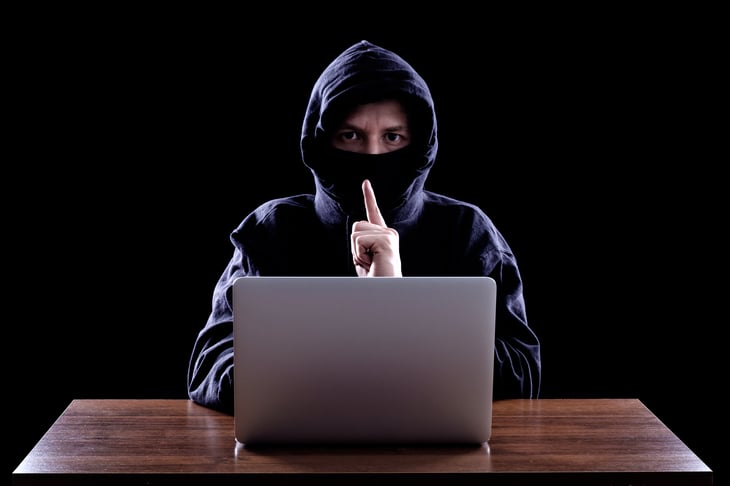
Working online is so commonplace that it’s easy to not fully engage when responding to online requests. Crooks who go “phishing” count on you multitasking while responding to the “urgent” emails they send in the guise of your bank, credit union and trusted retailers.

Protect yourself: Type the email address you are asked to visit into your browser — don’t click the link! Or, hover your cursor over the link to uncover the full address. If it’s not familiar, don’t click it.

2. You don’t sign off after a banking session

l i g h t p o e t / Shutterstock.com

It’s easy to think nothing of leaving accounts open until we shut down the computer. But that is risky. Every time you finish making an online banking transaction, sign out of your account, recommends Key Bank. Also, consider erasing the browser history.

3. Your password and security question are too basic
FabrikaSimf / Shutterstock.com

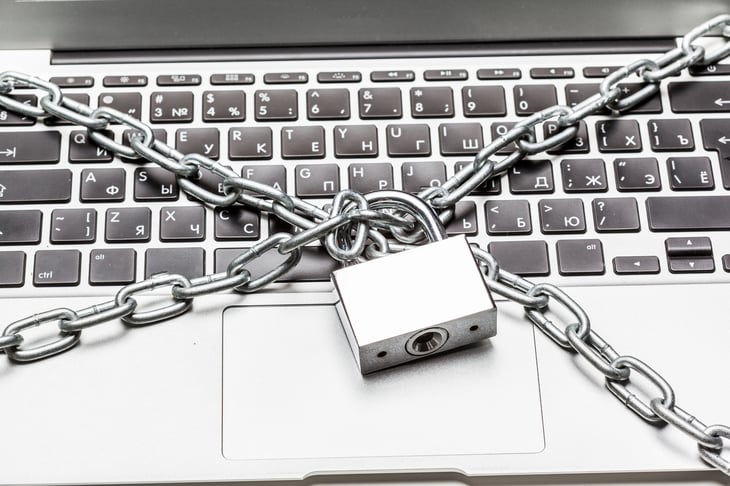
You know your Social Security number, credit card number and other routinely requested numbers — so protect them. Do not use those numbers or any part of them as passwords. If thieves steal your Social Security number or account number, they likely will try to use those numbers to access your account, according to Bank of America.

Create passwords with eight or more characters that include letters, numerals and symbols, recommends Bank of America. And, of course, use a unique password on your financial site. If you have trouble remembering your passwords, consider using a password manager.

As for security questions and answers, protect yourself by choosing a challenging question — the name of your first pet, Little League team, vacation spot or favorite high school teacher. Make it something that is not easily learned through a Web search.

4. You trust without verifying

YURALAITS ALBERT / Shutterstock.com

If you don’t know the person or company that requests your account information, think twice before sharing it.

Yes, some legitimate businesses routinely ask for such information — but so do criminals. Once crooks have this information, they withdraw money from your account by creating a demand draft — called a “remotely created check” — or creating an electronic transfer, according to the Board of Governors of the Federal Reserve System. Verify the identity and reputation of the person and/or company before you give up information.

5. You let crooks access your cellphone
panuwat phimpha / Shutterstock.com

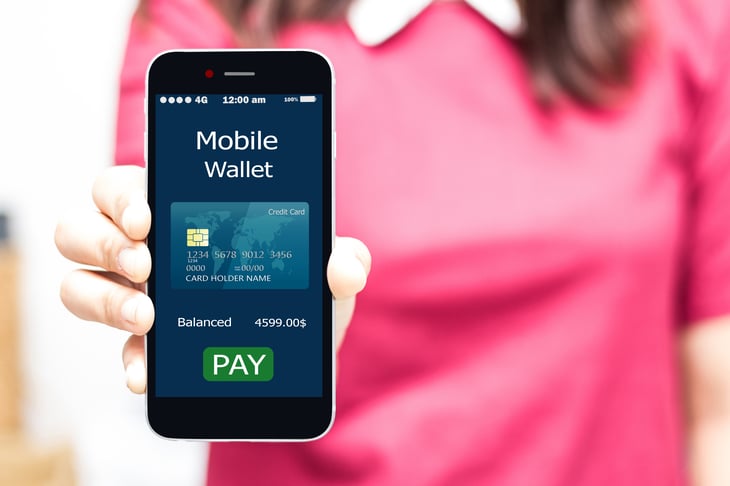
Downloaded cellphone apps can contain malicious codes that snap up personal information and remember keystrokes. “You have no idea who created that app, and very little code-checking goes on,” Julie Conroy McNelley, senior fraud and risk analyst at research firm Aite Group, tells U.S. News & World Report.

The lesson: Either invest in anti-virus software for your telephone or avoid using it for online banking. And if you lose your cellphone, don’t wait before using “Find My iPhone” or Google’s “Device Manager” to locate and wipe the phone of data.

6. You don’t demand extra protection

Iakov Filimonov / Shutterstock.com

To enhance security around accounts, some banks offer two-factor authentication, such as a key code or unique image in addition to a password. When looking for a bank, ask if it offers this enhanced security option.

7. You assume a site is safe
Marc Bruxelle / Shutterstock.com

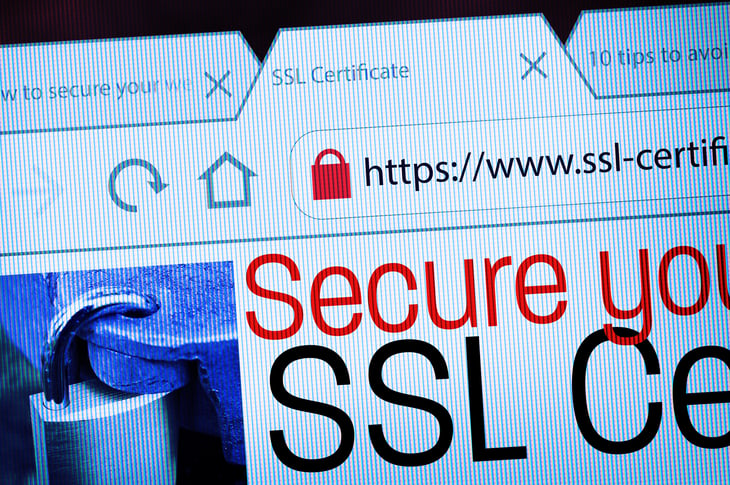
You can be doubly certain your information is safe by looking for a lock icon on the browser and verifying that the URL begins with “https.” That indicates you are looking at your account over an encrypted connection.

Do you have ways of keeping your information secure? Share your tips with us in comments below or on our Facebook page.

  Like Article
 
  Comment On
  Facebook   X   Reddit   LinkedIn

Sign up for our free newsletter!

Join our many free newsletter subscribers building wealth and destroying debt:

We'll send you simple ways to make, save, and grow your money daily.

Upgrade to an ad-free experience

As a newsletter subscriber, you're already part of the family. Members enjoy distraction-free reading, PDF downloads, and exclusive perks.

No ads • PDF downloads • 2 free eBooks • Email us questions
$50/year (Best value) $5/month
Learn more about membership benefits • Already a member? Log in
Sign up for our free newsletter!

Simple ways to make, save, and grow your money daily:

  happy subscribers    
Sign up for our free newsletter!

Join our many free newsletter subscribers building wealth and destroying debt:

Popular Topics
  • Retirement Investment
  • Surveys for Money
  • How to Make Money Online
  • Emergency Stockpile
  • Free Movie Streaming
  • Senior Discounts
Connect
  • Support & FAQs
  • Memberships
  • About
  • Advertise
  • Contact
  • Careers
Media
  • Television
  • Where We Air
  • Scripts
  • Sitemap
Legal
  • Terms
  • Privacy
  • Cookies
  • Disclaimer
  • Accessibility Statement
Editorial
  • Fact-Checking Policy
  • Ethics Policy
  • Corrections Policy
  • Ownership & Funding Info

Do Not Sell or Share My Personal Information

© 2026 Money Talks News. All Rights Reserved.
‭1 (833) 669-8557 | 1632 1st Ave #26661, New York, NY 10028

Advertising Disclosure: This site may be compensated in exchange for featured placement of certain sponsored products and services, or your clicking on links posted on this website. As an Amazon Associate, we earn from qualifying purchases.

Add a Comment
Sign up for our free newsletter!

Join our happy subscribers and sign up for our free newsletter! You'll get:

  • Tips and advice from our expert money reporters. (Our average experience is 18 years!)
  • Unexpected ways to make more and spend less, delivered to you daily.
  • The best deals and coupons to save on everything you buy.
 
 
Read Without Distractions. Save Without Limits.

As a newsletter subscriber, you've already discovered smarter ways to manage your money. A membership removes the ads and unlocks tools that help you save even more.

  • ✓No ads - distraction-free reading
  • ✓Premium experience - get more in less time
  • ✓PDF versions of all articles to keep
  • ✓2 free eBooks - a $30 value
  • ✓Member-only support - we prioritize you
  • ✓Course discounts - save on all courses
$50/year 2 months free vs. monthly $5/month Cancel anytime
Learn more about membership benefits Powered by Stripe