


You’re an honest, upstanding citizen. You pay taxes. You obey traffic signals. You don’t even jaywalk.
But there are federal and state laws that you may be breaking without even realizing it.
See if you’re guilty of violating any of the following laws. Some of these offenses can carry fines or even jail time.
1. Driving with snow on your car
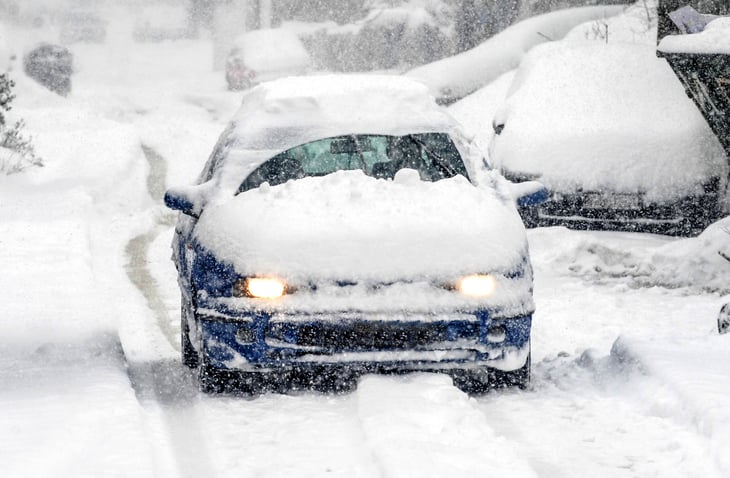
Several states where snow is more likely have laws against driving your vehicle without first removing accumulated snow, as we explain in “6 States Where It’s Illegal To Drive With Snow on Your Car.”
The idea is that snow limits visibility and creates a safety issue. Fines can go as high as $1,500 per offense.
2. Gambling

No, you don’t have a roulette wheel in your house. But if you play a friendly game of poker or other gambling games — even at home — you may well be breaking the law in some states.
The legality of home poker games is a gray area, notes the website Legal US Poker Sites:
“[K]eep in mind that most states illegalize gambling unless the legislature or a public referendum has specifically legalized and the state has licensed it. This means private games should be assumed to be illegal even if the law is not strictly enforced.”
Your best bet when gambling at home is to research your state’s regulations. It’s better to exercise caution rather than face fines, criminal charges or loss of property.
3. Hosting a movie night

Do you know that dense wording about copyrights that flashes on the screen when you play a DVD? Well, it’s important.
One thing it says is that if you play the film, television show or other recording in public, you’re violating copyright laws.
That means if you play the video for your neighborhood group, co-workers or swim club, you could face fines of up to $150,000 and other penalties — even if you show it in your backyard where others can see it.
If you show a film outside your home, do it safely. The Motion Picture Licensing Corp. explains the rules and issues the licenses that allow sharing a recording with others.
4. Sharing your Netflix password

Before streaming services like Netflix, HBO Max and Hulu started cracking down on password sharing, it was deemed a violation of federal law in 2016.
It’s unlikely federal agents will come after you for the practice, but to be sure you’re on the right side of the law, read the terms and conditions on your streaming service’s website before you share a password. Here are Netflix’s, for example.

5. Singing ‘Macarena’ in public

It’s probably still OK to sing “Macarena” and other well-known songs around the campfire with your kids. But think twice before you lead a large group to join in on a catchy current dance tune.
Depending on factors like the volume and the number of people involved, doing so may break copyright laws, according to Business Insider.
Think no one will care? In the 1990s, the American Society of Composers, Authors and Publishers wanted the Girl Scouts to pay royalties for singing “Macarena,” reports The New York Times.
The organization later regretted going after the Girl Scouts from a public relations standpoint, but the potential to use the law in this way remains.
6. Using Wi-Fi without permission

Is using a Wi-Fi connection without authorization theft?
Probably. The U.S. Computer Fraud and Abuse Act of 1986 makes it a felony to access computer systems, including routers, without authorization, even though Wi-Fi wasn’t really a thing then.
Some states have laws that are more explicit. It’s not common for people to be prosecuted for “Wi-Fi squatting” or “piggybacking,” but the risk is there.
7. Letting your pet startle wildlife
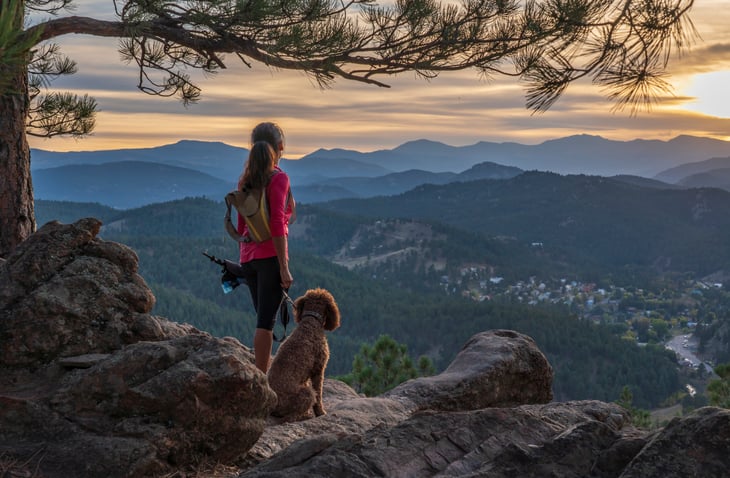
If you take your dog or other pet to a national park, keep it quiet.
The Code of Federal Regulations (Title 36, Section 2.15 (a)(4)) prohibits “allowing a pet to make noise that is unreasonable considering location, time of day or night, impact on park users, and other relevant factors, or that frightens wildlife by barking, howling, or making other noise.”
8. Fibbing about the weather
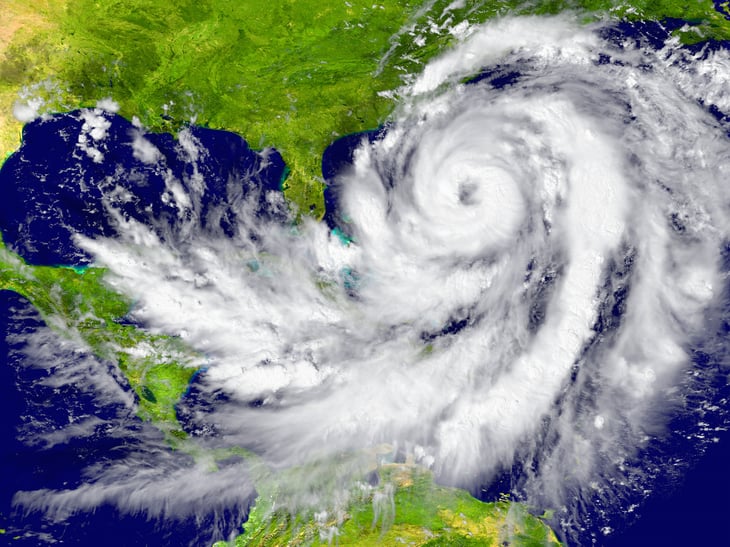
If you publish a weather forecast and falsely claim it’s from the National Weather Service, you could be fined or imprisoned for up to 90 days — or both — for publishing a false or counterfeit weather report.
Remember the media furor in 2019 when President Donald Trump went on camera to brief the nation about Hurricane Dorian’s projected path?
He faced a storm of criticism after he held up a National Weather Service map that had been altered with a Sharpie pen. Critics pointed to the law — 18 U.S. Code § 2074. The regulation, Yahoo News says, is intended to keep the government’s brand reliable and ensure its forecasts can be depended upon.
9. Doing interstate commerce in raw milk

In some states, it’s OK to sell raw milk. Others ban it.
But distributing it across state lines is another matter. That’s a violation of federal law. “All milk sold across state lines must be pasteurized and meet the standards of the U.S. Pasteurized Milk Ordinance,” reports Encyclopedia Britannica.
Just ask the Amish farmer who was hauled into U.S. District Court as the result of a U.S. Food and Drug Administration sting operation in 2011.
Although raw milk was legal to sell in Pennsylvania, Amish farmer Daniel Allgyer and his Rainbow Acres Farm and Rainbow Valley Farms were charged with breaking two federal laws in crossing state lines from Pennsylvania to sell the product in Washington, D.C., according to Agri-Pulse, an industry publication.
10. Using someone else’s disability parking permit
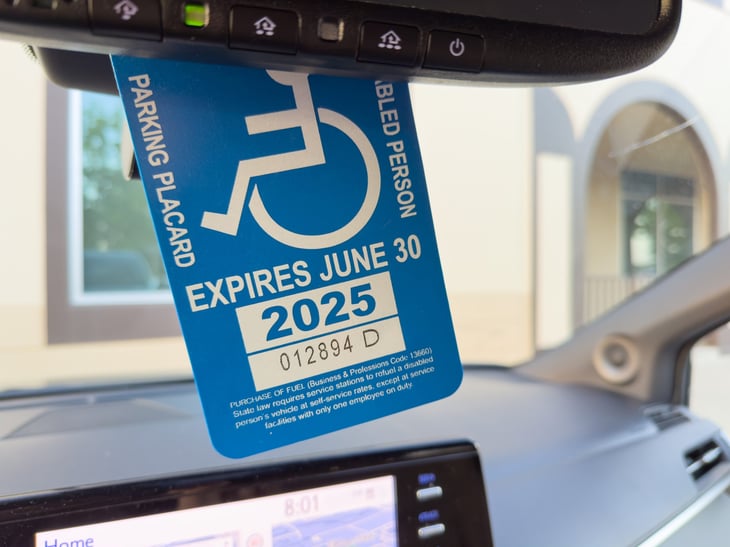
It’s obviously wrong to use a disability parking permit that belongs to someone else so you can park in a space intended for people with disabilities.
But do you know it is illegal in some states? Disability parking permits are regulated and enforced by the states, whose approaches vary. In California, for example, it is misdemeanor fraud, according to this Los Angeles legal firm.
The charge carries a penalty of up to six months of jail time and a fine of $250 to $1,000. Worse, licensed professionals — an insurance broker, nurse, attorney or physician, for a few examples — can face additional penalties.
11. Hanging items from a rearview mirror
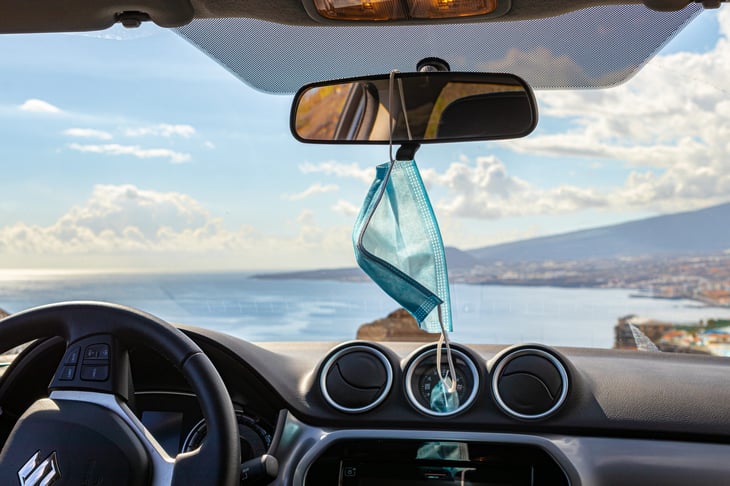
Many states have laws against hanging air fresheners, fuzzy dice, graduation tassels and other items from your rearview mirror. That also includes the masks we wore to stay safe during the pandemic.
In New Jersey and Pennsylvania, for example, it is illegal to hang “any object or material … from the inside rearview mirror,” reports Radio 94.5 PST.
The reason: Such dangling stuff obstructs the driver’s view, creating a safety hazard.
12. Photocopying a textbook

If you grew up in a time before everything was digital, you have probably photocopied from a book. It might be easier to ask who hasn’t.
But were you breaking federal copyright law?
Maybe, according to Stanford University Libraries. There’s no specific number of pages that it’s OK to copy without violating federal copyright law. The question is less about how much you copy and more about how you use the copyrighted text.
Photocopying is considered a “fair use” (legally defensible) of copyrighted materials if you use it “for a limited and ‘transformative’ purpose, such as to comment upon, criticize, or parody a copyrighted work,” the article says.
13. Riding in a pickup truck bed

A beautiful summer night with wind in your hair or a too-cramped truck cab your dad is trying to pack everyone into — whatever the reason you’re riding in a truck bed, it isn’t where you should be.
About 50 people under the age of 21 die every year due to incidents related to riding in the back of a pickup truck. But if the safety concern isn’t enough of a warning, maybe the potential of getting stopped by the police is.
Not every state has a law against riding in a truck bed. Some states, like New Jersey, allow it only if it’s job related. Other states have age or occupancy restrictions. Florida bans it for anyone under 18, but allows minors if they’re buckled in or on limited-access roads. Anything else, and you’ll see those flashing lights behind you.
So be sure to check your state’s laws before you hop in carefree.

Add a Comment