



When a loved one dies, a traditional burial or cremation typically takes place. However, states are increasingly approving an alternative option.
While some of us have heard of the green burial movement that offers more environmentally friendly ways for conducting funerals and burials, not everyone is familiar with human composting (also called natural organic reduction).
What is it? And where in the United States is it legal? Read on to learn the answers to these questions and more.
What is human composting?
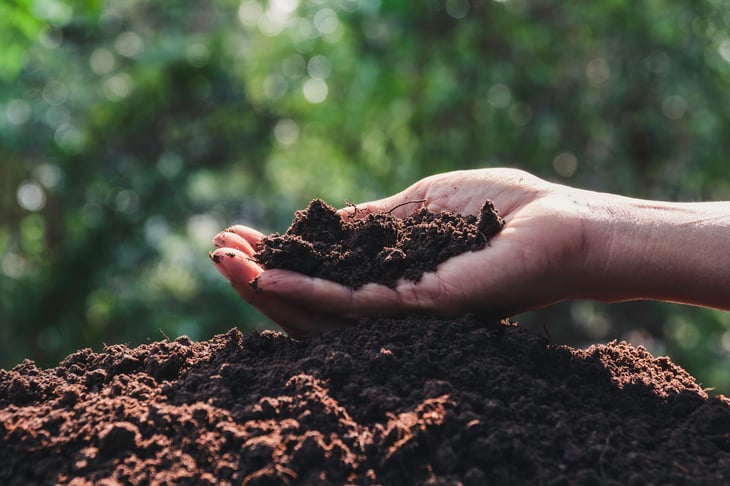
Composting — or decomposition — happens, as most know, when organic materials are placed directly in the earth and allowed to biodegrade.
When people talk about “human composting,” though, they typically are referring to above-ground decomposition and a specific process for turning human remains into soil.
Stateline (a publication of the Pew Charitable Trusts) writes:
“The process involves placing human remains in a steel box with biodegradable materials, which help the body naturally decompose. That produces soil, which is given to family members, who may spread it or use it to grow plants.”
That process takes eight to 12 weeks.

The advantages of human composting

The public appears receptive to alternative funeral practices. The 2024 Consumer Awareness and Preferences Report from the National Funeral Directors Association (NFDA) notes that 68% of polled Americans said they’d “be interested in exploring ‘green’ funeral options because of their potential environmental benefits, cost savings or for some other reason.”
Cremation of a single human body sends about 190 kilograms (418 pounds) of carbon dioxide into the air — the equivalent of driving a car for 470 miles, according to Chemical & Engineering News, published by the American Chemical Society.
Burials have their own problems, placing millions of liters of embalming fluid into the earth each year and using 47,000 cubic meters (m3) (about 1.7 million cubic feet) of wood for coffins annually, the publication says.
Another benefit of composting is that it gives those who choose it (and their grieving families and friends) the chance to express and act on their values. Also, it offers an opportunity to feel a part of the death process — something both heart-wrenching and beautiful, says Recompose, a licensed, full-service, green funeral home in Seattle specializing in human composting.

How much does human composting cost?

As for costs, human composting appears about on par with conventional funeral home services:
- Recompose, for example, charges $7,000 for the composting process (not including a ceremony).
- The median cost of a funeral with burial in 2023 was $8,300, according to the NFDA.
- The median price of a funeral with cremation was $6,280.
Following are all states that have passed laws to allow this practice.

1. Maine

The law: Legislative Document 536
When it took effect: 2024
Human composting became legal in Maine in August 2024, although it did so without the governor’s signature.
2. Minnesota

The law: House File 5247
When it takes effect: 2025
Legislation to allow human composting in Minnesota was originally introduced as a stand-alone bill but eventually was rolled into a much larger piece of legislation that addressed a variety of issues. Minnesotans can legally choose human composting after death starting on July 1, 2025.

3. Delaware

The law: House Bill 162
When it took effect: 2024
Human composting was legalized in Delaware as of May 16, 2024. Before legislation was passed, an amendment was added to the bill clarifying that someone cannot be organically reduced if they’re suspected of having a viral or other health risk that wouldn’t be eliminated during the composting process or if they die in connection to a radiological incident or if their body contains radioactive implants.
4. Maryland
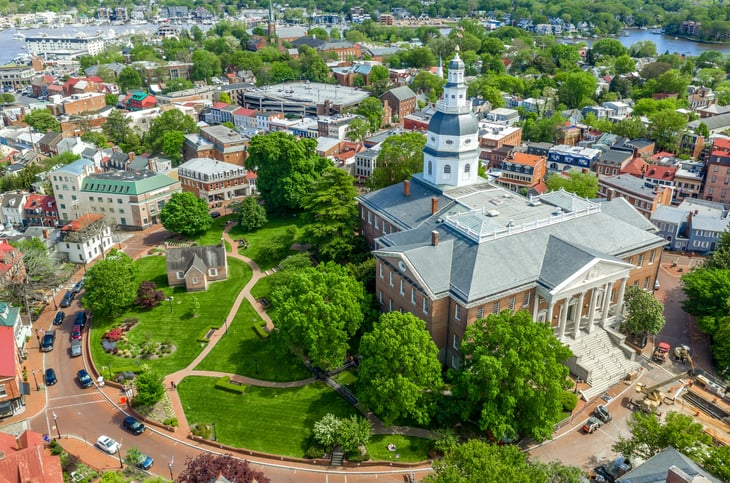
The law: House Bill 1168
When it took effect: 2024
Also known as the Green Death Care Options Act, HB 1168 went into effect on Oct. 1, 2024. The act also legalized the use of use alkaline hydrolysis, or “water cremation,” at Maryland crematories.
The Sierra Club describes the process:
“The body is placed in a stainless steel container filled with 95 percent water and 5 percent alkali (i.e., lye) that is then pressurized and heated to 300°F. After three hours, all that’s left are a brittle skeleton that can be crushed into powder and a liquid safe enough to be discharged into a municipal waste system.”

5. Arizona

The law: House Bill 2081
When it took effect: 2024
HB 2081 was dubbed by some as the “Grandpa in the Garden” bill. It was signed into law by Arizona Gov. Katie Hobbs in March 2024.
6. Nevada
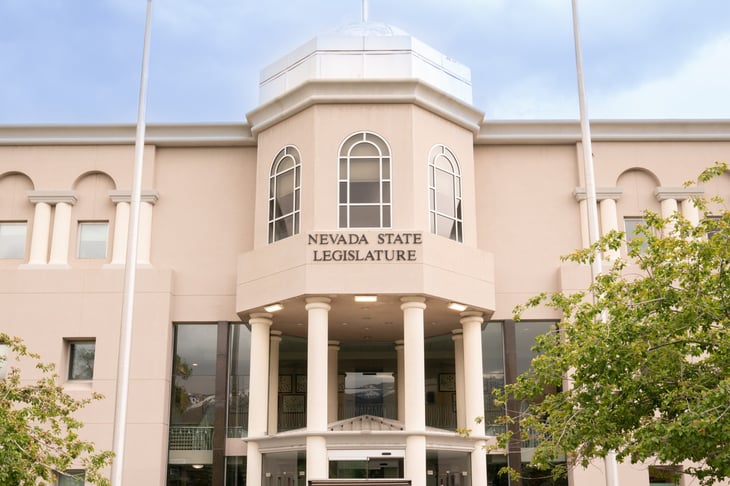
The law: Assembly Bill 289
When it took effect: 2023
This bill was approved by the Nevada Senate on a 19-1 vote and in the Assembly by a margin of 38-4. It was signed into law on May 30, 2023.

7. New York

The law: Assembly Bill A382
When it took effect: 2022
New York Gov. Kathy Hochul signed AB A382 into law on Dec. 30, 2022. This made human composting legal in the state, despite public pushback from New York religious groups.
8. California
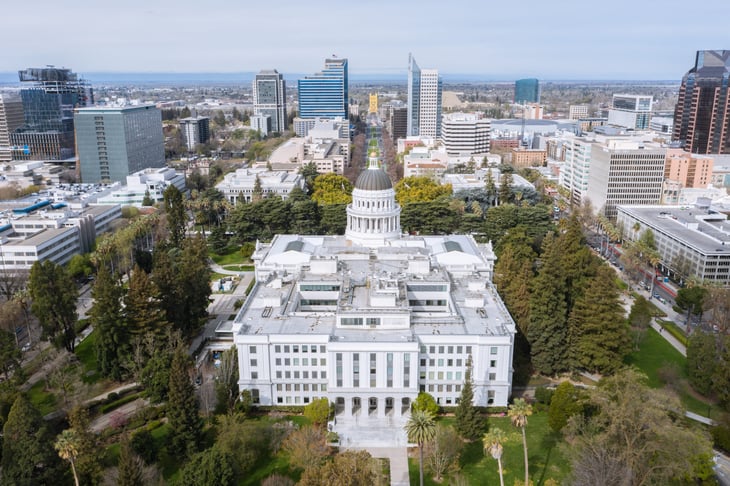
The law: Assembly Bill 351
When it takes effect: 2027
In September 2022, California became the fifth state to approve the use of human composting. While there was some opposition to the proposal from the California Catholic Conference which was concerned that composting would turn bodies into a “disposable commodity,” that was not enough to stop the bill’s passage.

9. Vermont

The law: House Bill 244 (Act 169)
When it took effect: 2023
Vermont’s governor signed that state’s bill regarding human composting into law in June 2022.
In addition to composting, the bill covers another green burial alternative: alkaline hydrolysis. This option consumes less energy than cremation but more than human composting.

10. Colorado

The law: Senate Bill 21-006
When it took effect: 2021
In March 2022, supporters of human composting in Colorado celebrated as soil from composted human remains was spread on a field. The action was a first, after the state legalized the process in 2021.
If you are concerned about where the soil from composted human remains could end up, “There are strict laws preventing the soil from being used to grow any food that people could eat,” according to Houston’s KHOU-11 TV.

11. Oregon

The law: House Bill 2574
When it took effect: 2022
A Q&A on the website of Oregon’s Legislature addresses some concerns about human composting, including worries that it could release pharmaceuticals or heavy metals into the soil.
Washington State University and Western Carolina University have studied the process, the site says. WSU found heavy metals (such as cadmium, arsenic, copper, lead, zinc and mercury) remaining to be well under EPA limits. And 95% of prescription drugs tracked by researchers were broken down in composting.

12. Washington

The law: Senate Bill 5001
When it took effect: 2020
Washington was the first state to allow human composting.
Entrepreneur Katrina Spade struck on the idea of human composting after learning that farmers use a similar process for disposing of animal remains, Smithsonian magazine reported in 2019, when Washington state passed its law.

Add a Comment