



Turning 65 has long been a milestone in our collective imagination. It’s the age traditionally associated with ending work and beginning a well-earned retirement.
Today, many folks quit working earlier than that age, and some retire later. But 65 remains a milestone age.
In fact, if you’re not careful, you can make some key mistakes the year you turn 65 that might haunt you financially — and in other ways — for years to come.
So, make sure to avoid the following big mistakes during the year you turn 65.
1. Waiting too long to file for Medicare

Long before your 65th birthday arrives, you should start thinking about your Medicare options and which choices are right for you. If you fail to do so and enroll in Medicare late, you could pay a big price.
As we have previously explained, if you do not enroll on time for the various aspects of Medicare coverage — Part A (hospital insurance), Part B (doctor and outpatient insurance) and Part D (prescription drug insurance) — you will pay a penalty. In some cases, the penalty can last the rest of your life.
For more on the details, read “8 Disappointing Realities of Medicare” and “8 Things Most People Don’t Know About Medicare.”
2. Continuing to contribute to an HSA

If you have been contributing to a health savings account (HSA) for many years, it might feel natural to continue to do so at age 65 and beyond. But for millions of people, that would be a big mistake.
Once you sign up for Medicare, you are prohibited by law from making additional contributions to an HSA. If you violate this rule, you could be subject to additional taxes and a penalty.
So, if your 65th birthday is approaching, when exactly should you stop contributing to your HSA? The answer depends on your circumstances, and it can become complicated.
Fortunately, we break it down in easy-to-understand terms in “4 Types of Medicare Penalties — and How to Avoid Them Before It’s Too Late.”
Although you cannot make new contributions to an HSA after you enroll in Medicare, you can still withdraw the money that remains in your HSA and use it to pay for qualified health expenses throughout retirement.
For more, check out “6 Reasons This Is the Best Type of Retirement Account out There.”
3. Thinking you can get ‘full retirement age’ Social Security benefits
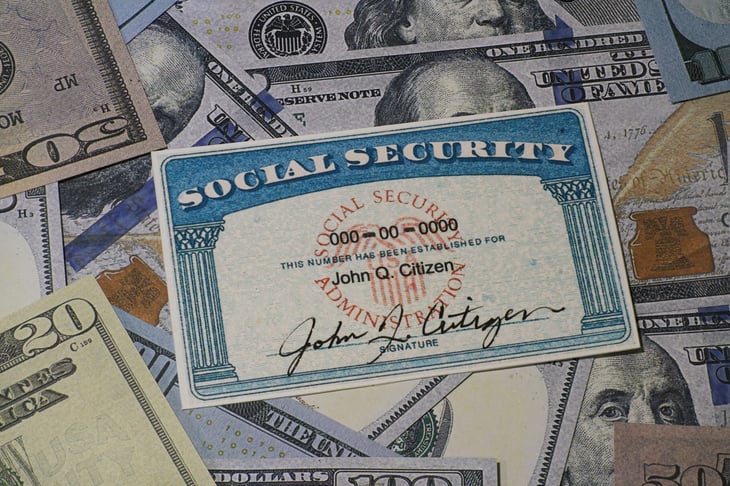
“Full retirement age” is the age at which you are eligible for 100% of your Social Security benefit.
There appears to be a persistent myth that once you turn 65, you have reached full retirement age and can claim a larger Social Security benefit. But that isn’t so.
If you were born between 1943 and 1954, your full retirement age is actually 66. Full retirement age slowly increases for everyone born between 1955 and 1960 until it reaches 67 for those born in 1960 or later.
4. Forgetting that you qualify for a larger standard deduction

Many people likely are unaware that the amount they can claim for the standard deduction on their tax return increases the year they turn 65.
For the 2026 tax year, for which returns are due in April 2027, taxpayers 65 and older will get an additional $1,650 per married person or $2,050 per single person. To be eligible for a higher standard deduction based on age for the 2026 tax year, you must have been born before Jan. 2, 1962.

5. Not making ‘catch-up’ retirement contributions

As we mentioned at the start, not everybody retires at age 65. Some people continue to work — often for many years — after that age. Some may do so because they love their jobs while others continue to work out of financial necessity.
If you are holding down a job and still collecting earned income, you can continue to make catch-up retirement contributions to your 401(k) or IRA. That means that in addition to the standard contribution limits for 2026, you can put an extra $8,000 in your 401(k) and $1,100 in your IRA.
And if you are in the minority of folks who are not enrolled in Medicare at 65, possibly because you are still on an employer’s health plan, you can even make catch-up contributions to a health savings account. Folks 55 and older can contribute an extra $1,000 to their HSA above and beyond the standard HSA contribution limits.
6. Not planning for required minimum distributions

Once you hit either age 73 or 75, depending on the year you were born, you must withdraw a required minimum distribution, or RMD, from your retirement accounts by Dec. 31 of each year. Failure to do so could result in a penalty of hundreds, or even thousands, of dollars.
Types of accounts that are subject to RMDs include non-Roth accounts, such as traditional individual retirement accounts (IRAs), 401(k) plans, 403(b) plans and others.
The only way to minimize or avoid RMDs and their penalties is to plan ahead. For example, you can roll over all or part of the balance in your traditional IRA to a Roth IRA. As a result, since Roth IRAs are not subject to RMDs, less of your retirement savings would be subject to RMDs once you reach your RMD age.
You can learn more about RMD penalties here: “Retirees Who Miss This Year-End Deadline Face a Hefty Fine.”
7. Avoiding thinking about an estate plan

Perhaps putting off estate planning is excusable when you are younger. But by the time you are 65, it’s simply irresponsible not to have an estate plan in place.
If you care about your loved ones — and about what happens to your assets after you shuffle off this mortal coil — you need to craft an estate plan. Even if you simply intend to leave your estate to charity, you want to make sure the wealth you have created goes to causes in which you believe.
For more, check out “6 Estate Planning Mistakes to Avoid.”

Add a Comment