



Editor's Note: This story originally appeared on Boldin.
Getting to retirement can feel like climbing a mountain. The planning, the spreadsheets, the tradeoffs — it’s a lot.
But here’s something fewer people expect: Retirement comes with challenges, and retirement boredom is one of the most common struggles after work ends.
Even if your finances are in great shape, many retirees find themselves restless, unmotivated, or unsure how to fill their days with meaning and momentum. And, research shows that older adults are among the most vulnerable to boredom.
Retirement boredom isn’t the only challenge facing retirees. In this article, we share the most common post-retirement problems reported by the Boldin community — and smart, real-world strategies to beat them and build a life that feels rich in every sense of the word.
1. Too Much Time With the Spouse

After years of living mostly separate lives during the workweek, retirement can suddenly mean all-day, every-day togetherness. For some couples, that’s … a lot.
Richard quoted the old line, “I married you for better or worse, but not for lunch.” Kris shared that the hardest part of retirement is having her husband around constantly: “He worked 6–7 days a week for 40 years. Now he’s home all the time.”
And Trevor admitted that he’s a little resentful of the never-ending “honey-do” list.
(Here are some tips for surviving retirement with your spouse.)
2. Missing Work

When leaving the workforce, some miss the routine. Others miss the people. And many genuinely liked their jobs more than they expected, especially when compared to the slower pace of retirement.
One retiree described how hard it was to adjust after an early retirement. “Work gave my day structure,” he said. “Without it, I had too much time to think and not enough to do.”
Here is a full account of how one retiree worked through his early entry into retirement, missing work, and experiencing boredom.
3. Aging

Retirement is supposed to be the reward for a life of work — but aging doesn’t always play by the script.
Ron wrote: “I had four years of retirement and all was good: traveled, partied like 1989 (lol). Then the big C came. Liver cancer. I got a new liver last week and I’m healing now. I think I’ll be partying again by Thanksgiving. Just no more alcohol.”
As actor Maurice Chevalier said, “Old age isn’t so bad when you consider the alternative.”

4. Being the ‘Go To’ for Aging Relatives and Adult Children

Many retirees face new demands from aging parents, adult kids, or both. While many people consider caregiving to be a privilege, there is no way around the fact that it is tough.
Bob shared, “I’ve been retired two months and have spent 90% of my time dealing with older relatives. I totally underestimated the time and stress involved.”
And Jeanne added, “Grown children think I have nothing else to do now, so I should be available whenever they need something. Frustrating.”
5. Losing Friends

Herbert pointed out that the hardest part of retirement is, “Saying goodbye to family and friends who pass away.”
These moments are incredibly hard — but also a powerful reminder to live fully while we can.
6. Irritating Your Friends With Retirement Joy

On the lighter side, Kelly joked that the hardest part of retirement is how much fun she’s having.
She wrote, “I’m irritating my friends with a big smile on my face and constant saying, ‘OMG, it’s fantastic. Retire as soon as you can.'”
7. Still Not Having Enough Time

Many retirees can relate to the quote from Bill Watterson, author and illustrator of Calvin and Hobbes, “There’s never enough time to do all the nothing you want.”
Mark’s spin on time was this: “Ironic, but I don’t have enough time to do everything I need to do and then want to do in a day. I should wake up earlier, but noooooo way!”
Joseph wondered, “How did I ever have time for work?”
8. Retirement Boredom

By far, the most common complaint about retirement is boredom and not having anything to do. Worse, is not having anything to do and feeling irrelevant.
John lamented, “I’m one month into retirement and still trying to figure this out. Realizing I have to search out my daily activities, they don’t come looking for me like work did.”
Toby commented, “Work and kids were my purpose for so long. Now I can focus on me and what I want and I feel a little lost.”
Next, we’ll look at ways recent retirees advise solving retirement challenges.
Plan before you retire

Terry offered this simple but powerful advice: “If you have nothing to do, keep working. Otherwise, you’ll be bored.”
Planning retirement is NOT just about your finances; it’s about knowing how you’ll spend your time.
Get a dog

Julie who shared a photo of her chocolate lab and puppies, said, “Dogs definitely keep you busy. And, it’s nice to go on walks with them.”
David agreed, “Get a dog to walk YOU every day.”
Have a purpose

Whether it’s volunteering, building something new, or just soaking up the joys of free time, it helps to have a reason to get out of bed.
Your purpose doesn’t have to be world-changing. It just has to matter to you.
Make lists or rules

While freedom is the goal for most retirees, giving yourself to-do lists or personalized rules for living may be helpful to avoid boredom.
Judy maintains three lists: someday, soon and today.
“I move to-do ‘cards’ around. ‘Go on African safari’ was in Someday, then moved to Soon, then to Today. Once done, it’s archived. It keeps me focused and reminds me how I’m spending this time.”
She continued, “Without the lists, I felt aimless and I couldn’t keep track of things I want to do in retirement. Every so often, I look at the archived items to remind myself where my time in retirement has gone.”
Andy has two rules that he follows to overcome boredom: 1. Stay busy and 2. Do good.
Keep moving

Sometimes the cure for boredom is as simple as motion. Go somewhere. Do something. (It doesn’t matter what.) This advice worked for Andy and Julie.
Andy wrote, “We walk every day, we volunteer often, travel somewhere once a month, golf. We are busier than ever.”
Julie commented that her rule is to move, “A body in motion stays in motion.”
Make new friends

Robert suggested, “Get familiar with the website www.meetup.com. It’s free and you will quickly find others with similar interests and hobbies. Five years ago I tried it and found guitar pickers and bicycles groups and … I am now the busiest retired guy around.”
Here are more tips for making friends in retirement.
Embrace free time

James thinks that if you are experiencing retirement boredom and looking to schedule your time, then you don’t have the right mindset.
He said, “You’re missing the point of retirement. There is zero need for a routine. And, in fact, I resent myself when I have to schedule anything definite. Let go of the work paradigm and embrace the luxury of time. You’ll figure it out. Or, you never will. Most don’t.”
He continued, “There is no ‘wasting’ time in retirement. You do what you want to do when you want to do it. There are no agendas, no timelines, etc. … Your entire retired life is free time now. Explore that luxury.”
Heather agreed, “Try the no-plan plan. Works great!”
Robert spoke to having hobbies, but not routines. “Hobbies are important (motorcycles are Robert’s passion). However, avoiding ‘routines’ in general keeps me more alert and happier. Some people need routines and I respect that, but it is not in my nature. I like to be unpredictable. I keep the neighbors confused.”
Keep to a routine
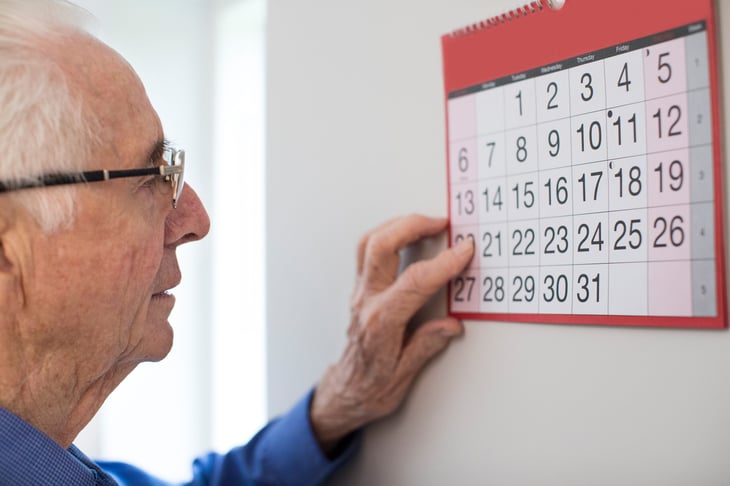
While many experts (and the guys quoted above) endorse the benefits of unstructured time, much research suggests that having a routine can help you stay mentally, physically and emotionally healthy.
Joseph endorsed a routine. He wrote, “I try to get up and go to bed at a similar time each day. I attempt to walk 6,000 steps by 1 PM (daily goal is 7,500+ so I want to jump start it early.) I schedule in-house appointments only on Monday and Tuesday if possible. I schedule doc appointments only on Wednesday if possible.
“COVID has cramped me some in that I don’t have a regular gym or workout routine which I really need. I nap around 2–2:30 PM if possible. I write down a list of things that need to be done and pick 3 even if it’s just something easy. Much more definition needed because I don’t want my family to find things for me to do.”
Jordana was passionate about the benefits of routine: “Routine is actually very good for you and healthy. Without it you’re liable to spend so much of your time wasting away on nothing important or healthy.”
She continued, “That’s what all the billionaires have figured out and that’s why they never want to retire even though they don’t need money, they work for charity — for creativity — to better society.
“You can’t do any of this if you don’t have a schedule and obligations to others. Work is good for your mind and brain anything with commitment and stimulation motivates you — in purpose and doing for others out of some obligation to help instead of just leisure all day.”
Read ‘Four Thousand Weeks: Time Management for Mortals’

“Four Thousand Weeks: Time Management for Mortals” is a book by Oliver Burkeman. The book’s title refers to the finite number of years you’ll live, assuming you make it to 80.
He addresses the struggle of how to best use your 4,000 weeks.
Drawing on the insights of both ancient and contemporary philosophers, psychologists, and spiritual teachers, the book delivers an entertaining, humorous, practical, and ultimately profound guide to time and time management.
He rejects the futile modern fixation on “getting everything done” and focuses you on constructing a meaningful life.
Make a to-do jar

Kelly has systems for combating retirement boredom.
She wrote, “Write down things you want to do, like 100 of them, and put them in a jar. Pull one out a week and DO it. Also, find one NEW thing to do in each of these categories: physical, spiritual, creative, intellectual, social, relationship and community. That gives you a well rounded life to keep you busy and fulfilled.”
Use a calendar

Karl wrote, “If I don’t put it on the calendar, it doesn’t happen and I spend way too much time on Facebook and other time wasters.”
Set screen time limits

Technology can be a time suck. And, with nothing but time in retirement, you want to be careful not to use up your time on the boob tube, phone or other mindless screens.
Fiona has a solution, “I give MYSELF screen time limits.”
Another respondent suggested putting all of your social apps in greyscale. It’s amazing how much less appealing they become.
Go back to work

Yep. Many retirees find happiness by going back to work.
Cathy admits, “I’m resisting the urge to keep working. I have a habit of starting hobbies that turn into companies.”
Work doesn’t have to be a grind. It can be something you love, on your terms.
All about reversing retirement.
Be accountable to someone

Karl uses his friends to make sure he does things he wants to do. And he finds that it helps with retirement boredom.
He wrote, “I am finding that I need to take control of what I do by inviting others to join me.”

Add a Comment