


Editor's Note: This story originally appeared on LawnStarter.
Transform your dry landscape into a thriving oasis. Drought-tolerant shrubs, such as brittlebush, jojoba, or ninebark, bring vibrant life to parched gardens while reducing water bills and the need for maintenance.
Landscaping experts I interviewed say transitioning to drought-resistant shrubs can reduce water usage by up to 60%-70%. The secret? Choosing species that have already mastered your local climate.
Here are options for every region.
Top Drought-Tolerant Shrubs for the Southwest

The Southwest region is particularly well-suited for plants that can withstand blazing sun and arid conditions. Plant in the fall and water regularly until the shrub is established.
1. Brittlebush
Encelia farinosa
- Hardiness zone: 7-10
- Growing conditions: Full sun and well-draining soil
- Foliage: Evergreen
- Mature size: 2-4 feet tall and wide
These drought-tolerant flowering shrubs change with the weather: pale green leaves turn white when dry, then burst with yellow flowers when moisture returns.
2. Creosote Bush
Larrea tridentata
- Hardiness zone: 8-11
- Growing conditions: Full sun and well-draining sandy, rocky, or gravelly soil
- Foliage: Evergreen
- Mature size: 3-8 feet tall and wide
Creosote bush offers vibrant yellow flowers and a distinctive, resinous fragrance—the iconic “smell of desert rain.”
3. Desert Spoon
Dasylirion wheeleri
- Hardiness zone: 8-11
- Growing conditions: Full sun and well-drained, slightly acidic soil
- Foliage: Evergreen
- Mature size: 3-5 feet tall and 4-5 feet wide
This tough desert shrub forms spiky rosettes of blue-green leaves, creating a striking focal point in xeriscape designs. Pair with soft-textured ground covers, such as blackfoot daisy.
4. Jojoba
Simmondsia chinensis
- Hardiness zone: 8-11
- Growing conditions: Full sun and well-draining soil; tolerates strongly acidic to very alkaline soils
- Foliage: Evergreen
- Mature size: 8-10 feet tall and 10-12 feet wide
For low-maintenance gardens, choose jojoba. This drought-tolerant, full-sun shrub thrives on just 3 inches of annual water and is perfect for privacy screening and desert backdrops.
5. Texas Ranger
Leucophyllum frutescens
- Hardiness zone: 8-10
- Growing conditions: Full sun and well-draining soil; tolerates rocky, alkaline soils
- Foliage: Evergreen
- Mature size: 5-8 feet tall and 4-6 feet wide
The “barometer bush” blooms purple flowers on silvery foliage when humidity rises, predicting rain more accurately than forecasts. Prune it in early spring to promote vigorous growth; deadhead and lightly trim after each bloom to keep a nice, compact shape.
Top Drought-Tolerant Shrubs for the Southeast

Drought-tolerant doesn’t always mean Southeast-ready. Your region’s acidic clay soil, strong winds, and unpredictable rainfall extremes require shrubs that can withstand this unique climate combination.

1. Adam’s Needle
Yucca filamentosa
- Hardiness zone: 4-10
- Growing conditions: Full sun to part shade and well-drained soil
- Foliage: Evergreen
- Mature size: 2-3 feet tall and wide
Adam’s needle thrives in poor soils, producing dramatic, sword-like foliage and towering flower spikes—perfect for drought-tolerant landscaping that requires minimal maintenance.
2. Beautyberry
Callicarpa americana
- Hardiness zone: 7-11
- Growing conditions: Full sun to part shade; moist but well-drained soil
- Foliage: Deciduous
- Mature size: 3-6 feet tall and wide
Southeast native beautyberry produces striking clusters of bright violet-to-magenta berries that make late summer gardens shine. Moderately tolerant to dry conditions, beautyberry will require watering during prolonged drought — ensure 1 inch of water or more per week if planted in a sunny area.
3. Florida Privet
Forestiera segregata
- Hardiness zone: 8-11
- Growing conditions: Full sun to part shade; prefers well-drained, sandy soil
- Foliage: Evergreen
- Mature size: 10-15 feet tall and 5-10 feet wide
Planning for a low-maintenance butterfly garden? Florida privet’s yellow-green flowers and bluish berries make it a wildlife magnet, especially attracting migrating monarch butterflies.
4. Yaupon Holly
Ilex vomitoria
- Hardiness zone: 7-9
- Growing conditions: Full sun to deep shade; tolerates various soils
- Foliage: Evergreen
- Mature size: 10-20 feet tall and 8-12 feet wide
America’s only caffeinated native plant survives drought, flooding, salt spray, and neglect while producing coffee-strength tea. Perfect for sustainable landscapes and morning energy needs.
Note: Don’t eat the berries; they’re toxic.
5. Wax Myrtle
Myrica cerifera
- Hardiness zone: 7-10
- Growing conditions: Full sun to part shade and wet swamps to dry soil
- Foliage: Evergreen
- Mature size: 10-20 feet tall and 8-10 feet wide
This drought-tolerant evergreen shrub maintains glossy, olive-green leaves year-round, providing coastal homeowners with reliable, hurricane-resistant landscaping.
Top Drought-Tolerant Shrubs for the Northeast
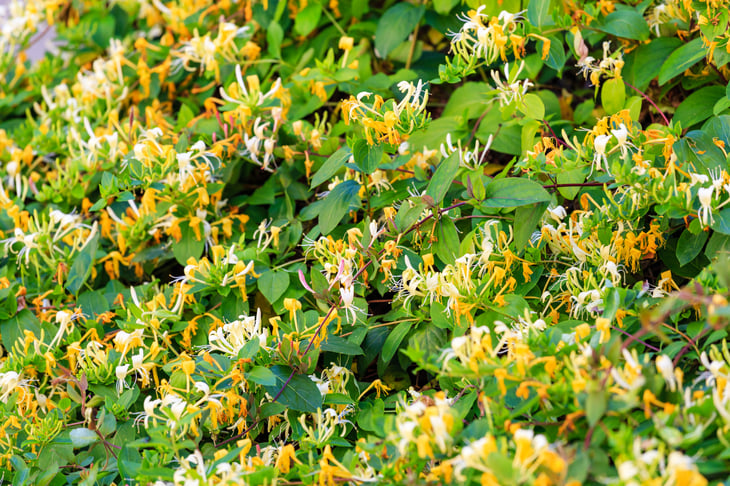
Northeastern homeowners face a hidden gardening challenge beyond harsh winters.
“Our clay-heavy soil actually makes drought conditions worse because roots can’t spread properly to find moisture,” explains Steve Schumacher, owner of Boston Landscape Co., a landscaping company from Massachusetts.
These shrubs handle both acidic, compacted soils and dry spells.
1. Bayberry
Myrica pensylvanica
- Hardiness zone: 3-7
- Growing conditions: Full sun to part shade; tolerates various soils
- Foliage: Deciduous
- Mature size: 6-8 feet tall and 5-10 feet wide
This tough Northeast native thrives in poor soil, salt spray, and harsh winters, while producing fragrant, waxy berries that are ideal for candles and attract birds.
2. Bush Honeysuckle
Diervilla lonicera
- Hardiness zone: 3-7
- Growing conditions: Full sun to part shade and acidic, well-draining soil
- Foliage: Deciduous
- Mature size: 3-4 feet tall and wide
Bush honeysuckle thrives in shade gardens along with wild ginger and bugleweed. Bees adore its summer blooms while brilliant orange-red fall color rivals any maple.
3. Juniper
Juniperus spp.
- Hardiness zone: 2-7
- Growing conditions: Full sun to part shade and slightly acidic, well-draining soil
- Foliage: Evergreen
- Mature size: 2-10 feet tall and wide
Among the most low-maintenance and drought-tolerant shrubs, junipers provide year-round structure and color while requiring little to no watering or fertilization after being established.
4. New Jersey Tea
Ceanothus americanus
- Hardiness zone: 4-10
- Growing conditions: Full sun to light shade and well-draining soil
- Foliage: Deciduous
- Mature size: 3-5 feet tall and wide
New Jersey Tea blooms with fragrant white clouds from June through August, attracting colorful butterflies and bumblebees. Perfect for water-wise pollinator and sensory gardens.
5. Red Chokeberry
Aronia arbutifolia
- Hardiness zone: 4-9
- Growing conditions: Full sun to part shade; tolerates various soils
- Foliage: Deciduous
- Mature size: 5-10 feet tall and 3-5 feet wide
This native delivers white spring blooms, brilliant fall foliage, and glossy red berries that persist through winter. Schumacher planted it as a replacement for water-hungry rhododendrons, noting that established plants need “almost zero supplemental watering after year 2.”
Top Drought-Tolerant Shrubs for the Midwest

Midwest drought tolerance isn’t just about water. “Temperature swings can kill roots, making water absorption nearly impossible even when moisture is available,” explains Christopher Deanovic, operations leader at Task Masters, a landscaping and renovation company in Minnesota.
These shrubs handle both challenges.
1. American Hazelnut
Corylus americana
- Hardiness zone: 4-9
- Growing conditions: Full sun to part shade and well-drained soil
- Foliage: Deciduous
- Mature size: 8-16 feet tall and 10-15 feet wide
Cold-hardy and drought-tolerant, the American hazelnut can overcome local challenges while delivering brilliant fall color, edible fruits, and essential wildlife habitat all in one package.
2. Fragrant Sumac
Rhus aromatica
- Hardiness zone: 3-9
- Growing conditions: Full sun to part shade and acidic, well-drained soil
- Foliage: Deciduous
- Mature size: 2-6 feet tall and 6-10 feet wide
This low-growing shrub works best along walkways — when you brush against the glossy, blue-green leaves or step on leaves leaning in your path, the plant releases a delicate lemony fragrance. Plus, its deep roots stabilize slopes and hillsides.
3. Leadplant
Amorpha canescens
- Hardiness zone: 2-9
- Growing conditions: Full sun to part shade and well-drained soil
- Foliage: Deciduous
- Mature size: 1-3 feet tall
Leadplant lives up to its tough reputation. It “laughs at our Zone 3-4 winters while needing minimal water,” says Deanovic, making it perfect for challenging rock garden designs.
4. Ninebark
Physocarpus opulifolius
- Hardiness zone: 2-7
- Growing conditions: Full sun and slightly acidic, well-drained soil
- Foliage: Deciduous
- Mature size: 5-10 feet tall and wide
Ninebark offers arching stems, colorful foliage, and peeling bark, plus exceptional drought resistance. William Hamilton, owner and founder of Nature’s Own Landscapes in Ohio, confirms his ninebarks “survived two major droughts without any irrigation while still producing beautiful white flowers.”
5. Prairie Rose
Rosa setigera
- Hardiness zone: 4-8
- Growing conditions: Full sun to part shade and well-drained soil
- Foliage: Deciduous
- Mature size: 5-15 feet tall and wide
You can train prairie rose into flowering hedges or guide it up arbors for fragrant, colorful backyard entrances. Plant it in full sun for spectacular blooms.
Top Drought-Tolerant Shrubs for the Pacific Northwest

Pacific Northwest shrubs must survive dry Mediterranean summers and soggy winters. This selection thrives in the local acidic soils, adapting to both extremes.
1. Oregon Grape
Mahonia aquifolium
- Hardiness zone: 5-9
- Growing conditions: Partial shade to full shade; moist, well-drained, acidic soil
- Foliage: Evergreen
- Mature size: 3-10 feet tall and wide.
Tuck this shade-lover under taller drought-tolerant trees for year-round color: sunny yellow spring flowers, blue autumn berries, and a blazing crimson winter foliage.
2. Manzanita
Arctostaphylos spp.
- Hardiness zone: 7-10
- Growing conditions: Sun to part shade and well-drained, acidic soil
- Foliage: Evergreen
- Mature size: 1-20 feet tall and 2-15 feet wide
After 2-3 years, this ornamental shrub thrives on rainwater alone, displaying a dramatic peeling bark and an architectural branching structure.
3. Pacific Wax Myrtle
Myrica californica
- Hardiness zone: 7-10
- Growing conditions: Full sun to part shade and slightly acidic, well-drained soil
- Foliage: Evergreen
- Mature size: 10-30 feet tall and 10-20 feet wide
Want privacy fast? The Pacific wax myrtle shoots up 2-4 feet annually, shrugging off salt spray and drought while remaining green year-round.
4. Red-flowering Currant
Ribes sanguineum
- Hardiness zone: 6-9
- Growing conditions: Full sun to part shade and well-drained soil
- Foliage: Deciduous
- Mature size: 8-10 feet tall and wide
Red-flowering currant is ideal for pollinator gardens — birds relish its tart berries, while hummingbirds enjoy its spring flowers’ nectar.
5. Coyote Brush
Baccharis pilularis
- Hardiness zone: 7-10
- Growing conditions: Full sun and well-drained soil
- Foliage: Evergreen
- Mature size: 2-10 feet tall and up to 6 feet wide
This wild-looking, tiered shrub suits naturalistic gardens perfectly. Low varieties create excellent drought-tolerant ground cover while upright shrubs provide effective privacy screening.
Top Drought-Tolerant Shrubs for the Mountain West

From desert valleys to mountain peaks, the Mountain West tests plants with alkaline soil, scorching sun, and unpredictable weather. These tough shrubs handle it all.
1. Apache Plume
Fallugia paradoxa
- Hardiness zone: 5-10
- Growing conditions: Full sun and sandy, gravelly, dry, well-drained soil
- Foliage: Deciduous
- Mature size: 2-6 feet tall and 4-6 feet wide
Delicate white blooms transform into magical pink plumes that dance in the desert breeze — a resilient beauty thriving in your garden’s driest, sunniest spots.
2. Cliffrose
Purshia stansburiana
- Hardiness zone: 4-9
- Growing conditions: Full sun and rocky, poor, well-draining soil
- Foliage: Semi-evergreen
- Mature size: Up to 10 feet tall and wide
Turn tricky slopes into scented gardens with cliffrose. This deep-rooted native prevents erosion and fills the summer air with honey fragrance.
3. Fernbush
Chamaebatiaria millefolium
- Hardiness zone: 4-8
- Growing conditions: Full sun and well-drained soil
- Foliage: Semi-evergreen or evergreen in zones 7-8 and deciduous in colder climates
- Mature size: 3-7 feet tall and wide
Fernbush’s lacy foliage and fragrant white flowers thrive in sunny rockeries and xeric gardens among yuccas and penstemons.
4. Mountain Mahogany
Cercocarpus spp.
- Hardiness zone: 3-9
- Growing conditions: Full sun to part shade and well-drained soil
- Foliage: Evergreen, aromatic
- Mature size: 10-25 feet tall and wide
With its silvery canopy and feathery summer plumes, mountain mahogany brings the rugged beauty of the Rocky Mountains to your doorstep.
5. Rabbitbrush
Ericameria nauseosa
- Hardiness zone: 3-8
- Growing conditions: Full sun and well-draining soil
- Foliage: Evergreen
- Mature size: Up to 7 feet tall and wide
With stunning golden blooms, silvery foliage, and zero watering once established, rabbitbrush is a butterfly magnet that thrives anywhere.

Add a Comment