


Thrift shoppers and pickers live for it — the mega find. It’s a rare moment when we’re in the right place at exactly the right time and discover an absurdly undervalued item.
My mega find happened over the summer when I stopped in a local antique mall.
As a longtime picker and reseller, I usually avoid these places because their retail prices leave little room for profit. But curiosity got the best of me and I spent the afternoon wandering pathways stacked with vintage junk and gems.
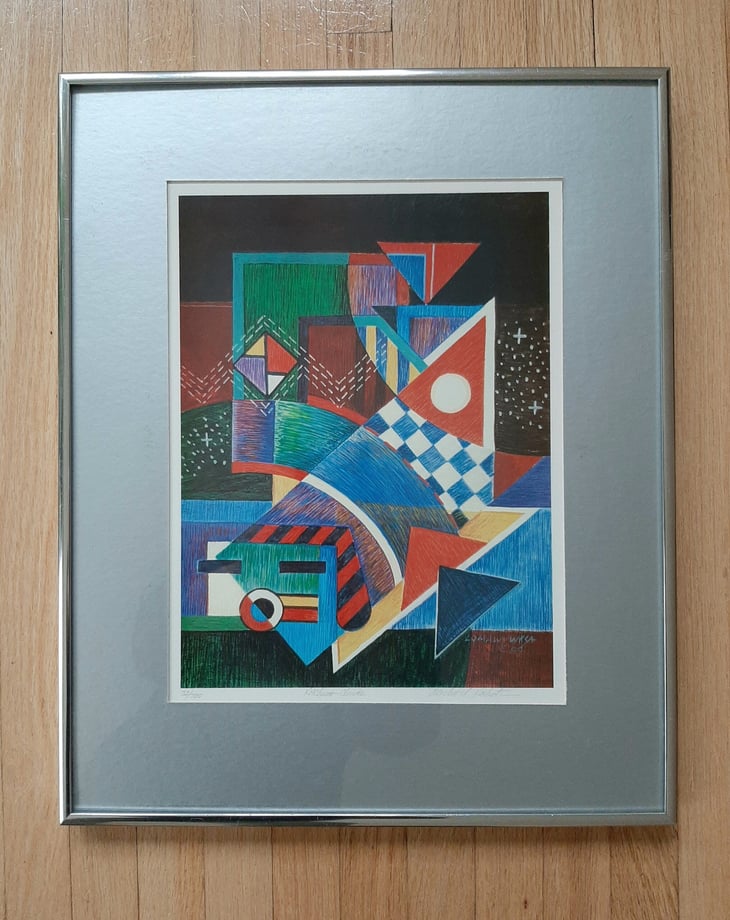
Eventually, one piece of art caught my eye, a lithograph by a Hopi artist named Michael Kabotie (1942-2009).
A quick Google search highlighted Kabotie’s impact on the art world and his many accomplishments.
Kabotie (also known by his Hopi name, Lomawywesa) was a silversmith, painter, poet and teacher. He was mentored by the famous jewelry maker Charles Loloma, and his work is part of the Museum of Northern Arizona, the Heard Museum and the British Museum’s Museum of Mankind.
The framed lithograph I found was in perfect condition. It was signed in pencil, and on the back the previous owner had taped one of Kabotie’s business cards. (The card was signed, too.) This $60 ensemble seemed like a good investment.
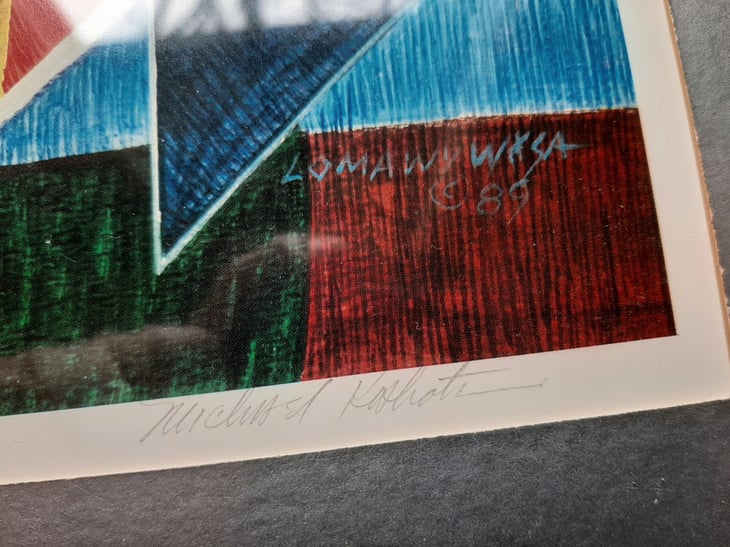
I brought it home, snapped several high-quality photographs, and provided a detailed write-up of both the artist and the art. Deciding to shoot for the moon, I priced the piece at $1,850. Other Kabotie lithographs had sold in the $2,000 to $4,000 range, but those were later pieces that showcased his more mature artistic style.
After three months, the lithograph sold for full asking price (plus $60 for professional packing and shipping). In 30 years of reselling, Kabotie’s beautiful artwork is the single most profitable item I’ve flipped.
Of course, the chances of finding another Kabotie in an overstuffed antique mall are slim, but the lesson is this: Original artwork can be found in almost every thrift store, yard sale and estate sale — and it’s usually ignored by shoppers.
And the best part? Buyers in the resale market are hungry for everything handmade, especially art. And you don’t need to find a 2,000-year-old Roman bust (or undervalued Kabotie) to make a handsome profit.
Signed pieces by unknown artists are in demand, too. Focus on the charm of a piece, how well it’s executed, and how well it represents a specific period or style.

Whether you’re an experienced reseller or simply looking for a side hustle, keep an eye out for:
- Hand-painted signs
- Folk or outsider art
- Old paintings, drawings and pastels
- Signed lithographs and prints
- Vintage photographs
- Sculptures and carvings
On eBay, this small antique French portrait recently sold for $285, and this still life of apples sold for $125.
With so much mass-produced art churning through the market, it’s important to develop your detective skills and distinguish mass-produced paintings from hand-painted ones. Factories have developed sophisticated production techniques to replicate brush strokes and impasto (a technique that leaves visible brushstrokes or palette knife marks), making it more difficult to quickly identify original art.
Here are the features I focus on when shopping for secondhand paintings:
- Canvas: Check out the back of the canvas. Frayed edges, yellowing and wear are all good signs of an original painting.
- Frame: Stretchers on mass-produced paintings will likely be plastic or flimsy, light-colored wood.
- Sheen: Mass-produced paintings tend to have a consistently glossy surface.
- Coverage: On factory-made paintings, the art will often overlap the sides of the frame. Original paintings tend to end crisply at the edges.
- Labels: Though gallery labels can be easily reproduced, old paper labels on the back of a painting tend to be a good indicator of original art.
- Smell: Your nose knows. Like all things vintage, paintings often have a distinct dusty/musty odor.

Add a Comment