


Editor's Note: This story originally appeared on LawnStarter.
A sparse lawn with multiple bare patches needs attention. But what’s the best treatment for your lawn: overseeding or reseeding?
Overseeding is spreading grass seed over an established lawn to fill in small bare patches.
If damage to your lawn is severe, reseeding is a better choice. In this process, you’ll remove all remaining turfgrass before planting new grass seed to create a completely new lawn.
With tips from an expert, we’ll help you decide which method is best for you.
Key Differences Between Overseeding and Reseeding
To determine whether overseeding or reseeding is best for your lawn, here’s a quick overview of the differences between the two:
Overseeding:
- Best for: Thin grass, bare patches, or minor lawn damage
- Cost: $0.09 to $0.15 per square foot to seed a lawn
- Time Investment: 2 to 4 hours per 5,000-square-foot yard
- Effort: Moderate
- Prep Work: Mow, dethatch, aerate, add soil amendments if needed
- Best timing for cool-season grasses: Late summer to early fall.
- Best timing for warm-season grasses: Late spring to early summer
- Success: Improves grass health and thickens the lawn
Reseeding:
- Best for: Lawns with severe damage or infestations of weeds, pests, or disease
- Cost of grass removal: $0.88 to $1.84 per square foot
- Cost to reseed a lawn: $0.09 to $0.15 per square foot
- Time investment: 4 to 8 hours per 5,000-square-foot yard
- Effort: Intensive
- Prep work: Remove grass, soil test, add soil amendments
- Best timing for cool-season grasses: Late summer to early fall
- Best timing for warm-season grasses: Late spring to early summer
- Success: Grows new grass
What Is Overseeding?
Overseeding is spreading grass seeds on an existing lawn. The goal of overseeding is to promote thick, lush growth, particularly in bare or patchy grass.
- To overseed, you need to prep your lawn first by dethatching, aerating, and mowing your lawn. Add soil amendments, like compost, if needed.
- Use a spreader and walk around your lawn in rows to distribute the grass seed.
For a detailed explanation on how to overseed, see our step-by-step guide: How to Overseed a Lawn in 8 Simple Steps.
When to Choose Overseeding
By filling in bare patches, overseeding is a cost-effective way to improve the overall health and appearance of your lawn. Here’s when you should overseed:
- Your lawn has only minor damage or a few bare patches. Overseeding is good for when your lawn is healthy overall but has a few gaps or bare patches. Thinning, sickly, or weak grass indicates you should overseed.
- To revitalize your lawn. Stress on your grass is caused by insects, disease, compaction, or drought. To keep your grass robust and healthy, revitalize your lawn with overseeding.
- It’s been 3 or more years since you last overseeded. Lawns should be overseeded every 2 to 3 years. Lawns that suffer regular damage may need overseeding as often as once a year.
- You have a cool-season grass. Cool-season grasses usually need overseeding more frequently than warm-season grasses, since warm-season grasses are more likely to fill in on their own.
Pro tip: Give new lawns a full year to establish before you overseed. “Typically, overseeding should not be done in the first year when establishing a newly sodded or installed…lawn,” says Kai Umeda, Extension agent emeritus at the University of Arizona.

Benefits of Overseeding
Here are the benefits of overseeding your grass:
- Grows thick, healthy grass
- Makes turf more resistant to diseases, pests, and weeds
- Improves curb appeal
- Fixes minor lawn damage
- Saves money on grass removal or intensive lawn remodels
Winter overseeding is also beneficial if homeowners want a lawn that grows all year.
Overseeding a cool-season grass in a warm-season lawn provides “an aesthetically pleasing green turf all year-round,” says Umeda. “Overseeding bermudagrass with cool-season grasses can be done every fall season to provide a winter turfgrass,” he says.

What Is Reseeding?
Grass reseeding differs from overseeding in that you first remove the existing grass before replanting new grass seed in bare soil.
Reseeding is a more intensive and expensive project, since you have to grow the entire lawn from the ground up — literally.
- To reseed, first remove the grass in your yard by digging it up, applying herbicides, or by using solarization or sheet mulching to kill the grass.
- Next, add compost or soil amendments.
- Then, use a spreader to spread grass seed around your yard.
For step-by-step instructions on how to plant grass seed, check out our guide on How to Plant Grass Seed.
When to Choose Reseeding
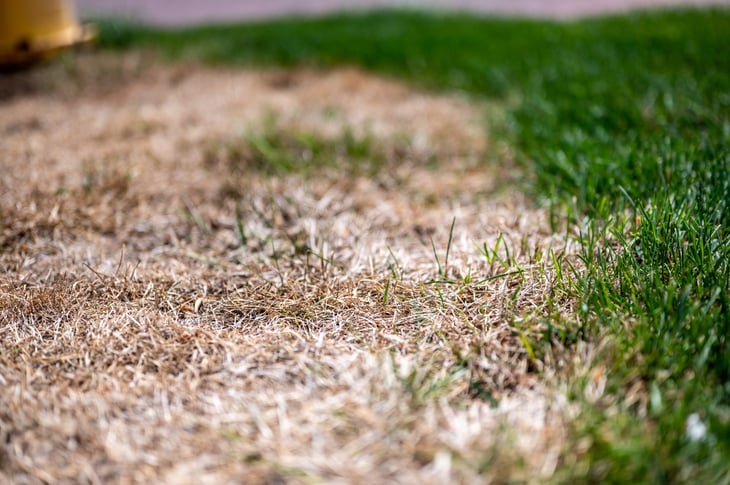
Typically, reseeding is used only in dire situations when you can’t fix your grass with overseeding. If 30% to 50% of your lawn is covered with weeds or dead grass, overseeding won’t be enough. You need to reseed your yard.
Reseeding should be used only as a last resort, since it is an intensive and expensive process. You will also have to deal with a bare dirt lawn until the newly seeded grass can regrow.
Here are times when reseeding may be necessary:
- Your lawn is severely damaged by lawn diseases or insect pests. If most of your grass has been killed by diseases or pests, it’s time to reseed and start over.
- Weeds have taken over your lawn. If the majority of your lawn is weeds, it’s best to kill or remove the weeds along with the remaining grass to restart your lawn from scratch.
- Your lawn is more dirt than grass. A few bare patches can be fixed with overseeding. However, too much bare soil means you will need to reseed your lawn.
- You want to change the type of grass in your lawn. Certain types of turfgrass are better suited to the local climate. When you need to switch the type of grass growing in your lawn, reseeding is the best option.
Benefits of Reseeding
Here are the benefits of reseeding your lawn:
- Allows you to choose your preferred turfgrass
- Helps eradicate pest infestations and lawn diseases
- Fixes severe lawn damage
- Gets rid of weeds by starting a weed-free lawn from scratch
Is Overseeding Just a Temporary Fix Compared to Reseeding?
No. Overseeding is a long-term solution that fixes bald spots or sickly patches in your yard by bolstering grass growth with new seed. Reseeding is intended to be used only in extreme cases where your existing lawn is beyond saving.
How Many Times Can I Overseed Before I Should Just Reseed?
When you have overseeded your lawn multiple times without results, it means that you may need to try reseeding your lawn instead.
However, if overseeding isn’t working and grass won’t grow in your lawn, it may indicate that there is a larger problem in your yard. Issues with the soil, time of year, the amount of sun or shade, or the type of grass can cause your seeding efforts to fail. Addressing the root causes of the failure should ensure success next time you overseed or reseed your lawn.

Add a Comment