


President Donald Trump is making good on his threats to slap more tariffs on imported goods, with cars being his latest target.
He issued a 25% tariff on imported cars and certain imported car parts on March 26. It’s set to take effect April 3 for cars and shortly thereafter for parts.
In the case of cars that qualify for preferential tariff treatment under the United States-Mexico-Canada Agreement (the free trade agreement formerly known as NAFTA), importers may seek exceptions for USA-made parts inside those cars. In other words, if an imported car is made with a combination of foreign and domestic parts, only a portion of the car’s value would be subject to the 25% tariff.
A recent S&P Global Mobility report sheds light on how such tariffs stand to affect U.S. consumers. The firm broke down which automakers are most likely to be impacted by 25% tariffs on cars imported from Mexico and Canada, based on where the cars are manufactured.
In its report, which S&P Global Mobility issued prior to Trump’s latest tariff announcement, the firm says:
“A 25% duty on the average $25,000 landed cost of a vehicle from Mexico and Canada would add $6,250. Importers are likely to pass most, if not all, of this increase to consumers.”
While the S&P Global Mobility report only looked at vehicles from Mexico and Canada, Trump’s latest automotive tariff is not limited to those countries. So, its effects could be even more wide-ranging that the report suggests.
But the report still gives consumers a good sense of which car brands would become more expensive in April under Trump’s new tariff. After all, federal data shows that Mexico is the country from which the U.S. imports the most passenger cars and light trucks by far.
1. Volkswagen
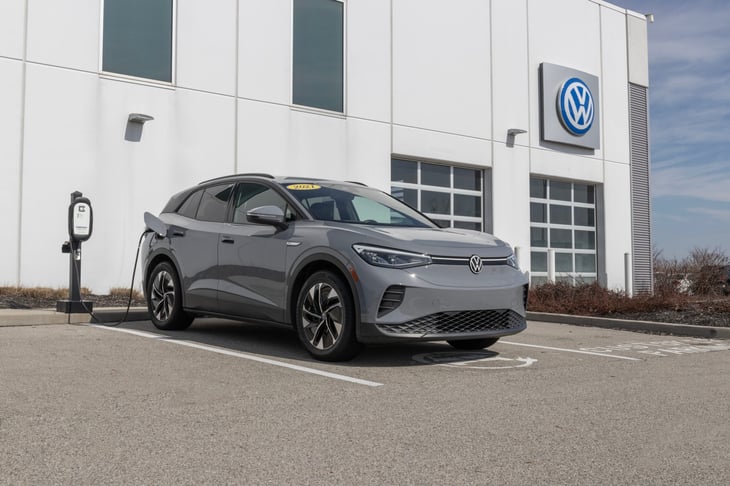
Volkswagen has produced vehicles in Mexico since 1967, and the company is most at risk from tariffs, according to S&P Global Mobility. More than 43% of its vehicles sold in the U.S. are sourced from Mexico.

2. Nissan

Around 27% of Nissan vehicles sold in the U.S. are sourced from Mexico, according to S&P Global Mobility. Nissan has produced vehicles in Mexico since 1992.

3. Stellantis
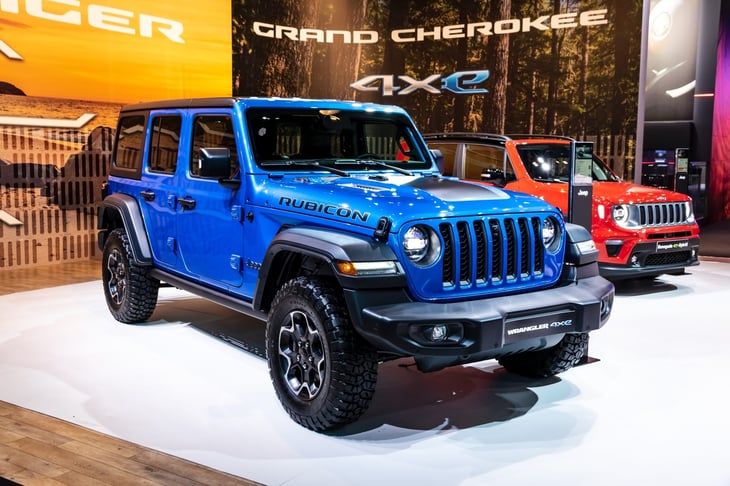
Stellantis — which emerged from the merger of Fiat Group and Chrysler Group — is now the umbrella company for more than a dozen brands. They include Fiat and Chrysler as well as Dodge, Jeep and Ram.
Last year, about 23% of Stellantis vehicles sold in the U.S. were sourced from Mexico. In particular, full-size pickup trucks from Stellantis are “at significant exposure risk” to the new tariffs, according to S&P Global Mobility.

Other car companies exposed to tariffs
Ford, GM and Honda are additional automakers that are more vulnerable to the new tariffs than others.
Ford and GM both have a history of producing vehicles in Canada and Mexico that stretches back nearly a century. Honda began producing vehicles in Canada in the mid-1980s and moved into Mexico earlier this century.
Last year, GM sourced about 22% of its U.S. sales from Mexico. The numbers were just under 15% for Ford and nearly 13% for Honda.


Add a Comment