



Not getting money when you expect to is no fun — especially if you were literally banking on it to get by.
If you’re not self-employed or an active lender, this is more likely to come up in the context of a tax refund.
Following are situations in which the IRS says a tax refund could be delayed — and what you can do about each.
1. You didn’t choose direct deposit

“The best and fastest way to get your tax refund is to have it electronically deposited for free into your financial account,” says the IRS.
To choose direct deposit when filing, you’ll need the correct account number and routing number from your bank. Both can be found on the bottom of checks or by contacting the bank.
Electing to receive a paper check leaves you vulnerable to delays in the mail service, including severe weather.

2. You filed a paper return
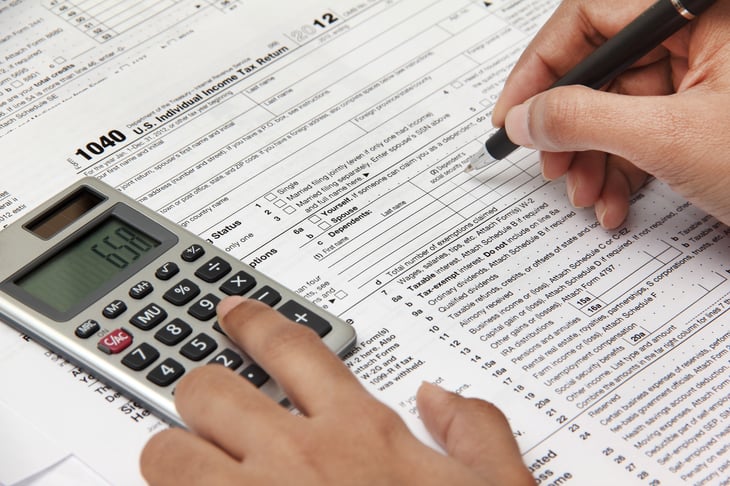
The IRS discourages paper returns for good reason. They allow for obvious delays — the time it takes to receive your return, the time it takes to process it, and the time it takes to fix mistakes that software could have caught automatically. If the IRS needs more information, you’ll have to wait for that communication by mail too. All of these things could significantly delay any tax refund.
While most refunds are issued within 21 calendar days, it could take four weeks or more to process a return sent through the mail, the IRS says.

3. You were a victim of identity theft

Being a victim of fraud or identity theft can delay a tax refund beyond 21 days, the IRS says.
Identity theft is not always a preventable crime so it’s not necessarily your fault if this happens. But there are many things you can and should do to protect yourself, as outlined by the IRS, which can reduce the risk. Some include using a password manager, a firewall, multi-factor authentication and an Identity Protection PIN.

4. Your return was incomplete or had errors

A return that is incomplete or wrong will slow down a tax refund and require more work on your part. The IRS keeps a list of common errors that could delay your return, which you can use as a checklist when filing.
For more, check out “9 Common and Costly Tax Mistakes.”

5. You forgot to file or underpaid last year

Your refund could be delayed or shrunk if you’re not square with the government. An easy way this could happen is if you forgot to file last year and have unpaid taxes and penalties to contend with.
When this happens, the IRS may hold or stop your refund to pay itself or any other federal agencies you owe first.
In certain circumstances, you can still get your refund expedited.
If you’re facing serious financial difficulties and need your refund immediately, contact the Taxpayer Advocate Service at 877-777-4778 to request assistance.

Other reasons your refund might be delayed

These are some of the most common mistakes consumers make that can delay a tax refund. There are other situations where — through no fault of your own — a delay could happen, including:
- You claimed the earned income tax credit (EITC).
- You claimed the additional child tax credit (ACTC).
- You filed Form 8379 with your return.
Filing for the EITC or ACTC guarantees your refund will be delayed if you file very early in the tax season.
“By law, we can’t issue EITC or ACTC refunds before mid-February,” the IRS says. “This includes your entire refund, not just the part that’s related to the credit you claimed on your tax return.”
If your tax return includes Form 8379, Injured Spouse Allocation, you should expect to wait as long as 14 weeks for it to process, the IRS says.


Add a Comment