



The economy stands at a crossroads. Markets have lost trillions, and inflation is squeezing household budgets. With warning signs flashing, smart consumers are taking protective steps. In uncertain times, preparation is key to financial resilience.
Families can guard against economic strain by securing strategic items before prices rise. According to the personal finance website Moneywise, 11 essential items could help strengthen you defend against inflation.
Pro Tip: Smart preparation isn’t just about what you buy — it also includes getting expert financial advice during turbulent times. If you have at least $100,000 in investments, try SmartAsset, a free service that matches you with up to three vetted financial advisors in your area after a quick questionnaire.
1. Paper product provisions

Supply chain issues became clear when toilet paper symbolized pandemic shortages, with prices doubling or tripling during peak demand.
A modest stockpile of toilet paper, paper towels, and similar essentials offers practical and financial protection.
These items take up little space and, when stored properly, retain quality indefinitely — making them perfect for buying ahead during sales.
Pro Tip: Protecting your home systems from unexpected failures offers similar financial security in tough times. Consider a home warranty — First American covers everything from appliances to heating and cooling. Take a second to see what policies cost and what they cover.
2. Emergency medication reserves

Rising drug costs can affect healthcare costs during downturns. Maintaining the supply of essential prescriptions and over-the-counter medications helps prevent treatment gaps during tough times.
Stock up on basics like pain relievers, digestive aids, and allergy meds. Health experts note that many medications remain effective past their expiration date if stored properly.
Talk to your doctor about building a safe reserve and rotating supplies to stay fresh. Proactive health screenings can also catch problems early — helping avoid expensive medical emergencies.
Pro Tip: Life Line Screening reveals hidden risks so you can act early. Book a screening today and have peace of mind.
3. Sanitizing and maintenance products

Clean homes are essential regardless of the economy. Demand for cleaning products can spike fast.
Concentrated formulas save space and money. Many cleaners stay effective beyond expiration if stored well.
A modest supply helps maintain your home despite shortages or rising prices. Home repairs don’t wait. Emergency funds can keep minor issues from becoming costly disasters.
Pro Tip: A home equity loan is a great way to access fast cash. Take a minute right now and see how much you can get, how fast you can get it and how little you'll pay.
4. Precious metal allocations

Market instability pushes investors toward safe-haven assets. Physical precious metals offer diversification beyond traditional financial systems.
While gold gets the spotlight, experts increasingly emphasize silver’s value as both a monetary hedge and industrial asset. Investors like Jim Rogers endorse silver in today’s climate.
Even small holdings can offer insurance against currency declines — research secure storage in advance. Consider formalizing your metals strategy with specialized investment vehicles to boost protection from volatility.
Pro Tip: Protect your wealth with an asset that can hedge against the damaging effects of a recession and financial calamity by opening a gold IRA.
5. Hygiene and grooming essentials

The personal care industry embraces “upflation” — rebranding basics like deodorant to justify steep price hikes. Some products now can sell for double their traditional cost.
Stocking up on soap, dental items, and shaving supplies offers quick budget relief. These items store well for years, making it easy to buy during sales without worrying about expiration.
Pro Tip: Budgeting for personal care should include preventive tools too. Thanks to new FDA rules, you can now buy top hearing aids without a prescription — saving money while protecting your long-term health.
6. Garden establishing equipment

Home food production offers both budget relief and nutritional security during tough times. Basic gardening supplies — seeds, tools, and soil — pay off over multiple seasons.
Even apartment dwellers can grow food using containers. Choose open-pollinated varieties to collect seeds for future use, boosting long-term value.
This self-sufficiency helps ensure fresh food access despite market shifts.
Pro Tip: Gardening helps cut grocery bills — but why stop there? Earn up to $1,000 a month doing simple tasks with KashKick to add even more cushion to your budget.
7. Long shelf-life food basics

Grocery inflation continues outpacing general price increases, with staple foods experiencing dramatic cost escalation. Government data shows that certain basics have increased by nearly 30% over five years.
Establishing modest reserves of shelf-stable foods – grains, legumes, canned proteins, and cooking fundamentals – creates a hedge against further price increases.
Prioritize items your household regularly consumes for natural rotation. Beyond financial advantages, adequate food supplies provide peace of mind during supply disruptions, with many families reporting substantial savings through strategic purchasing during sales.
Pro Tip: Stretch your food budget even further by maximizing returns on your emergency savings. SoFi Checking currently offers 3.8% interest — plus a potential $300 signup bonus. (Rates and offers may change.)
8. Alternative energy solutions
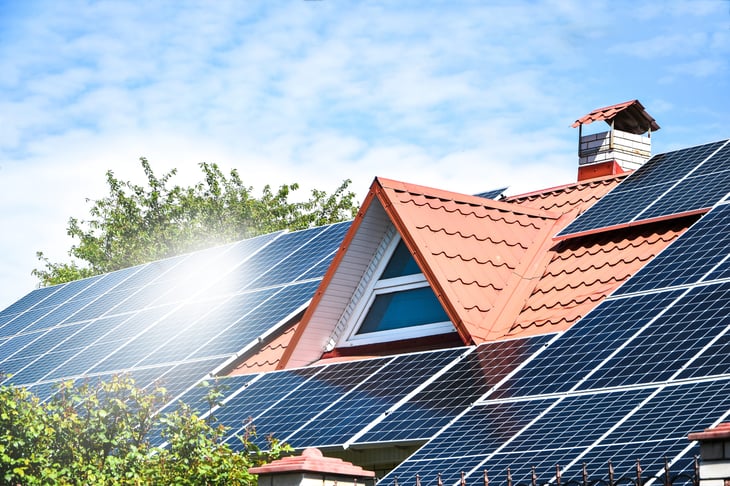
Utility costs fluctuate dramatically during economic instability. Backup power options provide both practical security and financial insulation.
Consider rechargeable power systems, portable solar generators, and high-efficiency lighting. These solutions reduce vulnerability to energy market volatility while keeping critical devices operational during service interruptions.
Even modest renewable capacity offers significant benefits – apartment dwellers can use compact solar chargers for essential electronics. These investments often reduce routine utility expenses, creating immediate savings alongside long-term security.
Pro Tip: While guarding against rising energy costs, don’t overlook other key household expenses like home insurance. Compare quotes from top providers to ensure you’re not overpaying.
9. Dividend-focused financial instruments

When markets turn unpredictable, steady income becomes key. Companies with strong dividend histories often continue payouts even in tough times, offering returns regardless of share price.
Sectors like utilities, consumer staples, and some real estate typically deliver more reliable dividends during downturns.
Unlike growth stocks, dividend investments generate ongoing cash flow — providing liquidity when other assets lose value or are hard to sell.
Pro Tip: Expert guidance makes navigating complex investments during market volatility more manageable. If you have over $100,000 in savings, SmartAsset offers a free service that matches you with a vetted fiduciary advisor in under 5 minutes.
10. Pet care supplies

Companion animal expenses continue climbing rapidly, with households directing over $45 billion annually toward pet nutrition – reflecting a 17.6% single-year increase. Premium pet formulations remain particularly susceptible to supply disruptions and price fluctuations.
Maintaining modest reserves of animal nutrition, medications and care supplies protects against both availability challenges and cost increases.
Properly stored pet products maintain effectiveness for extended periods, allowing strategic acquisition during promotional pricing without concerns about rapid deterioration.
Pro Tip: Stocking up on pet essentials is smart — but don’t forget to protect your wallet from unexpected vet bills. Emergencies can drain savings fast. Safeguard your finances (and your furry friends) with Pet Insurance.
11. Defensive stock positions

Financial protection goes beyond physical prep. Some sectors — like healthcare, utilities, and consumer staples — tend to hold up well during downturns.
These essential services remain in demand regardless of economic shifts, and history shows they often outperform growth stocks in tough markets.
Consider shifting part of your portfolio to these stable sectors before broader market corrections take hold.
Pro Tip: For savings diversification beyond traditional defensive stocks, consider alternative assets that perform independently of conventional markets. One modern option: real estate and venture capital. Companies like Fundrise let you start investing with as little as $10.
Cultivating resilience beyond stockpiling

Economic preparedness goes beyond stockpiling. Resilient households pair smart provisioning with practical skills like home maintenance, cooking, and financial management to stretch resources further.
Combining supplies with knowledge builds lasting security. As Moneywise notes, the most valuable preparation may be developing adaptable thinking to handle whatever economic challenges arise.
Pro Tip: Building everyday resilience is important, but long-term financial security depends on consistent retirement planning — especially in uncertain times. Waiting to save can cost you. Start now with matched contributions and the power of compounding interest. Open a SoFi IRA and set yourself up for a more comfortable retirement. Get started today.

Add a Comment