


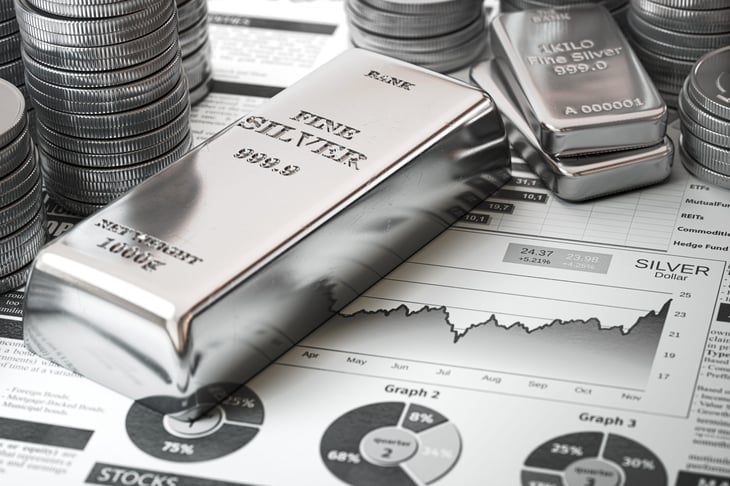
Silver prices have been climbing, and some experts think they could go much higher. Keith Neumeyer, who runs First Majestic Silver, has repeatedly said he believes silver could reach $100 per troy ounce.
In October 2024, the price reached a 12-year high, just shy of $35 an ounce, considerably lower than $100. However, Neumeyer and others point to ongoing supply shortages, growing industrial needs, and silver’s low price compared to gold.
If silver were to shoot up to $100, about four times higher than recent prices, it would shake up the economy in several important ways. Understanding these potential changes can help you make smarter money moves now.
Pro Tip: If you are one of many Americans who collectively have $30 trillion in untapped home equity, you could unlock up to $600K without monthly payments or personal liability. Most can’t access home equity without taking on debt. Hometap could be the key to leveraging your equity.
1. Higher prices everywhere

When silver prices skyrocket, it’s often a sign that inflation is getting worse. Since silver is used in many everyday products, from electronics to medical equipment, these items would become more expensive.
When companies have to pay more for the materials they use, they usually pass those costs on to consumers. This could increase the cost of everything from smartphones to solar panels.
During inflationary periods, it becomes even more crucial to make sure your savings work harder for you. Having emergency funds in high-yield accounts can provide some protection against rising prices.
Pro Tip: Earn as much as possible on your emergency savings. For example, SoFi Checking is offering 3.8% interest, plus a potential $300 signup bonus. (May change without notice.)
2. Tech and green energy price shock

Silver is a key ingredient in electric cars and solar panels. If silver prices triple or quadruple, companies like Tesla and solar panel makers would face much higher costs.
Companies could delay rolling out new technologies as they struggle with tighter profit margins. Stock prices for tech companies heavily dependent on silver would likely fall as investors reassess their growth prospects under these new cost pressures.
In times of market volatility and potential tech sector weakness, many investors look to diversify into assets that traditionally hold value during economic uncertainty and inflation.
Pro Tip: Gold can offer a strong defense against economic downturns. If you’re concerned about inflation or market shocks, consider safeguarding your savings by opening a gold IRA.
3. Mining stocks could surge
While many sectors would struggle with expensive silver, mining companies would celebrate. Businesses that extract silver from the ground, like Pan American Silver and Hecla Mining, would see their profits explode since their costs wouldn’t rise nearly as much as the price of silver.
Smaller mining companies might see even bigger gains as investors rush to get in on the action. Silver ETFs (exchange-traded funds) like SIL and SLV would also likely deliver impressive returns.
Consider investing a small portion of your money (around 5-10%) in silver mining stocks or ETFs. Remember to set stop-loss orders to protect your gains if prices become volatile.
Smart investors know that true portfolio strength comes from diversification beyond just one sector, even one as potentially lucrative as silver mining.
Pro Tip: One modern way to diversify is with real estate and venture capital. Companies like Fundrise offer investments as small as $10. Note: This is a testimonial in partnership with Fundrise. We earn a commission from partner links on moneytalksnews.com. All opinions are our own.
4. Dollar troubles ahead
When silver prices surge, the U.S. dollar often weakens. This happens because investors move money into “hard assets” like precious metals when they worry about paper currency losing value.
A weaker dollar would make imported goods more expensive (think foreign cars, electronics, and oil), which means you’d pay more at stores and gas pumps. On the flip side, American-made products would become cheaper for international buyers.
Consider adding some international investments to your portfolio to prepare for this possibility.
Thinking outside the traditional investment box can provide additional protection against dollar weakness.
Pro Tip: This might be a good time to consider an investment in wine and whiskey. Vinovest can get you started with as little as $1,000.
5. Goodbye silver jewelry and coins

At $100 per ounce, most people would stop buying silver jewelry, coins, and bars because they’d simply be too expensive. Companies like Tiffany & Co. that sell silver products could see those sales plummet as customers turn to alternatives like stainless steel.
A drop in consumer demand would create an unusual situation where industrial users desperately need silver while traditional buyers disappear from the market.
For savings, you might want to avoid retailers that depend heavily on silver sales. During major market shifts like this, many people look for ways to tap into their existing assets rather than making new purchases. Home equity becomes an increasingly valuable resource when other markets are in flux.
Pro Tip: If you are struggling with payments in retirement, a reverse mortgage can turn your home equity into tax-free cash for seniors 62+, no house sale required. Use the funds for medical bills, home repairs, or even that dream vacation—without monthly payments!
How to weather the silver storm

The financial landscape could change dramatically if silver hits $100 per troy ounce.
To prepare, don’t put all your eggs in one basket. Spread your money across different investments, stocks, bonds, real estate, and maybe some precious metals, to reduce your risk.
Keep some cash available for opportunities that appear when markets get choppy. The best deals often show up when others are panicking.
Pay attention to the economy. Watch for news about inflation, interest rates, and manufacturing demand for silver. With so much market uncertainty, many investors are turning to professional guidance to navigate these complex scenarios.
Pro Tip: If you have over $150,000 in investments, consider talking to a professional financial advisor. WiserAdvisor is a free service that will match you with a pro in your area.

Add a Comment