



The desk lunch has become a workplace norm, with more than 75% non-remote workers in companies regularly eating lunch at their desk, per Opinium Research.
While it might seem like a productivity hack to power through emails between bites of salad, this habit could be undermining your wellbeing and work performance in surprising ways.
Taking an actual break for lunch isn’t just a luxury—it’s a necessity for maintaining both your short-term productivity and long-term health. Here’s why you should reconsider that desk lunch habit.
Just as preventive health screenings help catch issues before they become serious problems, taking proper lunch breaks prevents workplace burnout before it starts.
Pro Tip: Life Line Screening reveals hidden risks so you can act early. Book a screening today and have peace of mind.
1. Your productivity actually suffers

Contrary to what you might think, working through lunch doesn’t make you more productive. Research shows that performance declines significantly without regular breaks. When you continuously work without pausing, decision fatigue sets in, and your ability to focus diminishes.
A proper lunch break resets your mental energy. Stepping away from your workspace for even 30 minutes gives your brain the downtime it needs to process information and recharge, leading to better afternoon performance and fewer errors.
This same principle of strategic pauses applies to other areas of life too—including managing your financial future, where occasional consultations with experts can improve your long-term outcomes.
Pro Tip: If you’ve got at least $100,000 in investments, check out a free service called SmartAsset. You fill out a short questionnaire and instantly get matched with up to three vetted financial advisors in your area.
2. Your desk is disgustingly dirty

Your workspace harbors more bacteria than you’d care to know. Studies have found the average office desk contains 400 times more bacteria than a toilet seat. Crumbs, food particles, and condensation from drinks create perfect breeding grounds for germs.
When you eat at your desk, you’re not just exposing your food to these microbes, you’re also contributing to the problem. Food residue accumulates in keyboard crevices and on surfaces, attracting pests and creating unsanitary conditions that can affect your health and the cleanliness of the entire office.
Stay attentive to other aspects of your health, including sensory wellness that affects your daily interactions and quality of life.
Pro Tip: The FDA has a new rule allowing people with hearing loss to buy top hearing aids without a prescription.
3. You miss valuable networking opportunities

Lunch breaks provide natural opportunities for relationship building that can benefit your career. Casual conversations in the break room or at nearby cafés foster connections with colleagues from different departments that wouldn’t happen otherwise.
These informal interactions often lead to collaboration, mentorship, and even friendships that enhance your work experience. Many professionals report that their most valuable workplace relationships developed during lunch conversations, not formal meetings or projects.
Staying connected with a affordable tools on the go, including your cell phone service.
Pro Tip: Paying more than $15 a month for your cell service? Stop that. Click here to save a bundle.
4. Your posture pays the price

Remaining in the same seated position while eating only compounds the physical strain of desk work. The human body isn’t designed for prolonged sitting, and hunching over your keyboard while eating further stresses your neck, shoulders, and back.
Movement during lunch breaks—even just walking to a cafeteria or nearby park—provides crucial physical relief that can prevent repetitive strain injuries and reduce musculoskeletal problems.
Simply changing positions and environments gives your body a much-needed reset. It’s best to address small issues before they become expensive problems requiring major repairs.
Pro Tip: Repair costs are skyrocketing. If you’re concerned about coming up with thousands for a car repair, consider the cost/benefit of an extended car warranty.
5. You’re training your brain to ignore hunger cues

Distracted eating—scrolling through emails or working on documents while eating—prevents you from recognizing when you’re full. This disconnection from natural hunger signals often leads to overeating or poor food choices.
Mindful eating, where you pay attention to your food and the experience of eating, allows your brain to register satisfaction appropriately. This awareness helps maintain better energy levels throughout the day and supports healthier eating habits overall.
Flexible work arrangements can also provide support by giving you more control over when and how you work.
Pro Tip: If you’re looking for part-time or work-from-home jobs, FlexJobs lets you browse and apply to verified jobs around the corner and around the world.
6. Work-life boundaries become nonexistent
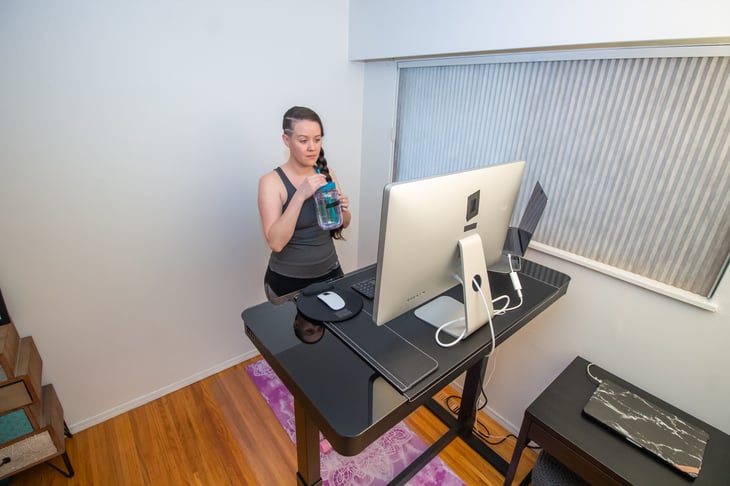
When lunch becomes just another work period, you erode the boundaries between personal time and professional obligations. This subtle boundary violation sets a precedent that can expand to other areas of your life.
Taking a proper lunch break establishes a healthy precedent that your time matters. It signals to both yourself and others that continuous work without breaks isn’t your standard operating procedure.
This boundary-setting skill becomes increasingly important in our always-connected work culture. You can use personal time at lunch to consider your savings plan, especially during these times of market turbulence.
Pro Tip: Gold is a time-tested way to add stability to your finances. Open a gold IRA and help protect your savings from inflation, volatility, and future uncertainty.
7. Your creative potential remains untapped

Some of your best ideas happen when you’re not actively working on a problem. The psychological phenomenon known as the “incubation effect” explains why stepping away from work often leads to breakthrough thinking.
Walking outside, chatting with friends, or simply enjoying a change of scenery activates different neural pathways. This mental shift allows your subconscious to work on problems in the background, often resulting in the “aha” moments that fuel innovation and creative problem-solving.
Apply that same creativity to your finances by considering new ways to access your home equity.
Pro Tip: Americans have $30 trillion in untapped home equity, yet most can’t access it without taking on debt. Hometap lets you unlock up to $600K of your wealth without monthly payments or personal liability.
Reclaim your lunch: Small steps toward better workdays

Start small by designating just two days a week as “no desk lunch” days. Pack a proper lunch or plan to meet a colleague at a nearby spot. Block this time on your calendar as you would any important meeting, making it clear you’re unavailable during this period.
Over time, you might find these lunch breaks become the most valuable part of your workday—refreshing your mind, nurturing your relationships, and protecting your physical wellbeing.
Your emails will still be there when you return, but you’ll be better equipped to handle them with the renewed energy and perspective that comes from a proper break.
This approach to making beneficial changes in how you use your resources applies to many areas of life, including how you leverage your assets in retirement.
Pro Tip: Struggling with payments in retirement? A reverse mortgage can turn your home equity into tax-free cash for seniors 62+, no house sale required. Use the funds for medical bills, home repairs, or even that dream vacation—without monthly payments!

Add a Comment