


Editor's Note: This story originally appeared on Boldin.
The best places to retire in the world look different in 2026 than they did two years ago. Rankings have shifted.
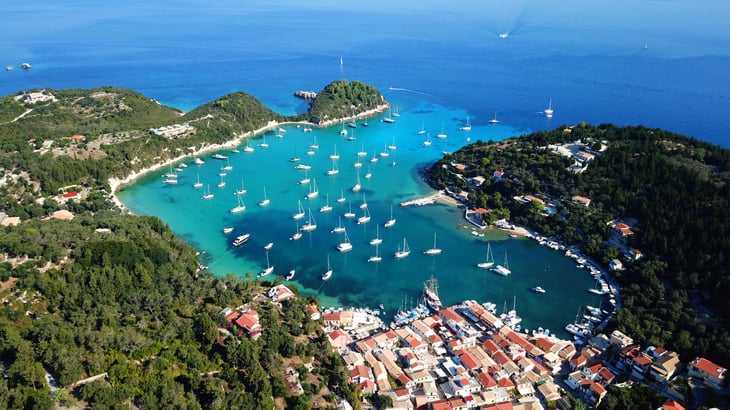
Greece climbed to the top of the global retirement index for the first time in 35 years. Portugal’s visa rules changed in ways that redirected demand across Southern Europe. And the number of Americans planning to retire abroad hit levels polling hasn’t captured before.
This guide covers what changed and where the rankings stand, what destinations cost in real terms, and six under-the-radar spots that are worth a close look.
More Americans Are Retiring Abroad Than Ever Before

In 2025, the U.S. recorded net negative migration for the first time since the Great Depression, according to the Wall Street Journal. A 2025 Harris Poll found that 44% of U.S. adults have seriously considered retiring abroad. Some 14% are planning to do so within two years.
The motivations are consistent across surveys: lower cost of living, better healthcare value, and the ability to retire earlier than the same savings would allow at home. Stretch $800,000 in rural Portugal instead of suburban California, and the retirement math changes in meaningful ways.
How the Best Places in the World to Retire Are Determined

Two organizations produce the most-cited global retirement indexes each year.
International Living scores countries on healthcare, cost of living, climate, infrastructure, visa access, and real-world expat experience. Their 2026 Global Retirement Index placed Greece at #1 for the first time in the index’s 35-year history. The full 2026 rankings are available at internationalliving.com.
Live and Invest Overseas rates 12 categories: climate, cost of living, English spoken, entertainment, environmental quality, expat community size, healthcare, infrastructure, real estate, residency options, safety, and taxes.
Both indexes draw on in-country reporting. Use them as a starting point. Then verify visa requirements and current healthcare specifics with government sources before making any decisions.
Greece Is the No. 1 Place to Retire in the World for 2026

International Living’s 2026 Global Retirement Index ranked Greece first. It’s the country’s first No. 1 ranking in the history of the index, up from 7th place the year before. Greece scored 90.1, with marks for affordable private healthcare, a Mediterranean cost of living, accessible visa options, and climate.
Housing in Greece can run 60% to 75% less than comparable U.S. properties. A couple can live well across much of the country for 1,800 euros to 2,500 euros per month.
The Golden Visa program remains open through real estate investment. Standard residential purchases start at 400,000 euros across most of Greece.
In high-demand areas — Athens, Thessaloniki, Mykonos, Santorini, and islands with populations above 3,100 — the threshold is 800,000 euros. The 250,000-euro entry point applies only to conversion of commercial properties into residential use, or restoration of listed heritage buildings.
Portugal Remains Popular, but Its Rules Have Changed

Over 20,000 U.S. citizens already live in Portugal. The country offers a range of terrain, a strong healthcare system, and an established expat community in Lisbon, Porto, and the Algarve.
Two things have changed in recent years. The real estate pathway was removed from Portugal’s Golden Visa program. And Portugal extended its citizenship residency requirement from five to 10 years, signed into law in May 2026. Those shifts have sent retirees toward Spain, Italy, and Greece instead.
The D7 Passive Income Visa remains open to retirees who can show sufficient monthly income. Braga, in Portugal’s northwest, is also worth a close look. It runs 25 to 30% cheaper than Lisbon, with two-bedroom apartments from 150,000 euros.
Learn more about current visa pathways at Expatica’s Portugal retirement guide.
Italy’s Flat 7% Tax Rate Is Attracting American Retirees

Qualifying small towns in southern Italy, those with fewer than 30,000 residents, allow retirees to pay a flat 7% annual tax rate on all foreign-sourced income. That covers Social Security, pensions, and investment income.
The benefit runs for up to ten years. Applying requires registering with Italy’s tax authority, the Agenzia delle Entrate, and meeting residency requirements.
About 15,465 American Social Security recipients already live in Italy. According to Get Golden Visa, Golden Visa applications from Americans jumped 27% in Q1 2026. Italy is now the fourth most sought-after European retirement destination for U.S. citizens.
The Abruzzo coast offers sea-view rentals from 800 euros a month. That’s 50% to 60% below comparable Tuscany prices. The 1-euro Sicilian homes that made headlines a few years back are real, but each one carries substantial renovation costs before it’s livable.
Spain Is Where Portugal Demand Is Going
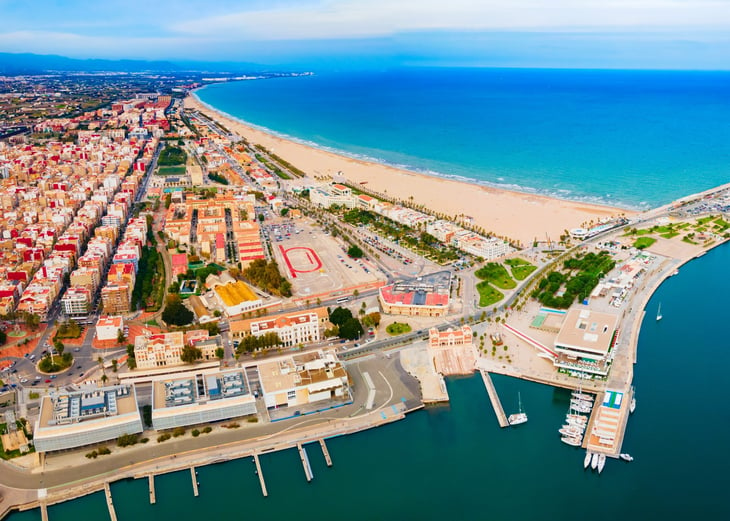
Retirees who planned on Portugal are landing in Spain instead. Popular destinations for American expats include Málaga, Alicante, Valencia, and Barcelona. Each has a different cost profile.
Spain’s Non-Lucrative Visa is the standard retiree pathway. It requires proof of passive income, around 2,160 euros per month for a single applicant, plus private health insurance.
The application goes through a Spanish consulate in the U.S. A couple can live in most Spanish cities for $2,500 to $3,500 a month. Coastal resort towns sit at the top of that range. Inland cities run lower.
Mexico Is the Closest and Cheapest Option for Most Americans

More Americans retire in Mexico than anywhere else outside the U.S. Proximity matters. So does the healthcare access in major expat hubs and the well-established Temporary Resident Visa process.
That visa requires proof of income, around $1,620 per month. It converts to Permanent Residency after four years. Popular destinations include San Miguel de Allende, Puerto Vallarta, Mérida, and Lake Chapala.
A couple can live well in most Mexican cities for $1,500 to $2,500 a month. Private specialists run $30 to $60 per visit without insurance.
Learn more at Mexperience’s guide to retiring in Mexico.
Panama Offers Retiree-Specific Benefits No Other Country Matches
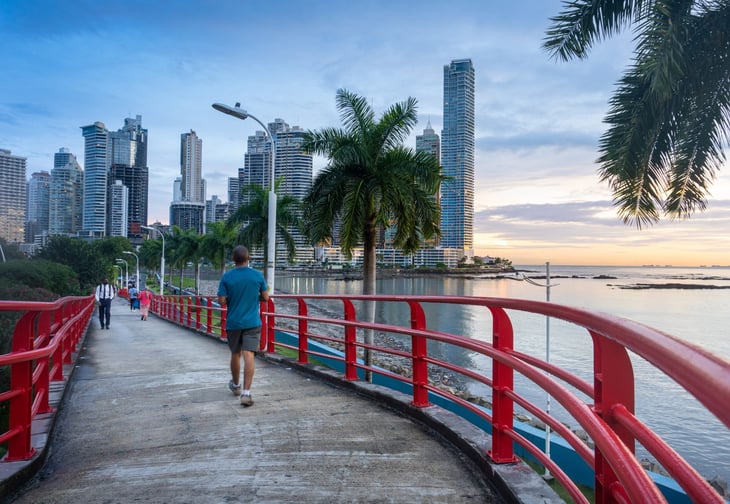
Panama’s Pensionado visa was built for retirees. It requires $1,000 per month in pension or retirement income, one of the lowest income thresholds of any formal retirement visa program in the world.
The benefits are legally mandated: 20% to 50% discounts on hotel stays, airlines, restaurants, healthcare, and entertainment. These are permanent statutory benefits, not promotional offers.
Panama City has modern infrastructure, English is common in business settings, and the country uses the U.S. dollar. A couple can retire there for $2,000 to $2,500 per month.
Learn more from International Living’s Panama guide.
Ecuador, Costa Rica, and Peru: Latin America’s Other Strong Contenders
Ecuador is one of the most affordable options in the region. It uses the U.S. dollar, offers a range of climates depending on elevation, and has a healthcare system that ranks well in Latin America.
Budget around $1,500 to $2,000 per month as a couple. U.S. News has a detailed guide to retiring in Ecuador.
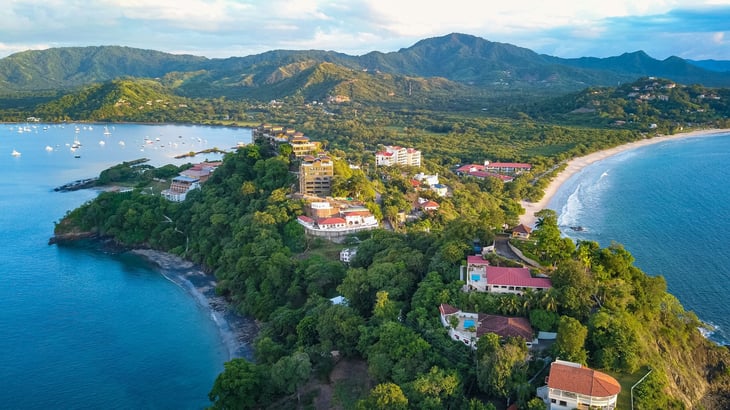
Costa Rica costs more, closer to $2,500 to $3,000 per month for a couple, but delivers strong quality of life, a stable democracy, and an established expat network. The infrastructure is solid.
Peru is the most affordable of the three. Both Cusco and Lima attract retirees. A couple can live on $1,000 to $1,500 per month.
Southeast Asia: Vietnam, Thailand, and the Philippines for Adventurous Retirees

Southeast Asia offers some of the lowest costs available to retirees anywhere. Vietnam and the Philippines use U.S. dollars in many daily transactions. Expect $1,000 to $1,500 per month as a couple in most cities.
Bangkok and Chiang Mai have Thailand’s strongest healthcare infrastructure, and the country has a long-established expat community. The Non-Immigrant O-A retirement visa is the standard pathway.
Visa rules in this region are more complex than in Europe or Latin America. Most countries don’t have a direct retirement visa. Verify current requirements with a local immigration attorney before committing to anything.
6 Hidden-Gem Destinations Gaining Ground in 2026

The following six destinations offer an optimal balance of affordable living costs and good quality of life, backed by verified pathways to residency. They don’t top the major indexes, but each has something concrete to offer retirees in 2026.
Braga, Portugal

Monthly cost (couple): 1,500–2,100 euros
Why it’s worth watching: 25%–30% cheaper than Lisbon or the Algarve. Legally accessible via the D7 Visa, requiring a verified, recurring passive income of at least 920 euros/month for the main applicant (+50% for a spouse, totaling 1,380 euros/month for a couple).
A retirement drawing 24,000 euros a year covers a comfortable, culturally active life. Hospital de Braga is well-regarded, English-speaking medical care is available, and the city has strong university and tech infrastructure.
The D7 visa is the access point. Income must be entirely passive: pensions, dividends, or rental yield. Active business income or remote corporate work disqualifies applicants from this track.
Abruzzo Coast, Italy
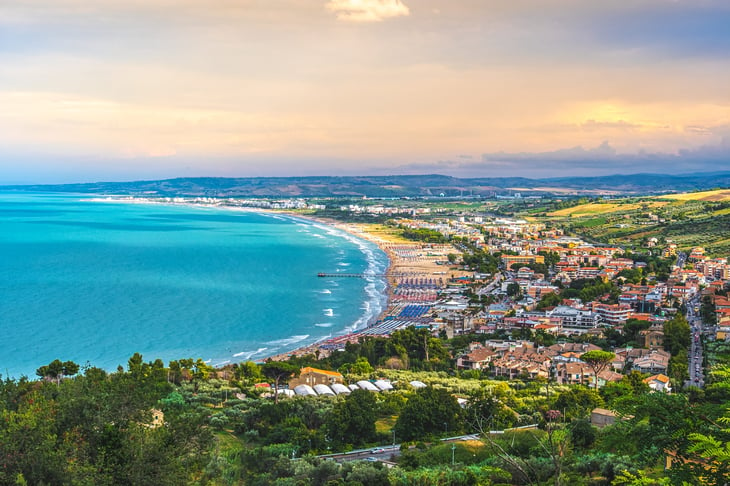
Monthly cost (couple): 1,400–1,900 euros
Why it’s worth watching: Adriatic sea views at 50%–60% cheaper than Tuscany, Florence, or along the Amalfi coast. Accessible via the Elective Residence Visa (about 38,000 euros/year passive income for a couple). Moving to towns with fewer than 30,000 residents (raised from 20,000 via Law 34/2026 on April 7, 2026) unlocks a 7% flat tax on all foreign-source income for up to 10 years.
A recent policy change expanded Italy’s 7% flat-tax incentive to towns up to 30,000 residents, opening up larger, better-connected coastal hubs. That rate covers all foreign-source income for up to ten years: 401(k) drawdowns, pensions, and investment income all qualify.
The Elective Residence Visa requires documented passive income. Consulates want a recurring, stable income stream. Lump-sum capital gains and irregular market distributions don’t count as guaranteed income. Investment income from dividends, annuities, interest, trusts, and investment funds is accepted. Consulates want documented, recurring income streams.
Galicia (Vigo/Ourense), Spain

Monthly cost (couple): 1,600–2,200 euros
Why it’s worth watching: Real estate is up to 40% cheaper than Madrid. Accessible via the Non-Lucrative Visa (NLV), requiring a guaranteed 28,800 euros/year for the main applicant and 7,200 euros for a spouse.
Note: Consulates heavily favor applicants who also show significant lump-sum savings buffers.
Galicia’s real estate averages around 1,600 euros per square meter, compared to 3,400 euros or more in Madrid or Barcelona. The region has low crime rates, a strong culinary culture, and a public-private healthcare system with good access for foreign residents.
Entry is through Spain’s Non-Lucrative Visa, which requires roughly 36,000 euros per year for a couple. Spanish consulates have discretion in how they evaluate applications. Showing substantial liquid savings above the minimum improves approval odds.
Chitré/Las Tablas, Panama

Monthly cost (couple): $1,400–$1,900
Why it’s worth watching: Safe, low-cost coastal lifestyle. Accessible via the Pensionado Visa, requiring a lifetime pension of $1,000/month (+$250 for a spouse) and granting massive senior discounts.
Note: The income threshold drops to $750/month if you purchase local real estate worth $100,000 or more.
The Azuero Peninsula runs well below Panama City in cost and pace. Panama uses the U.S. dollar, removing currency exposure. The Pensionado program comes with legally mandated senior discounts: 25% off restaurant meals, 30% off public transport, and up to 20% off medical consultations.
The baseline income requirement is $1,000 per month in qualifying retirement income. Applicants who purchase local real estate worth $100,000 or more see that threshold drop to $750 per month.
Chania (Crete), Greece

Monthly cost (couple): 1,500–2,100 euros
Why it’s worth watching: Affordable Mediterranean living.
Chania costs less than Greece’s high-tourism islands. The harbor is Venetian, winters are mild, and daily costs reflect a working city rather than a resort economy. Access is through Greece’s Financially Independent Person visa, which requires 3,500 euros per month net for a single applicant, plus 20% for a spouse.
The FIP visa and Greece’s 7% flat tax on foreign pension income are separate mechanisms. Residency comes first through the FIP. The flat-tax election is filed separately and carries a 500 euro annual fee.
Pereira, Colombia

Monthly cost (couple): $1,300–$1,800 euros
Why it’s worth watching: The crown jewel of the Coffee Axis. Highly accessible via the M-11 Pensioner Visa, which requires a guaranteed lifetime pension of three times the minimum wage (fixed at COP 5,252,715/month for 2026, or roughly $1,400/month).
Pereira has less expat saturation and lower rent pressure than Medellín. A couple can maintain a high standard of living for under $2,000 per month. The city sits in the Coffee Axis, with a temperate climate, a walkable layout, and internationally accredited medical facilities.
The M-11 Pensioner Visa is pegged to Colombia’s minimum wage, currently around $1,400 per month. That threshold shifts with USD/COP fluctuations, so it’s worth building in a buffer when projecting long-term cash flow.
What Retiring Abroad Actually Costs: A Country-by-Country Comparison

Retiring costs vary by country and lifestyle. Use them as planning anchors.
| Country | Monthly Budget (couple) | Primary Visa | Healthcare Quality | English Widely Spoken? |
|---|---|---|---|---|
| Greece | 1,800–3,000 euros | Financially Independent Person Visa / Golden Visa (min. 400,000–800,000 euros in real estate) | Strong private | Moderate |
| Portugal | 2,000–2,800 euros | D7 Passive Income Visa | Strong | Yes (cities) |
| Italy | 1,800–3,000 euros | Elective Residency Visa | Strong | Limited |
| Spain | 2,200–3,200 euros | Non-Lucrative Visa | Strong | Limited |
| Mexico | $2,000–$2,500 | Temporary Resident Visa | Good (private) | Moderate |
| Panama | $2,500–$4,500 | Pensionado Visa | Very Good | Moderate |
| Ecuador | $1,500–$2,000 | Pensioner/Rentier Visa | Good | Limited |
| Vietnam | $1,500–$2,500 | E-Visa (90-day, renewable) | Moderate | Limited |
| Thailand | $1,200–$2,000 | Non-Immigrant O-A | Strong (Bangkok) | Moderate |
Sources: International Living 2026, Expatica, Numbeo.

The Financial Impact of Moving Abroad

Moving abroad reshapes most of the assumptions in a retirement plan. Housing costs shift. Healthcare costs shift. Tax treatment of your income changes depending on whether the U.S. has a tax treaty with the destination country. Currency risk enters the picture.
Running those variables in a spreadsheet misses how they interact with each other. When to claim Social Security affects your tax bracket. Your tax bracket shapes how much Roth conversion makes sense. Healthcare costs affect your marginal rates. These aren’t independent levers. They’re a chain, and the move triggers all of them at once.
The Boldin Planner models these interactions. Sell your house, cut your monthly spend by 40%, and move your retirement date forward three years. You can see how that ripples through tax scenarios, Social Security timing, and withdrawal sequencing before you commit to anything.
The math works out more often than you might assume. Running it before you go is how you know.

Add a Comment