


Editor's Note: This story originally appeared on LawnStarter.
Sometimes, the grass on your lawn is thinner than the hair on your grandpa’s head. Mowing, dethatching, and fertilizing are just a few of our many tips on how to thicken your lawn.
Routine maintenance is the key to improving overall lawn health, strength, and beauty.
Thinning grass is usually a sign of a lawn in distress. Typically, your lawn is thin because it’s missing out on something it needs, like nutrients, sunlight, or water.
Give it the care it deserves, and you’ll soon have a thicker and healthier lawn.
1. Banish Weeds
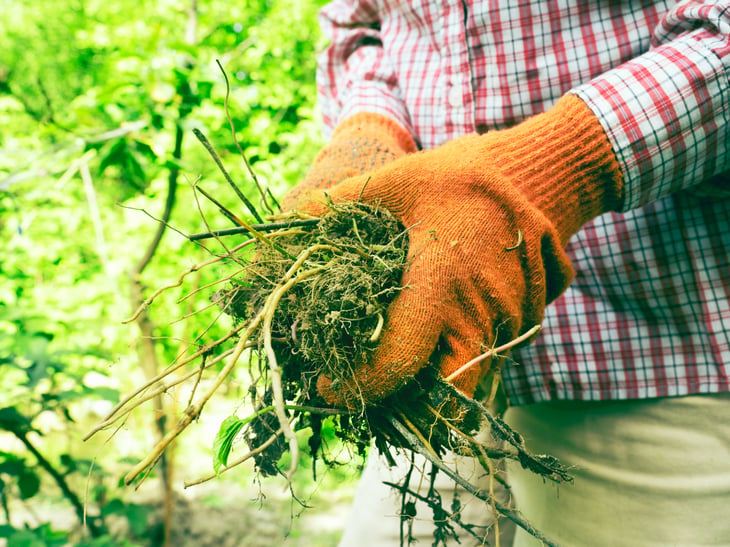
Weeds hurt the growth of your lawn by competing with grass for sun, water, space, and nutrients. If you have weeds and apply fertilizer, the weeds are likely to gobble up the nutrients intended for your grass. This competition impedes grass growth, leading to a thin lawn.
Not only will weeds steal resources from your turf, but these aggressive spreaders can also choke out the turf at a rapid pace. Let the weeds run free, and your turfgrass will thin out in no time.
You can get rid of weeds by either pulling them out by hand or applying herbicide.
2. Perfect Your Mowing Technique

Proper mowing techniques can help maintain the lawn’s health and thickness. When you mow your lawn, the grass is stimulated to grow, roots spread deeper into the soil, and you get a thicker lawn.
Lawns that are never mowed don’t receive this boost and simply grow tall and unruly, eventually forming clumps.
Here are some simple mowing tips:
- Mow within your turf type’s recommended range. Mowing your lawn too short can place unnecessary stress on the grass. This makes it harder for the grass to photosynthesize.
- Avoid removing more than one-third of the grass height during a single mow.
- Use a sharp mower blade to provide a clean cut because dull blades can cause the grass to tear.
3. Test Your Soil

Performing a soil test can identify an imbalanced pH level or nutrient deficiency in the lawn’s soil. A soil test indicates if your lawn needs fertilizer, lime, or other interventions to boost thickness.
With this knowledge, you can improve your lawn’s growth and keep it green.
4. Dethatch Your Lawn
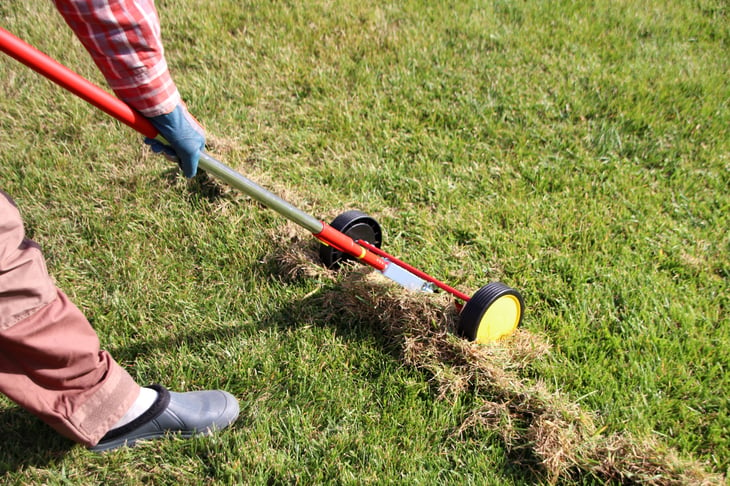
Thatch is a layer of dead plant material that can build up between the soil and grass blades, blocking essential nutrients from reaching the grass roots, and causing your lawn to thin. Dethatching involves removing this layer to help your lawn breathe and grow thicker.
Here are some simple dethatching tips:
- A thatch layer less than one-half an inch actually has its benefits. But once the layer exceeds one-half inch, it’s time to remove it.
- For warm-season grasses, dethatch in late spring or early summer. For cool-season grasses, dethatch in early spring or fall.
- Make sure the soil is moist but not wet, and remove any piles of thatch that collect on your lawn.
- Avoid dethatching your lawn when it is dormant, stressed, experiencing extreme heat, or growing seedlings.
5. Fertilize Your Lawn

Your lawn needs the right nutrients to be healthy. Applying fertilizer during your grass type’s growing season helps ensure your lawn gets the required nutrients to grow thick and strong.
For warm-season grasses, apply fertilizer in late spring or early summer. For cool-season grasses, apply fertilizer in early spring or fall.

6. Aerate Annually
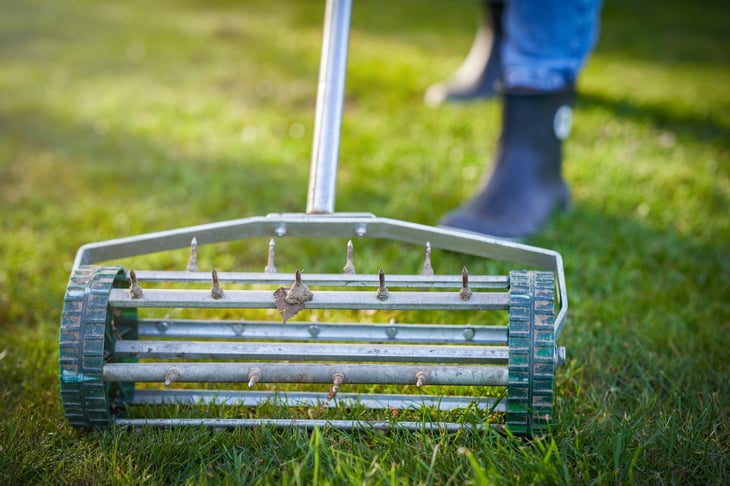
If your lawn is thinning or wilting, this could mean the soil is compacted. Soil compaction is a common problem that develops over time, stopping sunlight, water, and nutrients from reaching your grass roots. Core aeration is the best method of alleviating soil compaction.
Core aeration involves using hollow tines to perforate your lawn and remove plugs of soil. This loosens the soil, giving your lawn access to air and nutrients. This makes your roots healthier and encourages thick lawn grass by allowing new grass to grow. For most homeowners, aerating annually is enough to see beneficial results.
Aerate your cool-season turf in early spring or fall. If you grow warm-season grass, aerate in late spring or early summer. If you need to dethatch and aerate at the same time, remove thatch before you aerate.
7. Overseed Your Lawn
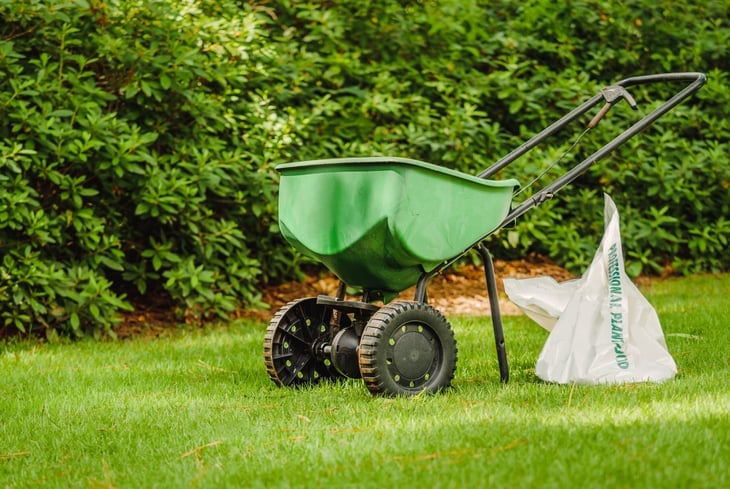
Overseeding is a useful way to fill in bare spots on your lawn and make it thicker. Rather than tearing out your lawn and starting from scratch, overseeding involves adding grass seed to your current lawn. This simple technique results in a lawn that is thicker and more lush.
Here are some simple overseeding tips:
- Overseed warm-season grass in late spring or early summer. Cool-season grass, however, should be overseeded in early spring or fall.
- You can also overseed your warm-season grass with cool-season ryegrass in the fall to keep your lawn green and lush during the winter.
- Aerate and dethatch your lawn before overseeding. For overseeding to work, the seeds need to be able to reach the soil.
For step-by-step instructions, visit our article “How to Overseed a Lawn in 8 Simple Steps.”
8. Minimize Shade

Many grass types will not grow well in areas that are too shady. This is because many grass varieties need partial or direct sunlight to do well.
If your thin lawn is bathed in shade, it may be time to trim your trees. Doing this minimizes the shade cast by your trees and lets your grass get more sun.
9. Water Wisely
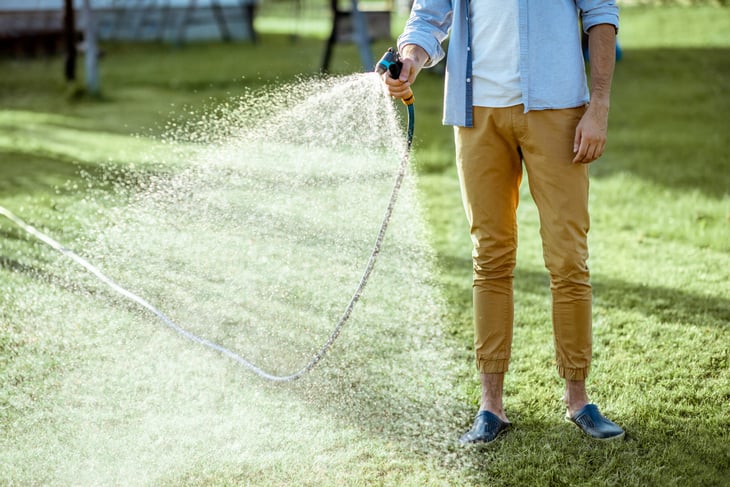
Both over- and under-watering can cause your grass to thin. Give your lawn a big drink when you water but do so infrequently. Deep but infrequent watering is good for preventing both over- and under-watering.
Signs of overwatering:
- Soil feels soggy or spongy underfoot
- Excessive growth of weeds or fungi
- Water runoff
Signs of under-watering:
- Footprints remain visible on the lawn
- Grass is dry and crispy
- Soil is dry or cracked
10. Protect Your Lawn From Pests and Diseases

Many insects, fungi, and bacteria harm lawns. Both fungal and bacterial diseases, like dollar spot and large patch, can discolor and wilt areas of your lawn. Insects like white grubs, chinch bugs, and sod webworms cause wilting, uneven patches, and discoloration.
Dethatching, aerating, and watering your lawn correctly can prevent pests and diseases. Use pesticides or beneficial nematodes to eliminate insect infestations.
Not sure what pest is causing your lawn to thin? Visit our guide, “11 Summer Lawn Pests and How to Get Rid of Them.”

Add a Comment