


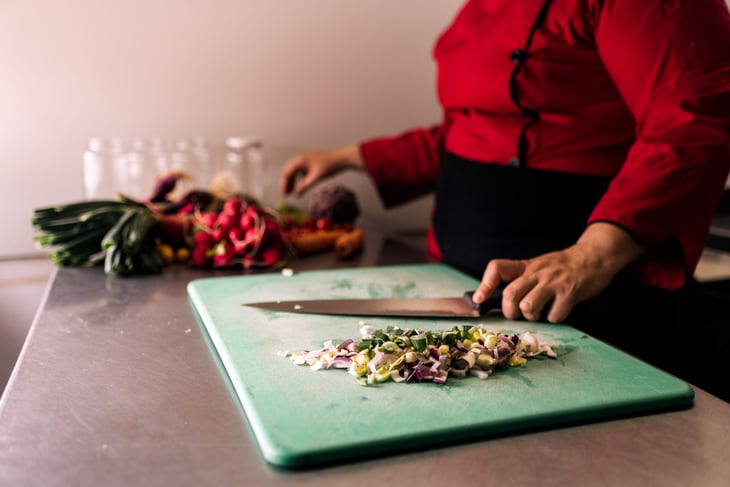
Plastic: It’s an insidious ingredient that may not be in your recipe book, but it’s in your food.
It doesn’t appear in large, visible shards. It enters your cooking as microplastics. These are small plastic pieces that typically range in size from 5 millimeters (about the size of a pencil eraser) to 1 nanometer (a tiny fraction of the width of a single human hair).
Microplastics can also degrade into nanoplastics, which are even smaller, at less than 1 micrometer.
It’s impossible to escape microplastics, as they’re found everywhere, from the soil our food grows in to the water we drink and cook with and even the air we breathe.
The effects of microplastics on the human body aren’t fully understood, yet. But researchers have found accumulations of microplastics in the tissues of testes, placentas, brains, kidneys, livers and other organs. And studies have linked microplastics to a number of health issues, such as dementia, stroke, heart disease and a higher risk of death.
Those are all good reasons to minimize your plastic consumption. Here’s what science says works.
1. Avoid bottled water

Bottled water is easy, but not necessarily the safest option with regard to microplastics.
Research published by the American Chemical Society concluded that those who drink only from plastic bottles could potentially ingest about an additional 90,000 particles of microplastics every year, compared with 4,000 particles for those who only drink tap water.
One alternative, as a recent study found, is boiling and filtering tap water that contains calcium, which could help remove almost 90% of microplastics. As calcium-containing water boils, limescale (calcium carbonate) forms, trapping the microplastic particles in crystalline structures. Limescale that builds up can be scrubbed away, and any still floating in the water can be removed by pouring it through a coffee filter.
The effect was most pronounced with hard water — water with a higher mineral content — but boiling soft water still removed about 25% of microplastics, according to researchers.
You can also use a water filter to remove microplastics from tap water. The Wirecutter compiled a list of the best filters, the first of which is the Brita Elite Filter, which can be paired with the 10-cup Brita Standard Everyday Pitcher.
2. Don’t microwave plastic containers
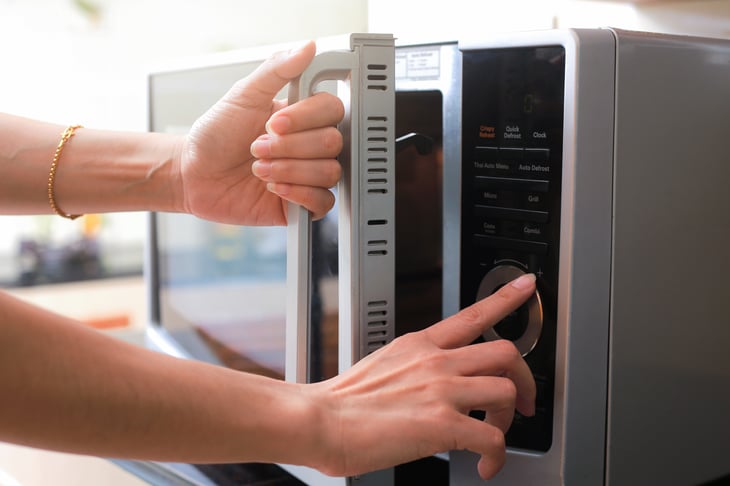
Plastic containers are convenient; however, they shouldn’t be microwaved. Not only can they release harmful chemicals into your food, but they can also release microplastics.
Research published by the American Chemical Society found that microwave heating for just three minutes caused certain containers to shed up to 4.22 million microplastic and 2.11 billion nanoplastic particles from a single square centimeter of plastic surface.
Even containers storing foods at refrigerator or room temperatures for more than six months can also release millions to billions of microplastics.
The health impact of these particles on children is still uncertain. However, the research team observed that when exposed to such particles, approximately 75% of cultured embryonic kidney cells perished within 48 hours.
Microplastics researcher Tracey Woodruff says she would never put plastic in the microwave, including her kids’ bottles, which she once put in the microwave to warm up milk. Now, if she microwaves anything, she uses ceramic or glass containers.
3. Don’t fry fish
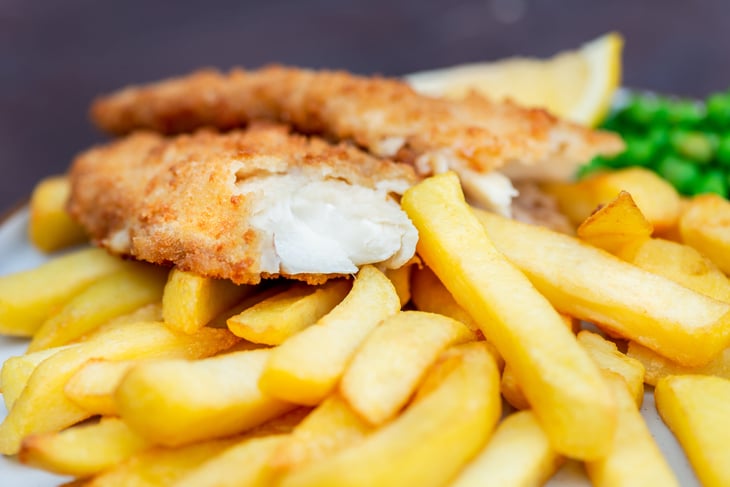
Surprise, surprise — something being tasty doesn’t mean it’s safe.
Researchers measured microplastic levels in fish before and after three different cooking methods — frying, steaming and boiling.
Frying fish significantly increased the presence of microplastics, which the researchers attribute to a breakdown of polyvinyl chloride, or PVC, during the frying process.
Steaming or boiling fish did not cause a change in microplastics levels, according to the research published by the American Chemical Society.
4. Avoid instant rice
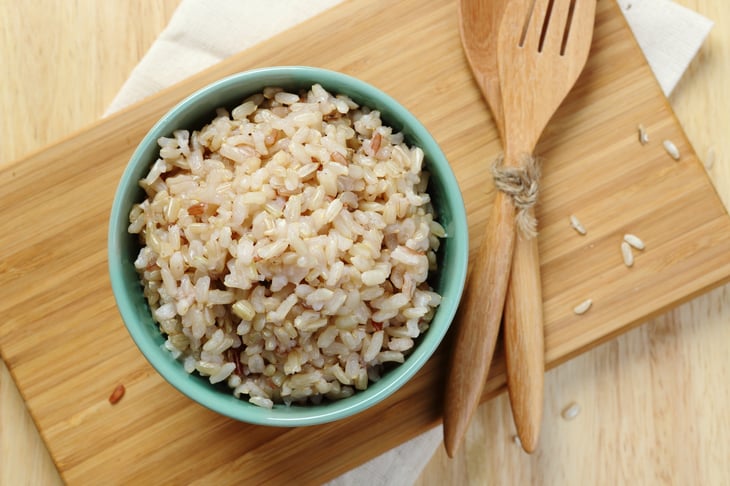
Research published in the Journal of Hazardous Materials found that the plastic content of pre-cooked, instant rice was four times higher than in uncooked rice. Researchers even found that there’s no statistically notable difference in the plastic content of pre-cooked rice in paper or plastic packaging.
The results suggest that the increased plastic content is due to the industrial processing, not just the packaging.
Uncooked rice isn’t plastic-free, either. But it is less contaminated, and researchers found that just washing it before cooking can reduce the presence of microplastics by 20% to 40%.

5. Drink loose-leaf tea
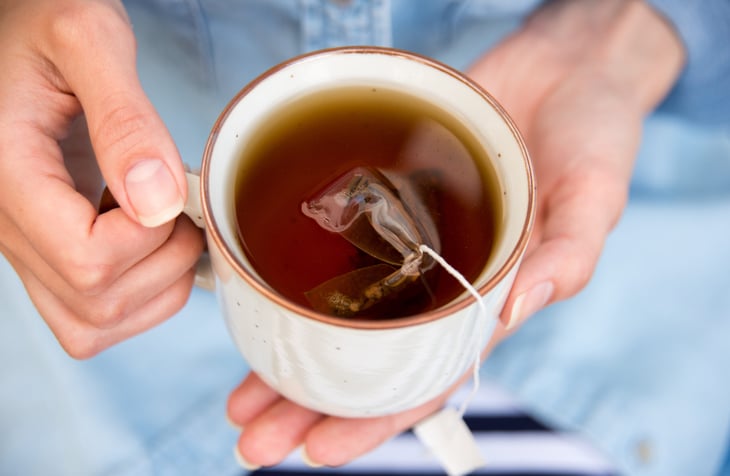
Bagged tea is popular on store shelves. But its convenience can come at the cost of high levels of microplastics in your teacup.
Researchers at McGill University concluded that just one teabag at brewing temperature released about 11.6 billion microplastic and 3.1 billion nanoplastic particles into the water — thousands of times higher than previously reported in other foods.
And paper tea bags aren’t plastic-free, either. These bags often still have a plastic sealant.
Loose-leaf tea is a better option for those looking to reduce their exposure to microplastics.
6. Avoid plastic cutting boards
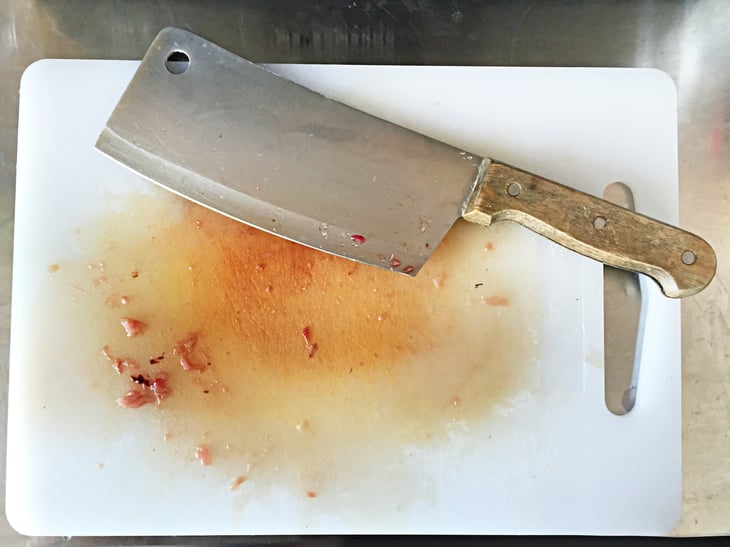
Research from the American Chemical Society looked at how many microplastics can be released when chopping food and analyzed both wooden and plastic cutting boards. They found that the amount of microplastic particles released during food preparation depends on:
- An individual’s chopping style
- The material the board is made of
- The amount of force used to cut through food
- How roughly or finely the food is chopped
- How often a cutting board is used
Researchers calculated that food preparation on a plastic board could produce 14 million to 71 million polyethylene microplastics (the most commonly used plastic) and 79 million polypropylene microplastics (common in items like food containers).
Instead of plastic, opt for a cutting board made of wood, glass, marble or bamboo, the Environmental Working Group says.
7. Stop chewing gum
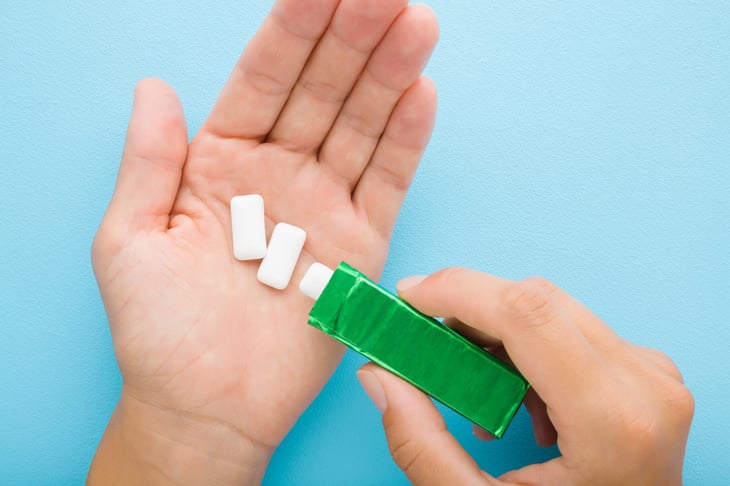
A pilot study concluded that chewing one piece of gum can release hundreds to thousands of microplastic particles into saliva, which is then possibly ingested.
Some gums use plant sap like chicle to get their texture, while others use artificial rubber bases created from petroleum-based polymers.
“Our initial hypothesis was that the synthetic gums would have a lot more microplastics because the base is a type of plastic,” says Lisa Lowe, a member of the research team. “Surprisingly, both synthetic and natural gums had similar amounts of microplastics released when we chewed them.”
Researchers tested five commercially available brands of synthetic gum and five brands of natural gum. They also had one person chew seven pieces of each brand to eliminate variations in people’s chewing patterns. Each piece was chewed for four minutes.
The researchers measured 100 microplastics released per gram of gum on average. Some gum pieces, however, released as many as 600 microplastic particles per gram. For context, a typical piece of gum weighs between 2 and 6 grams. So, a large piece could release thousands of microplastics.
8. Ease up on salt — even sea salt
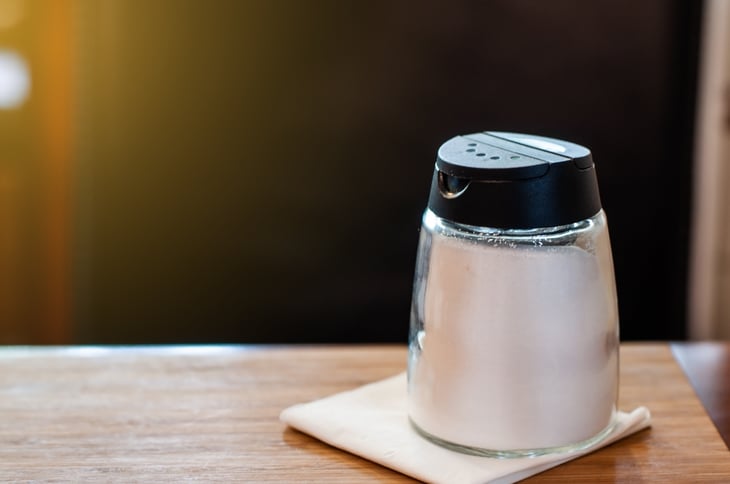
The world’s go-to seasoning is now full of microplastics.
A study published in Environmental Science & Technology analyzed 39 global salt brands — more than 90% of which were found to contain microplastics. Only three of the tested salt brands were plastic-free.
Sea salt was found to be the most contaminated with microplastics. Lake salt and rock salt were the second and third most contaminated, respectively. And salts from Asia tended to have higher plastic concentrations.

Add a Comment