



Gas prices typically climb as Memorial Day approaches, with summer blend transitions and increased travel demand driving costs higher. While current prices offer some relief compared to last year, industry experts warn this break may be short-lived due to potential tariffs and seasonal factors.
Smart drivers don’t wait for price spikes to take action. Implementing money-saving strategies now can protect your budget from the annual spring surge at the pump.
These approaches can help you save significantly without drastically changing your driving habits.
Pro Tip: Your vehicle costs include more than just fuel. Save up to $600 on your car insurance with this car insurance comparison site. Combining these insurance savings with the gas-saving strategies below could put hundreds of dollars back in your pocket this summer.
1. Time your fill-ups for midweek savings

Gas prices follow predictable weekly patterns. They typically rise on Thursdays as stations prepare for weekend travelers, and Friday is the most expensive day to fill up in many areas.
Tuesday and Wednesday mornings often feature the lowest prices of the week, with studies showing savings of up to 10 cents per gallon compared to weekend prices.
Setting a midweek reminder to fill up could save you $5-$8 per tank, savings that add up quickly for regular commuters.
Being proactive about car maintenance is just as important as timing your fill-ups.
Pro Tip: Car repair bills aren’t what they used to be. One auto shop told Consumer Reports their average job rose from $1,600 a decade ago to $4,000 today. Endurance gives you access to thousands of ASE-certified repair shops and pays the bill upfront, so you’re only responsible for the deductible. Get a free quote today!
2. Stack grocery loyalty points with gas rewards

Major grocery chains like Kroger, Safeway, and Giant offer fuel rewards programs that save you 10-30 cents per gallon based on your grocery spending. When filling up at participating stations, these accumulated points convert directly to fuel discounts.
Planning your grocery shopping strategically maximizes these benefits. Many chains offer bonus point days or extra points on gift card purchases. By timing your grocery trips around these promotions, you’re essentially getting paid to buy things you need — a smart financial strategy for everyday necessities.
Pro Tip: Smart money management applies to both everyday spending and investment planning. If you’ve got at least $100,000 in investments, check out a free service called SmartAsset. You fill out a short questionnaire and instantly get matched with up to three vetted financial advisors in your area who can help you optimize your overall financial strategy, including maximizing rewards programs.
3. Use traffic apps to avoid slowdowns that waste fuel

Stop-and-go traffic can reduce fuel economy by up to 40% on city streets. Navigation apps like Waze and Google Maps save time and gas by routing users around congestion and reducing idle time.
Before heading out, check your route on these apps, even for familiar destinations. Many apps now include fuel-efficient routing options, prioritizing steady speeds and fewer stops.
Having the right technology at your fingertips can significantly reduce your fuel consumption and overall transportation costs.
Pro Tip: Your smartphone is a powerful money-saving tool for navigation, but only if your cell plan is affordable. Paying more than $15 a month for your cell service? Stop that. Using your smartphone smartly means saving on your phone plan too. Click here to save a bundle on your cell service while still having the data you need for money-saving navigation apps.
4. Avoid topping off your tank
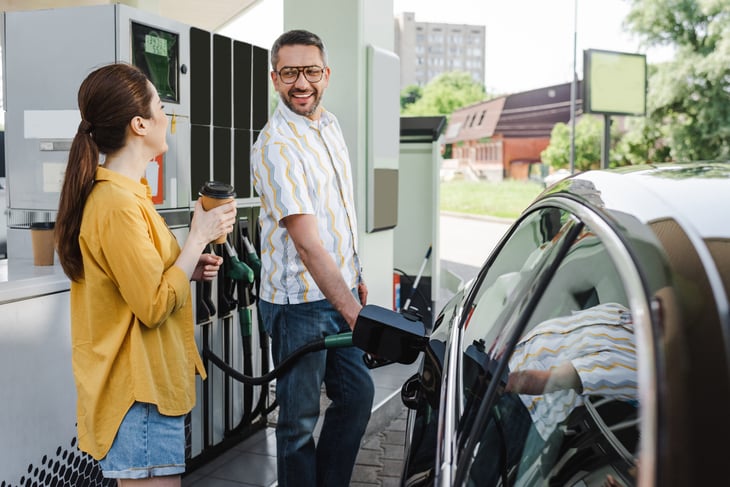
Many drivers habitually “round up” when refueling, continuing to pump after the nozzle clicks off. This common practice wastes money as the extra fuel often flows into the station’s vapor recovery system rather than your tank.
Modern fuel systems are designed to leave appropriate expansion space in your tank. That extra dollar of gas you’re squeezing in might be pouring down the drain.
Stop at the first click to ensure you’re only paying for fuel that actually makes it into your vehicle — a simple habit that saves money and reduces environmental impact.
Pro Tip: Eliminating waste is smart whether it’s at the gas pump or in your banking. Earn as much as possible on your emergency savings. For example, SoFi Checking is offering 3.8% interest, plus a potential $300 signup bonus. Just like avoiding topping off your tank, smart banking ensures every dollar works for you. (May change without notice.)
5. Choose gas credit cards with broad category rewards

Gas station-branded credit cards typically offer fixed per-gallon discounts, which become less valuable as prices rise. Instead, consider general rewards cards that offer percentage-based rebates of 3-5% on all fuel purchases, regardless of the station.
Look for cards with no annual fee that offer rewards in multiple categories beyond gas. This approach allows you to fuel up wherever prices are lowest while still earning rewards.
Many cards also feature quarterly bonus categories that temporarily boost your gas savings to 5% or more, putting real cash back in your wallet.
Pro Tip: Just as the right credit card can transform your gas purchases into meaningful rewards, other financial products can help optimize your overall financial picture. Need cash, debt relief, or help funding a major expense? The right financial product can help you manage cash flow while saving on gas and other expenses. Find the best options tailored to your needs — fast, easy, and secure. Explore financial solutions here.
6. Keep your car running efficiently

Proper vehicle maintenance can improve fuel economy by up to 10%. Simple steps like maintaining proper tire pressure (check monthly), replacing dirty air filters (every 12,000-15,000 miles), and using the manufacturer’s recommended motor oil can significantly boost your miles per gallon.
Remove unnecessary weight from your vehicle, especially before long trips. Each 100 pounds of extra cargo reduces fuel economy by about 1%.
Also, aerodynamic drag can be reduced by removing roof racks or carriers when not in use, as they can decrease efficiency by 2-8% on highways. Regular maintenance doesn’t just save gas — it protects your vehicle investment in the long term.
Pro Tip: Your car maintenance directly impacts fuel efficiency and repair frequency. Repair costs are skyrocketing. If you’re concerned about spending thousands on a car repair that could affect your vehicle’s efficiency and gas mileage, consider the cost/benefit of an extended car warranty to protect against unexpected expenses.
7. Use cash-back apps to earn on every fill-up

Dedicated fuel savings apps like GasBuddy, Upside, and Trunow offer cash back rebates of 5-25 cents per gallon at participating stations. These savings are applied after purchase and can be stacked with credit card rewards and loyalty programs.
Most apps require just a photo of your receipt or linking a payment card to track purchases automatically. While individual savings might seem small, they can add up to hundreds of dollars annually for typical drivers. These digital tools essentially pay you to do something you’re already doing—filling your tank.
Pro Tip: Use a car insurance shopping site and find cheaper insurance to save on transportation costs beyond just fuel. GetToggle.com offers personalized coverage recommendations based on your vehicle, driving habits, and finances, potentially saving you hundreds more each year.
Your roadmap to summer savings

Implementing even a few of these strategies can reduce your fuel costs by 15-20% before prices peak this summer. The key is consistency—small savings on each fill-up compound over time into substantial budget relief.
The best approach combines immediate tactics like timing your fill-ups with longer-term strategies like proper vehicle maintenance.
By making these practices routine now, you’ll not only save at the pump this Memorial Day but continue benefiting throughout summer driving season and beyond—putting hundreds of dollars back in your pocket.
Pro Tip: The same strategic thinking that saves money on gas can transform your entire financial picture. If you’ve got more than $100,000 in savings, get some advice from a pro about comprehensive money-saving strategies beyond just gas prices. SmartAsset offers a free service that matches you to a vetted, fiduciary advisor in less than 5 minutes who can help you build a complete financial strategy that maximizes efficiency across all aspects of your financial life.

Add a Comment