


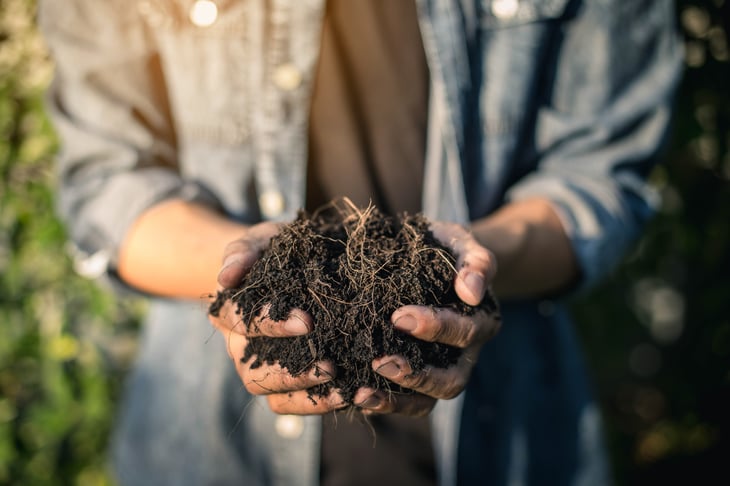
Editor's Note: This story originally appeared on LawnStarter.
Using compost in your yard is a fantastic way to enhance soil health and support plant growth.
Compost made from decomposed organic materials like yard waste and kitchen scraps enriches the soil with nutrients. It improves the soil’s structure, making it more fertile and better able to retain water.
Compost can be used as a soil amendment in your gardens and flowerbeds, as topdressing to nurture a productive lawn, as mulch around trees and shrubs, and to prevent erosion on hillsides.
1. Improve Plant and Soil Health in Your Garden

Compost is a fantastic addition to your garden and can be used as a soil amendment or mulch.
Grant Cardon, Utah State University Extension soils specialist, says, “Organic matter is simply the best thing one can add to enhance soil properties and function as a growth medium. It’s nature’s ‘silver bullet’ so to speak, for soil health establishment and improvement …
“[Compost and manures] provide carbon for microbial growth, plant nutrients and soil aggregate building compounds as they decompose in the soil. There is generally no concern with these materials tying up nitrogen, as the carbon and nitrogen contents are better balanced.”
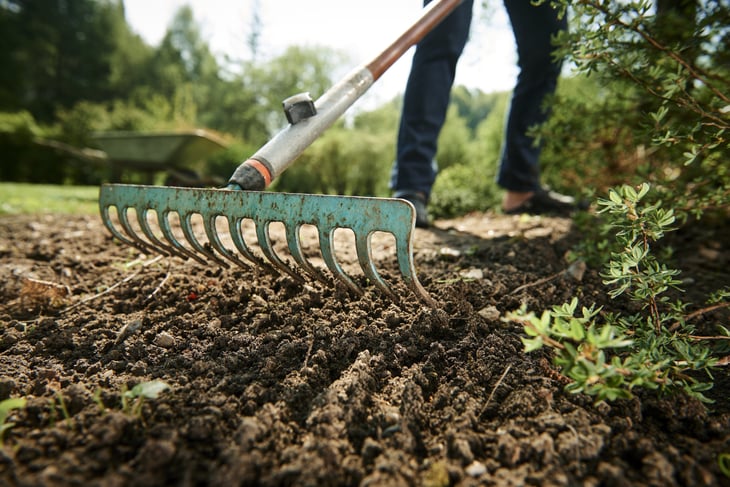
To use compost in your garden, you can spread 2 to 4 inches over the planting area and then work it in the top 8 to 12 inches of soil using a rototiller or garden fork (be prepared to sweat!).
Benefits of Working Compost Into Your Soil

After working compost into the ground, you’ll see the full benefits:
- Better soil structure, leading to improved water retention and drainage of excess water. According to the City of Ankeny, Iowa, “A hundred pounds of average soil (a 1-foot-by-10-foot row tilled 6 inches deep) with a pound of compost mixed in will hold an additional 33 pounds (4 gallons) of water. Take the organic content to 5 pounds, and that 100 pounds of soil will hold nearly 200 pounds (25 gallons) of water!”
- Organic matter that slowly releases nutrients over time, improving soil fertility
- Improved cation exchange capacity to minimize nutrient leaching
- Higher levels of beneficial soil microbes to help break down organic matter and improve root growth
More Tips for Using Compost in Your Garden

You can also spread 1 inch of compost on top of the soil to act as mulch. Compost left on top of the soil will help improve water retention, insulate the roots from extreme temperatures, prevent weed seed germination, and minimize soil loss from erosion.
My tip: If you can mix the compost into the soil, do so. Yes, it is significantly more labor-intensive than leaving it on top, but over the last 20-some years of gardening, I’ve found that incorporating compost into the garden area is one of the best ways to improve your soil.
You can often rent tillers from your local Home Depot or Lowe’s if you have a large garden area.
How I use compost in my garden: I add about 2 inches of compost to my garden every other year. Since I live in a desert climate that experiences high summer temperatures and limited rainfall, the organic matter doesn’t break down as quickly as in cooler, humid climates.

2. Create Better Flowerbeds
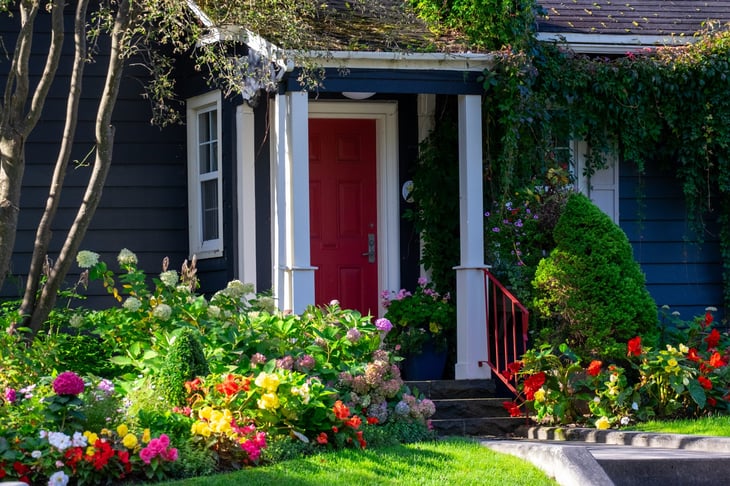
Compost can be used in your flowerbeds like your garden — you can either work a couple of inches in as a soil amendment or spread an inch on top of the ground as a mulch. You can also mix a small amount of compost into backfill soil when planting.
My tip: In my experience, flowerbeds are often harder to work compost into the soil than in your garden, unless you’re building a brand new bed. Every couple of years, I spread an inch or two across the bare soil and then scratch it into the top couple inches of soil using a handheld garden fork.

3. Fill Raised Beds
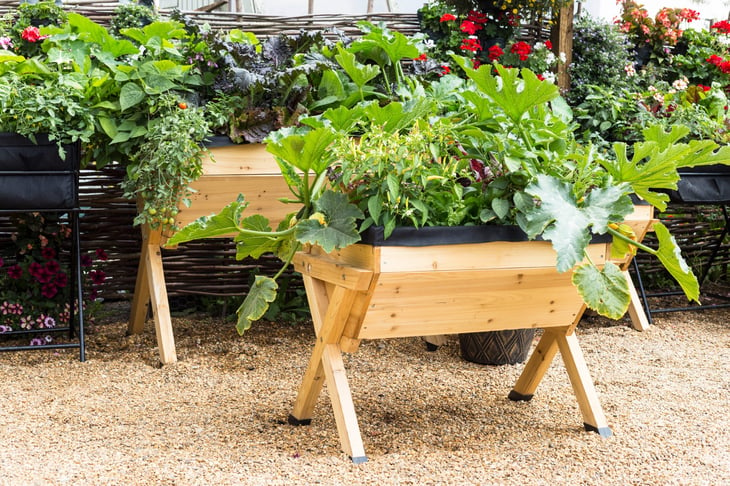
Filling your raised garden beds with a mix of compost, soil, and other materials creates an ideal growing environment for your plants. Mixing in the proper ratios gives you a nutrient-rich, well-draining growing media that supports healthy, vigorous plant growth.
A typical ratio is a 1:1 ratio of topsoil and compost, or 50% topsoil, 30% compost, and 20% other lightweight organic material, such as coconut coir or peat moss, to create a lighter, fluffier growing substrate. However, these numbers can be adjusted depending on the type of plants you’re growing.
Mix the materials in a wheelbarrow or the raised bed with a shovel or garden fork. Once thoroughly mixed, spread the compost-laden material evenly throughout the bed, filling it 1 to 2 inches below the top edge.

Tips for Filling Raised Beds
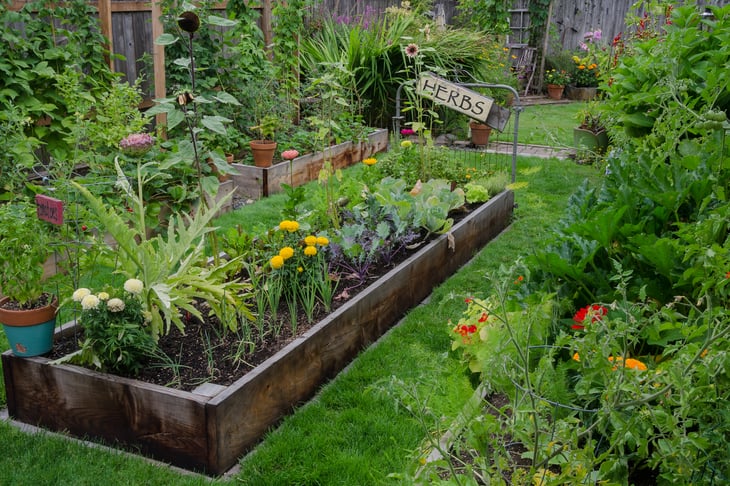
You never want to fill raised beds solely with topsoil.
Stephanie Murray, director of the Rutgers Soil Testing Laboratory, explains:
“For permanent raised beds, native mineral soils amended with small amounts of clean sourced, well-rotted composts can often provide an ideal growing medium for plants.
“Blending a quality compost into the mineral soil will help increase overall depth of the beds while improving aeration and nutrient and moisture retention.
“These mineral soils will tend to maintain their volume after initial settling, proper porosity for drainage and aeration, and nutrient-holding capacity that are qualities critical for healthy roots.”

4. Enrich Your Soil Before Starting a New Lawn
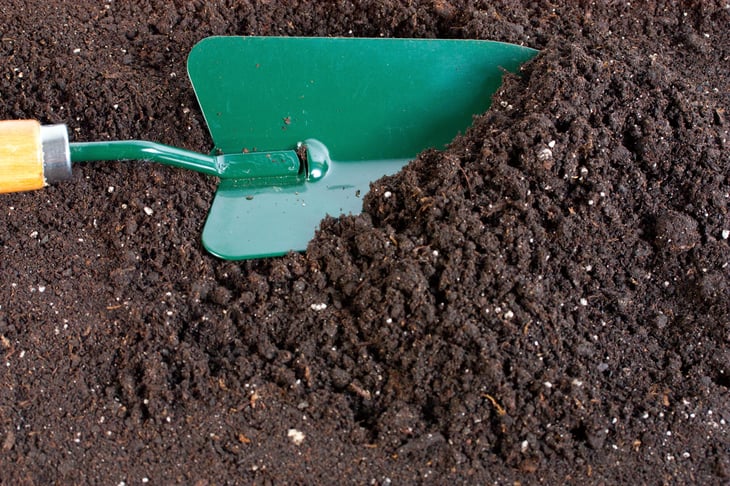
Adding compost to the topsoil before starting a new lawn is an excellent way to ensure a nutrient-rich, healthy foundation for grass growth.
It is essential if you are landscaping around a newly built house. Construction often strips away the top layer of soil to level the lot or build a foundation, removing the organic matter and nutrient-rich material.
Regardless if you’re seeding or laying sod, spread 2 or 3 inches of high-quality compost across the entire lawn area, and then use a rototiller, rake, or shovel to mix it into the top 4 to 6 inches of soil.
Mixing to this depth helps ensure the organic matter is evenly distributed through the root zone and prevents the compost from forming a distinct layer.
If there is a distinct layer of compost, the roots may want to stay in that space, instead of growing downward.

5. Topdress Existing Lawns
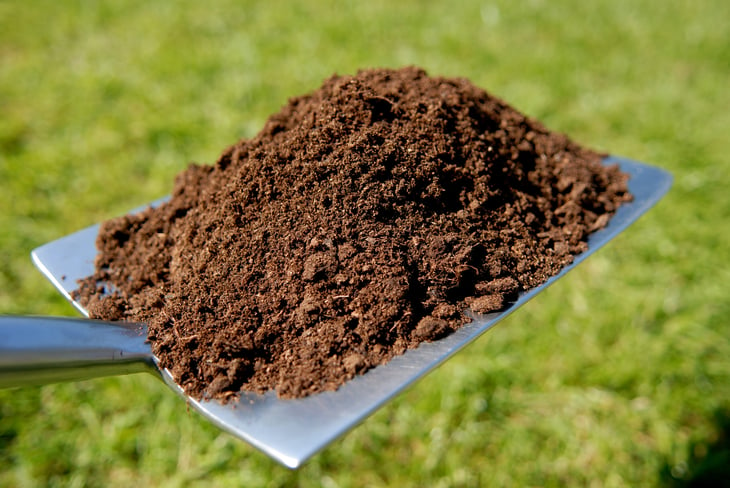
Topdressing a lawn is accomplished by spreading a thin layer of compost over the grass. It helps boost the soil under your lawn without tearing out all the grass. While it isn’t an easy task, you’ll see exceptional benefits, making it worth the time and effort.
The compost also will help the lawn in other ways, beyond the expected improvement in soil structure and water-holding capacity.
- Reduces thatch buildup, lengthening the time between dethatching or power raking.
- Smooths uneven terrain stemming from worm castings, freeze/thaw cycles, or water runoff.

How to Topdress Your Lawn With Compost
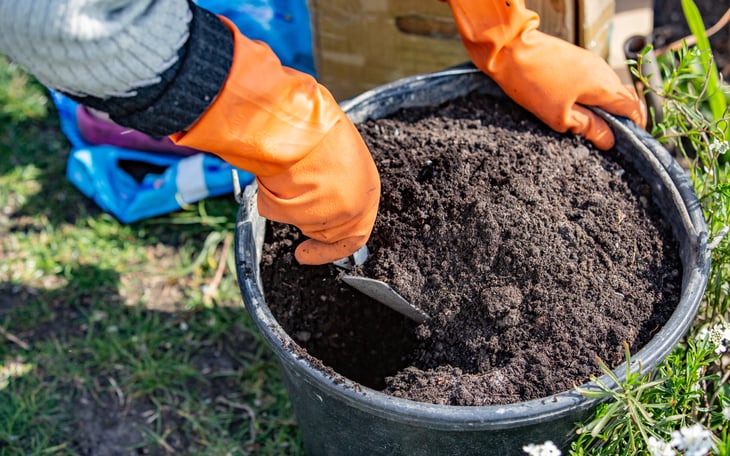
The best way to spread compost on your lawn is to use a garden shovel. Break your yard up into small areas, a few square feet, and work systematically through them.
Shovel out a small amount of compost and then “fling” it with a smooth, sweeping motion similar to hitting a hockey puck. Spread the topdressing over the lawn to a depth of 1/8 to 1/2 inch and then rake it in or water the lawn well.
Following is the volume of soil needed to topdress 1,000 square feet for the depth of topdressing (inches) and volume of soil required (cubic yards):
- 1/8 inch deep: 0.40 cubic yards
- 1/4 inch deep: 0.77 cubic yards
- 3/8 inch deep: 1.14 cubic yards
- 1/2 inch deep: 1.54 cubic yards
- 5/8 inch deep: 1.91 cubic yards
- 3/4 inch deep: 2.31 cubic yards
Pro tip: Topdress warm-season lawns in the spring and cool-season lawns in the fall. This allows three or four mows before severe heat or cold sets in.

6. Mulch Around Trees and Shrubs

Compost is an excellent material to use for mulching around trees and shrubs:
- Mulching with compost around trees and shrubs helps the soil retain moisture, keeping the roots hydrated and reducing the need to water frequently.
- Compost acts as an insulator, keeping the soil cool during hot weather and warmer during the winter. This protects the roots from extreme temperature swings, reducing plant stress.
- It also blocks sunlight from reaching the soil surface, inhibiting weed germination and growth.
Remove weeds, grass, and debris around the base of your trees or shrubs, extending out 3 to 6 feet, depending on the plant size. Lightly loosen the topsoil with a garden rake or a hand cultivator.
Spread a 2- to 4-inch-thick layer of compost across the soil, making sure it is evenly distributed without any mounds or thick patches. Leave a 2-inch gap between the trunk and the compost to prevent pest problems and bark rot.
Pro tip: While tempting, do not add compost to the hole when planting new trees or shrubs, or do so very sparingly. If too much compost is added to the planting hole, it creates a stark contrast between the amended soil and the surrounding area, which can create drainage issues and slow root growth.
In extreme cases, it may confine the roots to the amended area, preventing them from growing outward.

7. Prevent Erosion on Hillsides

You can also add a layer of compost to sloped areas in your yard prone to erosion. The compost stabilizes the soil by improving water infiltration, reducing the runoff that causes erosion.
Similar to mulching around trees and shrubs, start by removing weeds and debris from the hillside. Then, evenly apply 2 to 4 inches of compost across the slope. Avoid applying it too thick, as it can become waterlogged and slide, compounding the soil erosion problem.
Pro tip: For heavy slopes, consider installing biodegradable erosion-control mats before spreading compost, and then use netting or mesh over the top of the compost to anchor it in place.
Next are FAQs about compost.

Can You Apply Too Much Compost to Your Garden?
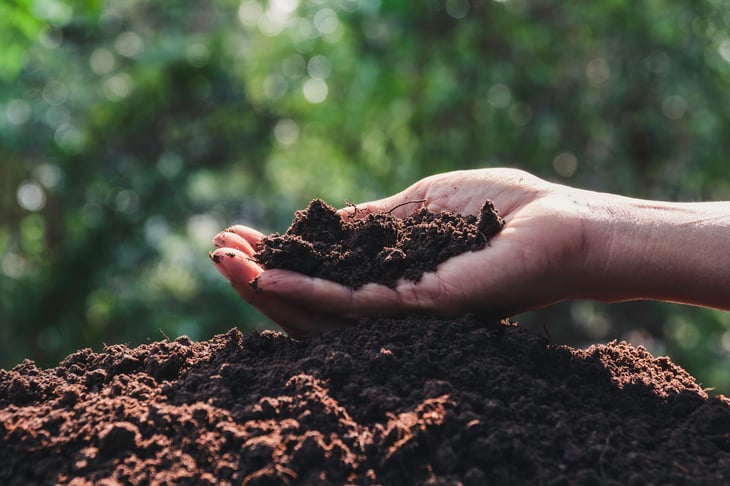
Yes, you can apply too much compost, which can cause adverse effects on your garden plants.
Excessive amounts of compost can cause high nitrogen and phosphorus levels, disrupting growth.
You’ll see vigorous foliage growth versus fruiting — which is problematic in tomatoes, peppers, etc. — and the high phosphorus can impede the uptake of calcium, magnesium, and iron.

How Long Does Compost Last in a Garden?
In most cases, it’s recommended that gardeners add compost to their garden soil every spring before planting.
Compost doesn’t go bad, but the organic matter continues to break down over time, shrinking in size. As the organic matter breaks down, the nutrient release slows down or stops.
Is Compost the Same Thing as Manure?
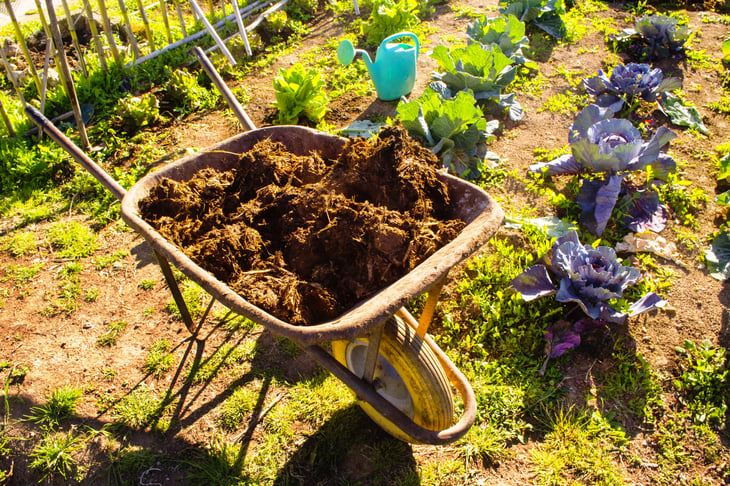
No, compost and manure are different, although they both can improve soil health.
Compost results from the decomposition of organic material by microbes, earthworms, and other microorganisms.
Manure is animal waste that has not been decomposed yet. It can help soil fertility and plant growth but must be carefully applied as it can be too intense or “hot” if not appropriately aged.

Add a Comment