


Editor's Note: This story originally appeared on LawnStarter.
The best drought-tolerant ground covers will depend on your location. While these ground cover plants have low water demand and can tough out the heat, choose the species that naturally thrive in your region.
Ice plant in the Southwest region, dymondia in the Pacific Northwest, Asiatic jasmine in humid areas of the Southeast, sedum in the Midwest, and Kinnikinnick in the Rockies are just some of the best drought-resistant ground covers. We also interviewed an expert for help in discussing some of these options.
Best Drought-Tolerant Ground Covers for Hot, Arid Regions (Southwest/Desert)
Maintaining a drought-tolerant landscape, especially in the hot desert, can be quite challenging. So, choosing the right full-sun ground cover that thrives in hot and dry conditions typical of the Southwest can make all the difference.
Additionally, while some ground covers can be stepped on, Robert Polomski, associate extension specialist at Clemson University, warns to “avoid walking on any of these ground covers.” He says, “Unlike turfgrasses, these ground covers are meant to be viewed from afar.”
Ice Plant (Delosperma)
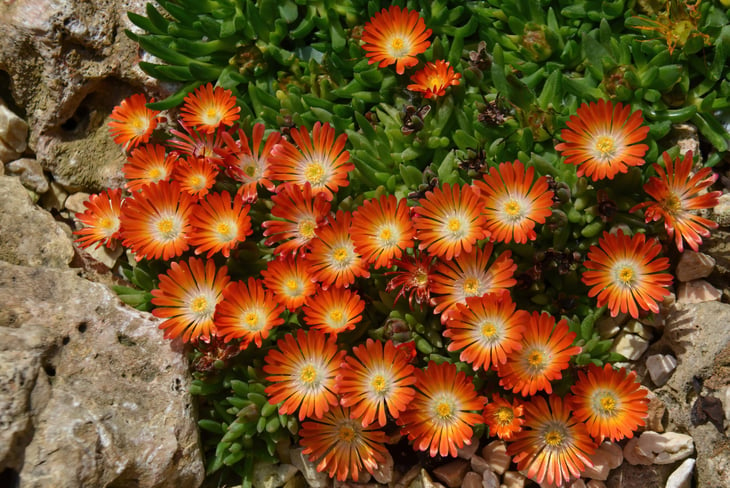
A vibrant, low-growing succulent, ice plant can blanket the ground in shades of pink, purple, or yellow. Its fleshy leaves store water, making it ideal for xeriscaping and poor, rocky soils.
- Hardiness Zones: 5-10
- Sun Exposure: Full sun
- Soil Requirements: Well-draining, sandy or rocky soils
- Foot Traffic: Low
- Size: 3-6 inches tall, spreads up to 2 feet
- Features: Colorful blooms, evergreen in mild climates, excellent for erosion control
Trailing Lantana (Lantana Montevidensis)

A fast-spreading ground cover plant, trailing lantana can handle extreme heat with ease. Its lush cascade of lavender or purple blooms can persist through the hottest months, making it perfect for pollinator gardens.
- Hardiness Zones: 8-11
- Sun Exposure: Full sun
- Soil Requirements: Well-draining, poor soils
- Foot Traffic: Low to moderate
- Size: 12-18 inches tall, spreads 3-5 feet
- Features: Low-maintenance, fragrant foliage
Desert Marigold (Baileya Multiradiata)
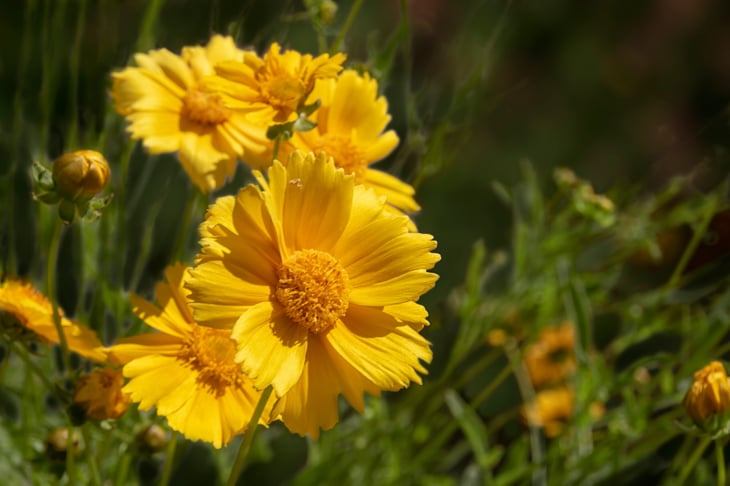
Tough as nails, desert marigold can thrive even in the harsh, dry corners of your yard. This native wildflower produces bright yellow, daisy-like blooms.
- Hardiness Zones: 6-10
- Sun Exposure: Full sun
- Soil Requirements: Well-draining, dry soils
- Foot Traffic: Low
- Size: 12-18 inches tall and wide
- Features: Long bloom period, self-seeding, highly drought-resistant, native to the Southwest
Best Drought-Tolerant Ground Covers for Mediterranean Climates (California, Pacific Northwest)
Since California and the Pacific Northwest have mild, wet winters and hot, dry summers, it’s only natural to use water-wise plants. The following ground covers thrive in coastal conditions, while adding texture and color to landscapes.

Creeping Thyme (Thymus serpyllum)

This perennial ground cover is edible and can be walked on. It forms a dense, aromatic mat of greenery that produces tiny purple blooms in summer, making it a charming, eco-friendly grass alternative.
- Hardiness Zones: 4-9
- Sun Exposure: Full sun to light shade
- Soil Requirements: Well-draining, sandy or loamy soils
- Foot Traffic: Moderate
- Size: 2-3 inches tall, spreads up to 12 inches
- Features: Fragrant foliage, pollinator-friendly, suppresses weeds, evergreen in mild climates
Dymondia (Dymondia margaretae)
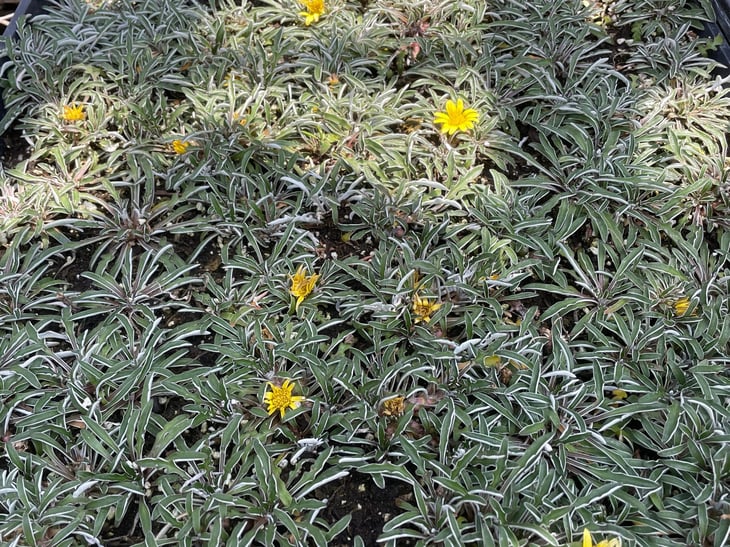
Due to its tight, resilient growth, Dymondia is perfect for garden paths or in dry borders. This hardy, low-maintenance ground cover has silver-green leaves and tiny yellow flowers that bloom in summer.
- Hardiness Zones: 9-11
- Sun Exposure: Full sun to light shade
- Soil Requirements: Well-draining soil, clay (with amendment)
- Foot Traffic: Moderate
- Size: 2-4 inches tall
- Features: Low-growing, suppresses weeds, silver-toned foliage
Manzanita (Arctostaphylos spp.)

With their glossy, green leaves, red bark, and early-season flowers, certain low-growing manzanita varieties can be an excellent no-mow grass alternative. These native evergreens are incredibly drought-tolerant once established.
- Hardiness Zones: 8-10
- Sun Exposure: Full sun to partial shade
- Soil Requirements: Well-draining, slightly acidic soils
- Foot Traffic: Low
- Size: Varies — some stay under 1 foot tall, spreading several feet wide
- Features: Supports pollinators and birds, erosion control
Best Drought-Tolerant Ground Covers for Southeastern Humid Regions
Even in the humid Southeast, extended dry spells can take a toll on landscapes. These full-sun ground cover plants are well-adapted to heat, humidity, and drought.
Asiatic Jasmine (Trachelospermum asiaticum)

With its glossy leaves and dense growth habit, Asiatic jasmine can smother weeds. Thriving in both sun and shade, this vigorous, evergreen ground cover can survive dry periods once established.
Compared to mondo grass and lily turf, Polomski says that Asiatic jasmine is the easiest to establish since it can cover more ground. He adds that, unlike the other two, which are sold as clumps, Asiatic jasmine “has long prostrate stems that often spill over the sides of the purchased flat or container.”
Polomski continues, “After planting, the stems that contact the soil oftentimes produce roots at the nodes along the stems.”
- Hardiness Zones: 7-11
- Sun Exposure: Full sun to full shade
- Soil Requirements: Well-draining, adaptable to various soil types
- Foot Traffic: Low to moderate
- Size: 12-18 inches tall
- Features: Dense and low-maintenance, suppresses weeds, deer-resistant, evergreen foliage
Mondo Grass (Ophiopogon japonicus)

Often mistaken for turf, mondo grass is a hardy, grass-like perennial that creates a tidy, low-maintenance ground cover. If you’re looking for a ground cover for shade, this evergreen is a good option since it tolerates both drought and shade.
- Hardiness Zones: 6-11
- Sun Exposure: Full sun to full shade
- Soil Requirements: Moist, well-drained soil
- Foot Traffic: Light
- Size: 6-10 inches tall
- Features: Erosion control, excellent for stepping stones
Lily Turf (Liriope muscari)

Lily turf is a tough-as-nails ground cover with grass-like foliage and spikes of purple flowers in summer. It adapts well to drought, humidity, and heavy shade, making it a favorite for Southern landscapes.
According to Polomski, lily turf, which grows faster than mondo grass, is considered invasive in the Southeast. He recommends cutting it back to within 3 to 4 inches of the ground using either a string trimmer, clippers, or a mower set at its highest setting. “It should be done before the new pips (small seeds) emerge in early spring,” he adds.
- Hardiness Zones: 5-10
- Sun Exposure: Full sun to full shade
- Soil Requirements: Well-drained, clay, and poor soils
- Foot Traffic: Light to moderate
- Size: 12-18 inches tall and wide
- Features: Evergreen or semi-evergreen, flowering, erosion-resistant, low-maintenance
Best Drought-Tolerant Ground Covers for Midwestern and Northeastern Regions
These regions experience a mix of hot summers, cold winters, and unpredictable rainfall. The following ground covers are hardy, adaptable, and capable of withstanding both drought and freeze-thaw cycles.
Sedum (Stonecrop)
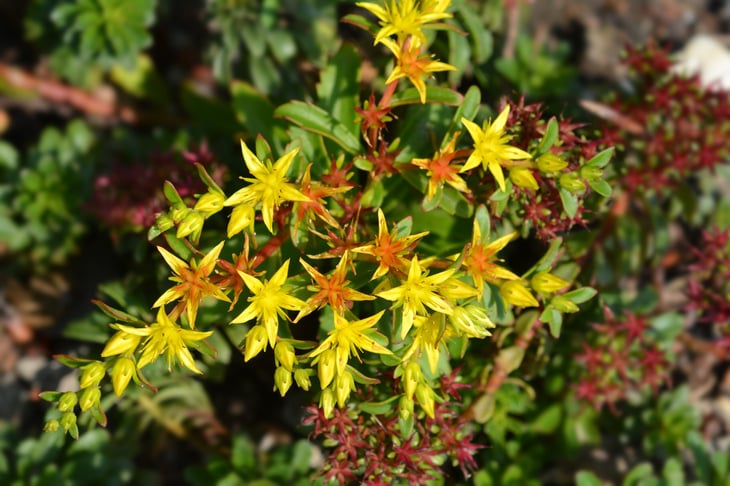
Sedum is a diverse group of succulent ground covers that store water in their fleshy leaves, making them perfect for drought-prone areas. These Midwest ground covers come in various colors and textures, and most species are also cold-tolerant.
- Hardiness Zones: 3-9
- Sun Exposure: Full sun
- Soil Requirements: Well-draining, sandy or rocky soils
- Foot Traffic: Low
- Size: 3 inches to 2 feet tall
- Features: Great for rock gardens, attracts pollinators
Wild Strawberry (Fragaria virginiana)

This native ground cover has charming trifoliate leaves and small, edible strawberries in summer. It spreads quickly by runners and thrives in woodland areas.
- Hardiness Zones: 5-9
- Sun Exposure: Full sun to partial shade
- Soil Requirements: Moist, well-drained soil
- Foot Traffic: Light
- Size: 4-9 inches tall
- Features: Wildlife-friendly, attractive ground-hugging foliage
Barren Strawberry (Waldsteinia ternata)

While its leaves look similar to true strawberries, barren strawberry doesn’t produce fruit. It’s a tidy and ornamental ground cover that’s evergreen in the Midwest and Northeast.
- Hardiness Zones: 4-9
- Sun Exposure: Full sun to partial shade
- Soil Requirements: Well-drained, moderately fertile soil
- Foot Traffic: Low to moderate
- Size: 3-6 inches tall
- Features: Yellow spring flowers, low-maintenance, great for slopes or borders
Best Drought-Tolerant Ground Covers for Rocky Mountain and High Altitude Regions
Cold winters, intense sun, and fast-draining soils are common in high-elevation areas. Built to survive with little water, the following ground covers can thrive in tough alpine and mountainous conditions.
Kinnikinnick (Arctostaphylos uva-ursi)

Kinnikinnick is a native evergreen ground cover with small, leathery leaves and pinkish spring flowers that produce red berries. It spreads slowly to form a dense mat.
- Hardiness Zones: 3-7
- Sun Exposure: Full sun to partial shade
- Soil Requirements: Well-drained, acidic or sandy soils
- Foot Traffic: Low
- Size: 6-12 inches tall, spreads 3-6 feet
- Features: Erosion control, wildlife-friendly, low water needs
Sulfur Buckwheat (Eriogonum umbellatum)

Native to the western U.S., sulfur buckwheat features clusters of bright yellow flowers that turn to rust as they age, persisting into fall. This flowering ground cover thrives in rocky soils and handles extreme drought with ease.
- Hardiness Zones: 4-8
- Sun Exposure: Full sun
- Soil Requirements: Well-drained, rocky soils
- Foot Traffic: Low
- Size: 6-12 inches tall and wide
- Features: Long bloom time, attracts pollinators
Pussytoes (Antennaria spp.)

This slow-spreading, perennial ground cover has fuzzy, paw-like flowers, hence the name. Pussytoes are low-growing and incredibly drought- and cold-tolerant.
- Hardiness Zones: 3-9
- Sun Exposure: Full sun
- Soil Requirements: Well-drained, poor soils
- Foot Traffic: Light
- Size: 3-9 inches tall
- Features: Silvery foliage, deer-resistant
How Long Does It Take Drought-Tolerant Ground Covers to Get Established?
Most drought-tolerant ground covers take 1 to 2 growing seasons to fully establish. During this time, they’ll need regular watering until roots are deep enough to handle dry conditions.
Can I Mix Different Types of Drought-Tolerant Ground Covers Together?
Yes, you can mix varieties to create a more dynamic and resilient landscape. To avoid competition, they should share similar sunlight, soil, and watering needs.
How Do I Prevent My Drought-Tolerant Ground Cover from Excessively Spreading?
Choose clumping varieties or install garden edging to contain aggressive spreaders. Occasional trimming or dividing can also help manage growth.
What Drought-Tolerant Ground Covers Can Handle the Most Foot Traffic?
Dymondia, creeping thyme, and some types of sedum can handle moderate foot traffic. For heavier use, consider stepping stones to protect plant health.

Add a Comment