


Sometimes, an event explodes onto the stage of history and has a long-lasting — even permanent — impact on nearly everyone who experiences it.
That is certainly true of nine calamities that have occurred over the past half-century, according to an Edelman Financial Engines survey of 3,000 people ages 30 and older.
Those surveyed said the following events had the biggest negative impact on their sense of financial security.
1. The COVID-19 pandemic

Survey respondents who cited this historical event among those that had the biggest negative impact on their sense of financial security: 57%
The COVID-19 pandemic — which officially lasted from March 2020 to May 2023 — shook the world. It triggered a brief recession during March and April 2020 and left millions of Americans at home without work for months.
Given how recent the event was — and its seismic impact — it’s no surprise to find it at the top of this list.
2. The high inflation of 2022-2023

Survey respondents who cited this historical event among those that had the biggest negative impact on their sense of financial security: 55%
As COVID-19 began to fade, runaway inflation roared into the spotlight. Prices rose steadily beginning in early 2022. By June of that year, the U.S. inflation rate peaked at 9.1%, the highest 12-month increase since November 1981.
In the end, the recent bout of high inflation inflicted wounds on America’s sense of financial security that are almost as deep as those caused by the pandemic. If high prices still have you down, learn “How to Control Your Personal Inflation Level.”
3. The Great Recession

Survey respondents who cited this historical event among those that had the biggest negative impact on their sense of financial security: 37%
The Great Recession was arguably the biggest economic downturn since the Great Depression of the early 20th century. It officially lasted from December 2007 to June 2009, causing millions to lose their jobs and precipitating a major bear market in stocks.
However, homeowners may have felt the greatest impact of the Great Recession, as property values across the U.S. plunged in the wake of the crisis.
4. The 9/11 attacks
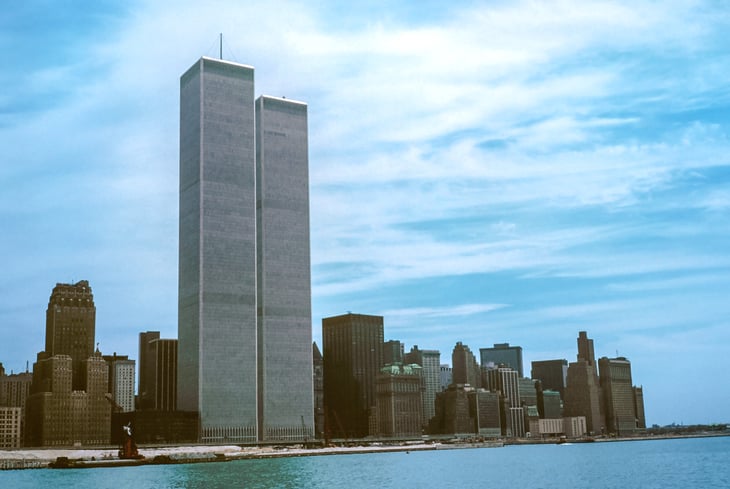
Survey respondents who cited this historical event among those that had the biggest negative impact on their sense of financial security: 21%
On Sept. 11, 2001, terrorists hijacked airplanes and used them to strike targets in New York City and Washington, D.C. Nearly 3,000 people died, making it the deadliest terror attack in history.

Despite the New York Stock Exchange and Nasdaq Stock Exchange remaining closed from Sept. 11 until Sept. 17 — the longest shutdown since the Great Depression — the U.S. economy emerged from the attack relatively unscathed. But Americans’ sense of security — financial and otherwise — was permanently shaken.
5. The 1987 stock market crash

Survey respondents who cited this historical event among those that had the biggest negative impact on their sense of financial security: 13%
The mantra of “stocks for the long run” was sorely tested on Oct. 19, 1987, when markets plunged more than 22% in a single day. It was the largest one-day decline in history, eclipsing anything seen during the era of the Great Depression.
Money Talks News founder Stacy Johnson was working as a stockbroker on that nerve-racking day. He shared his memories of living through history in the making in “5 Lessons From the ‘Black Monday’ Stock Market Crash.”
Other impactful moments in history

Here are the other events that left a negative and scarring impact on Americans’ sense of financial security:
- The wars in Afghanistan and Iraq: 8%
- The “dot com bust” of the early 2000s: 7%
- The savings and loan crisis of the 1980s: 5%
- Stagflation and the oil embargo of the 1970s: 5%

Add a Comment