


Editor's Note: This story originally appeared on LawnStarter.
To successfully create a pollinator lawn, assess the area, choose how much of the site to convert, and select and install the right plants to attract bees and other beneficial insects to your yard.
Pollinator lawns are eco-friendly and low-maintenance, a perfect option for homeowners looking to cut back on turf-related expenses. Additionally, we interviewed a specialist who provided helpful advice for creating your pollinator lawn.
Note: We’ll use “bee lawn” and “pollinator lawn” interchangeably, but we’ll focus on creating lawns for all pollinators, not just bees, in this article.
Step 1. Assess the Area
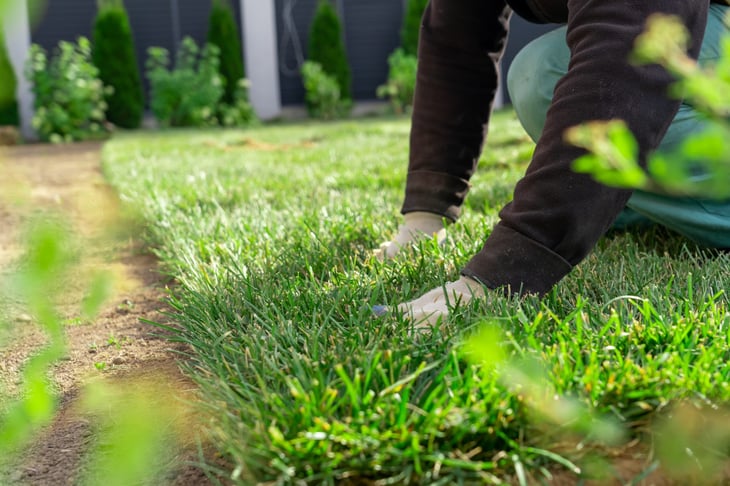
The first step is to take a look at the site’s current conditions:
- Sun exposure: Pollinator plants typically prefer sunny sites.
- Rainfall: Choosing a spot that gets enough rain means less supplemental water.
- Existing turf: Depending on the health of your existing turf, it might be better to renovate instead of overseed.
- Traffic: Pollinator lawns are ideal in spots with no traffic or very low traffic.
- Soil pH: Conduct a soil test to find out the conditions of your soil.
Note: If you live in an HOA, check with your association about their regulations before planting.
Step 2. Choose Your Conversion Method
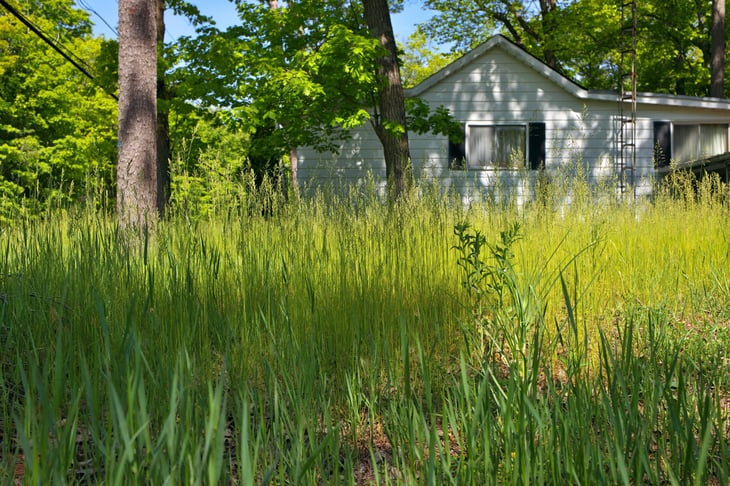
You don’t have to upend your entire yard to make your space more pollinator-friendly. Here are three approaches to convert your lawn (or part of it) to a pollinator lawn:
Gradual Transition
You can gradually transition your lawn into a pollinator lawn by following these steps:
- Overseed your lawn with native grasses or ground covers.
- Stop mowing your lawn weekly to allow your grass to flower. Aim to mow every two to three weeks instead. You can also let your lawn (or a part of it) go natural. Just remember to check your local legislation, since in some places you can be fined for refusing to mow your lawn.
- Eliminate chemical fertilizers, pesticides and herbicides. Instead, opt for organic herbicides or organic fertilizers, such as corn gluten meal.
Sectional Conversion
If you’d like to “test things out” before fully turning your lawn into a pollinator lawn, select a small area and convert just this section.
- Choose a spot with plenty of sunlight. It can be a section of your backyard, around your home’s foundation, a slope, or anywhere you see fit.
- Use rocks, wood, or fencing to define the borders.
- Add shrubs, trees, and flowering perennials that pollinators enjoy.
If the existing turf is in good condition with few weeds, simply overseed with the native grass or flowering ground cover seed.
Complete Renovations
Complete renovations are a good option for lawns that are overtaken with unwanted weeds, have too many bare patches, or have structural problems (compacted soil or unevenness). You can use one of these four methods to kill the existing grass:
- Solarization: Spread a clear plastic tarp over the area so the heat builds up, killing the plants. It works only in warmer weather and takes two to three weeks in the summer.
- Sheet mulching: If you live in a colder area where solarization won’t work, try sheet mulching. It consists of using a sheet of cardboard to suffocate the unwanted grass.
- Physical removal: You can also use a sod cutter or a sod kicker to remove the turf. However, this method can also remove desirable organic matter from your soil.
- Herbicides: Using herbicides is quicker than solarization and easier than physically removing the sod. Opt for organic herbicides for a more eco-friendly option.
Step 3. Select the Right Plants
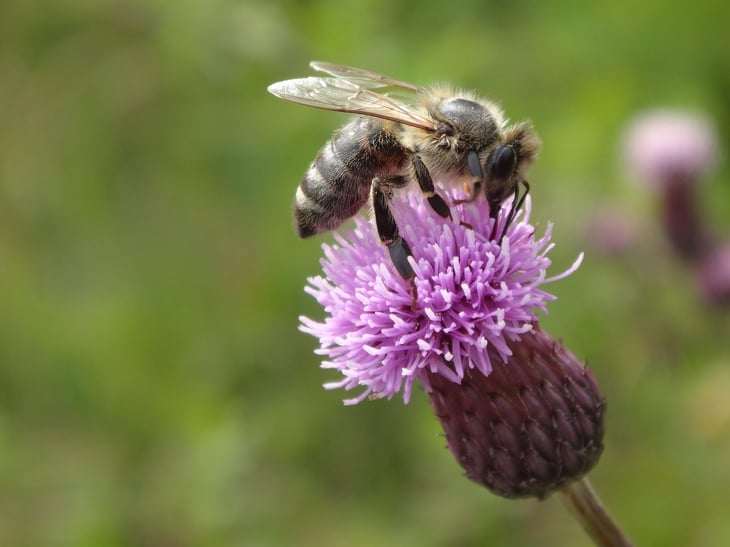
If you’re a beginner, you can start by using pollinator seed mixes commonly sold in local nurseries. James Wolfin, conservation specialist at Twin City Seed Company, highlights the importance of going native: “Native plants have a deep evolutionary history with our native pollinators. Some specialist species will only feed on select native plants.”
However, as Wolfin explains, there are limited options of native plants for pollinator lawns. Because of this, he proposes prioritizing native plants while also incorporating non-native species that are beneficial for pollinators.
Here are some recommended seeding rates (per 1,000 square feet) for pollinator lawns:
- Dutch white clover: 1.1 ounces
- Creeping thyme: 0.16 ounces
- Self-heal: 1.2 ounces
- Bee lawn seed mix (choose a mix designed for your region): 5 pounds
The best time for establishing bee lawns is late fall in the northern states (dormant seeding works best); plant in early spring in southern states.

Step 4. Install Your Pollinator Lawn
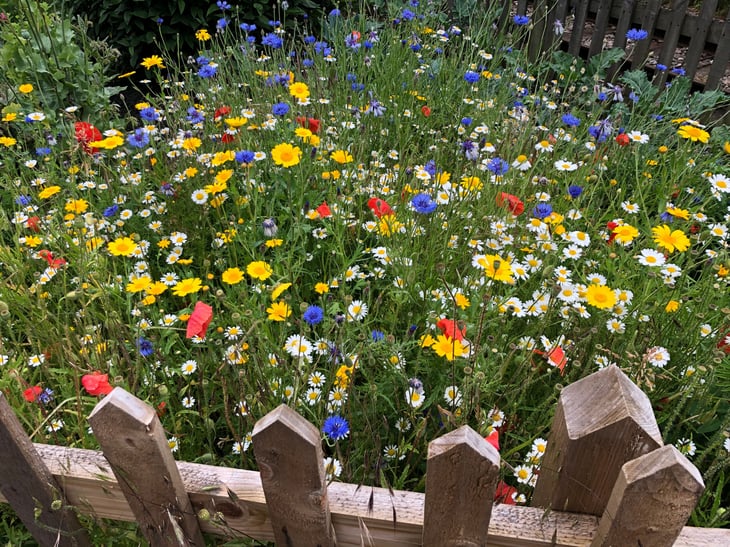
If you’ve chosen to kill the lawn and start from bare soil, you still may have work to do.
As Wolfin explains, “A bee lawn requires three weeks of hard work for years of easy [care] thereafter.”
- Aerate the soil before planting.
- Level and amend your soil if necessary.
Pro Tip: These soil preparation steps are the same as for planting grass seed.
To install your pollinator lawn:
- Spread the seeds with a fertilizer spreader.
- If planting in spring, rake them into the soil and water lightly two to three times per day for the first three weeks (or until you see the seedlings sprouting).
Wolfin says, “Be patient. Flowers take time to establish. The clover will likely establish in year one, but the other flowers are likely to flower in year two and beyond.”
How Much Does It Cost to Install a Pollinator Garden?
Preparing and seeding a small 100-square-foot area with pollinator plants will cost you around $30, while an entire acre can have a cost of around $800 to $1,799.
The overall costs to install a pollinator garden vary depending on the size of your garden and the method of plant establishment (seeding or transplanting). For a more precise cost estimate, visit the Bee Better Cost Estimator.
Will a Pollinator Lawn Attract Unwanted Pests?
Yes, pollinator lawns will attract a variety of insects, including some that can become pests, such as gnats, mosquitoes, and aphids. However, these spaces also attract their predators, such as ladybugs, birds, and praying mantises.

Add a Comment