


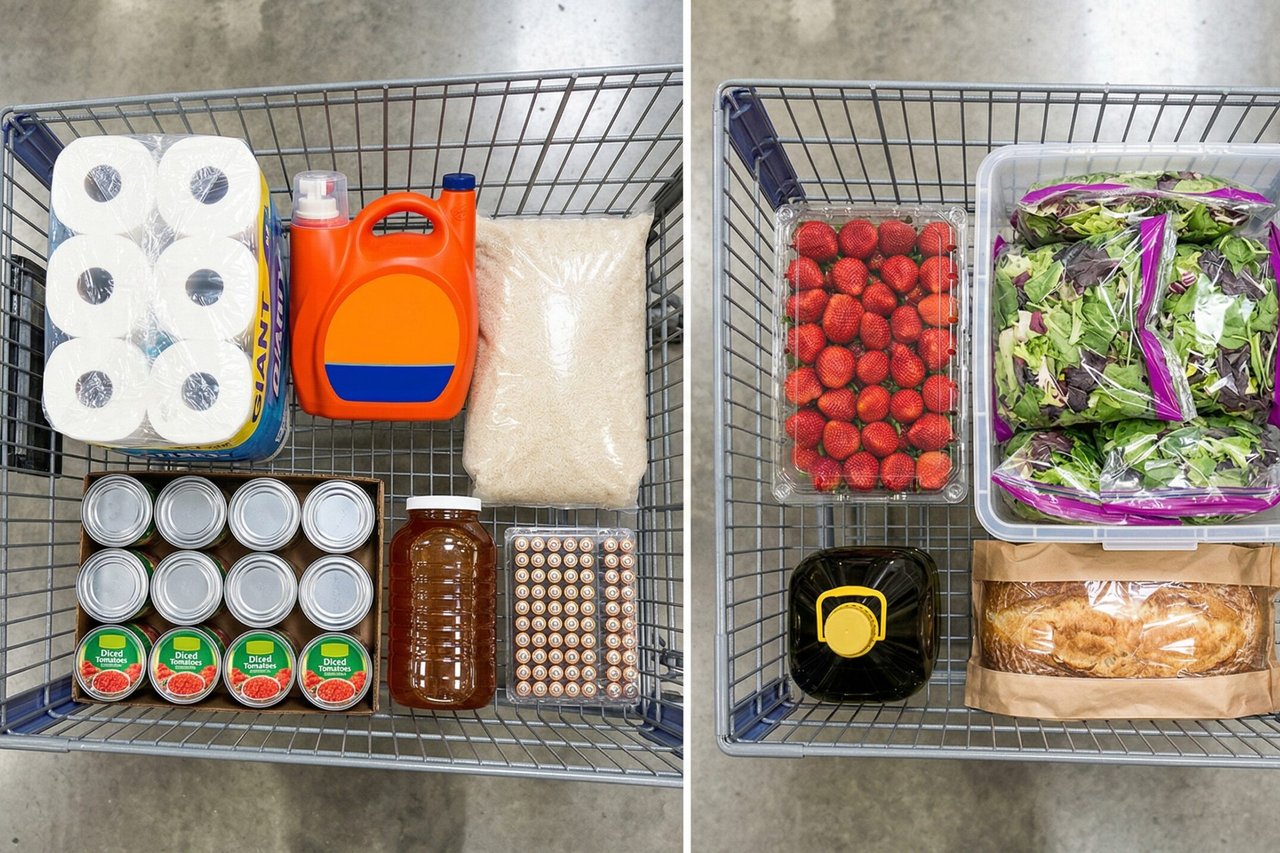
The math on warehouse clubs sounds simple. Buy more, pay less per unit, win.
But here’s the catch the membership card doesn’t tell you about.
Americans toss out roughly 30% to 40% of the food supply every year, according to the U.S. Department of Agriculture (USDA), which estimates that adds up to about 133 billion pounds and $161 billion worth of food annually.
The average family of four loses about $1,500 a year to food they buy and never eat. For more on how that adds up at the household level, take a look at “13 Easy Ways to Cut Food Waste and Save Money.”
That bulk “deal” isn’t a deal if half of it goes in the trash.
Here are 17 items that almost always pay off when you buy in bulk — and eight that you should leave on the shelf no matter how good the per-unit price looks.
The 17 items worth stocking up on
1. Toilet paper. It doesn’t expire. You’ll use it. The per-roll price at warehouse clubs typically beats the grocery store by a wide margin. Just make sure you have somewhere to store the brick.
2. Paper towels. Same logic as toilet paper. These are everyday consumables with infinite shelf life, and the bulk markup at regular supermarkets is brutal compared to club pricing.
3. Trash bags. You’re going to use every single one. Buying name brands like Hefty or Glad in 200-count boxes can cut your cost per bag nearly in half versus the 40-count at the grocery store.
4. Laundry detergent. Detergent stays good for at least a year unopened, longer if stored cool and dry. The big jugs at Sam’s or Costco undercut grocery prices by 30% or more per load.
5. Dishwasher pods. Cascade pods are one of those products with a flat price floor at supermarkets. According to FinanceBuzz, Costco recently priced Cascade dishwasher pods at 16 cents per pod, versus 18 cents at Sam’s Club. Either way, both crush the grocery store.
6. Toothpaste and toothbrushes. Toothpaste lasts roughly two years past its manufacture date. Toothbrushes never go bad. Unless you’re a household of one who hates brushing, you’ll go through these.
7. Diapers and baby wipes. Babies don’t slow down. Warehouse clubs carry multiple brands and sizes, and the cost-per-diaper math works in your favor almost every time. Stock up before your kid sizes out.
8. Batteries. Modern alkaline batteries have a shelf life of seven to 10 years. Buying a 48-pack of AAs at a warehouse club costs a fraction of what you’d pay grabbing a four-pack at a drugstore in an emergency.
9. White rice. This is the king of bulk pantry staples. White rice, stored in a cool, dry, airtight container, can last 25 to 30 years without losing meaningful quality. A 25-pound bag is a no-brainer.
10. Dried pasta. Dried pasta has only about 12% moisture, which makes it shelf-stable for the long haul. Most varieties last up to three years if stored in a cool, dry place. Buy the case.
11. Canned beans and tomatoes. Acidic canned goods like tomatoes are good for about 18 months. Canned beans last two to five years. They’re the backbone of cheap weeknight dinners, and the per-can price at warehouse stores is hard to beat.
12. Canned tuna and chicken. Same story. High protein, dirt cheap per serving, and unopened cans last years on a shelf. A flat of 12 cans at Costco often runs less than what you’d pay for half that at a regular grocery store.
13. Honey. Real honey is essentially immortal. It never goes bad, thanks to its acidic pH and low water content. Archaeologists have even found edible honey in ancient Egyptian tombs. Buy the giant jug guilt-free.
14. Frozen meat and poultry. If you have freezer space, this is where warehouse clubs earn their keep. Buy a Costco pack of chicken breasts, portion it into freezer bags the day you get home, and you’ve locked in low prices for months.
15. Frozen vegetables. Frozen peas, broccoli, corn, and spinach keep their nutrients and last six to 12 months in the freezer. Bulk bags cost a fraction per ounce of the small grocery-store boxes.
16. Aluminum foil and plastic wrap. These never expire. The giant rolls at warehouse clubs last most households a year or more, and the per-foot price absolutely demolishes grocery store rolls.
17. Gasoline. No, it’s not a pantry item, but worth mentioning. Costco and Sam’s Club gas prices typically run 10 to 30 cents per gallon below nearby stations, and for many members, gas savings alone justify the membership fee.

The 8 items likely to expire on you
1. Fresh berries. Bulk berries look like a great deal, but their thin skins and high moisture make them spoil fast — usually within three to five days. Mold can spread overnight. Unless you’re freezing them immediately, skip the giant clamshell.
2. Bagged salad greens. Pre-washed salad mixes are bacteria’s favorite playground. Even refrigerated, they wilt and turn slimy within a week. The big tub at the warehouse store is a race you’ll lose.
3. Cooking oils. Olive and vegetable oils start to oxidize the moment you open them. A multi-year Australian study by researcher Jamie Ayton found that extra-virgin olive oil stored in warm conditions or exposed to air and light turned rancid faster, lost antioxidants, and degraded so much that many samples no longer met “extra virgin” standards. Buy smaller bottles.
4. Brown rice. Unlike its white cousin, brown rice contains natural oils in the bran layer that cause it to go rancid in roughly six months. A 25-pound bag is a ticking clock unless you store it in the freezer.
5. Spices and seasonings. Ground spices lose their punch within about a year. That giant container of paprika looks economical until you realize you’re seasoning your food with flavorless dust by month eight.
6. Condiments. Ketchup, mustard, mayo, and salad dressings sound bulletproof, but once opened they have a real shelf life. Registered dietitian Cara Harbstreet has noted that once opened and refrigerated, most of these foods last only one to two months. The warehouse-size mayo jar is for restaurants, not families.
7. Nuts. Almonds, walnuts, pecans, and cashews are loaded with oils that turn rancid within months at room temperature. The bulk bag tastes great for the first few weeks, then goes bitter. Freeze them immediately or buy smaller quantities.
8. Bakery bread. Costco bakery loaves are gorgeous because they’re preservative-free. That’s also why the second loaf will be moldy by day four. Unless you can freeze it the moment you walk in the door, one loaf is plenty.
The bottom line
The cheapest item in your house is the one you actually use. The most expensive is the one you bought in bulk and threw away. Before you toss anything into that oversized cart, run a quick gut check: Do I have somewhere to store this, and will I realistically finish it before it turns?
If the answer to either question is no, the per-unit savings on the price tag are a mirage. You’re not saving money. You’re just paying a bigger bill upfront for the same amount of waste.
For more on where the warehouse club math breaks down, take a look at “9 Costco Items That Waste Your Money.” If you’re trying to decide whether membership is worth it at all, “5 Ways a Costco Membership Can Save You Thousands a Year” lays out the math.
And for an honest look at how easy it is to lose money to spoilage even when you’re trying to be careful, read “I Am Waste-Conscious and Frugal — Yet Still Manage to Throw Away $270 Worth of Food Every Few Months.”
Buy smart. Store smarter. And don’t let a “bargain” trick you into funding the local landfill.

Add a Comment