


Editor's Note: This story originally appeared on LawnStarter.
Not all grass types feel good underfoot. But the best grasses to walk on barefoot, such as improved common Bermudagrass and Kentucky bluegrass, combine soft texture and lush density to create a smooth, cushiony surface.
To have the best barefoot-friendly lawn, you must consider how the grass feels when walked on and how it holds up to foot traffic.
We’ve asked a turfgrass expert to help identify which types of grasses are perfect for shoeless walking. Read on to see the recommendations.
1. Improved Common Bermudagrass
Many homeowners are now enjoying the numerous health benefits of walking barefoot on grass, including lowering stress hormones and improving sleep quality.
And if you’re living in the southern U.S., improved common Bermudagrass is your best option. It’s one of the best grasses to walk on barefoot, thanks to its soft, yet resilient, blades.
Known for its fine texture and bright green color, improved common Bermudagrass creates a dense, springy turf that feels smooth under bare feet.
It thrives in hot climates and quickly forms a thick, uniform lawn that’s perfect for lounging or playing outdoors. It’s ideal for open areas and high-traffic yards that get plenty of sun.
According to Lambert McCarty, professor of turfgrass science and management at Clemson University, most people choose improved common Bermudagrass, “as seeds are readily available, and it germinates relatively quickly if planted at the correct time and properly maintained.”
- Classification: Warm-season grass
- Best for: USDA hardiness zone 6-10
- Foot traffic tolerance: High; recovers quickly
- Maintenance needs: Moderate to high; weekly mowing and monthly fertilizing during active growth
- Mowing height: 1.5 inches
- Watering needs: Low to moderate; benefits from deep watering in summer
- Shade tolerance: Low; at least 6-8 hours of sun
- Special features: Fast-growing; better disease and pest resistance
2. Kentucky Bluegrass
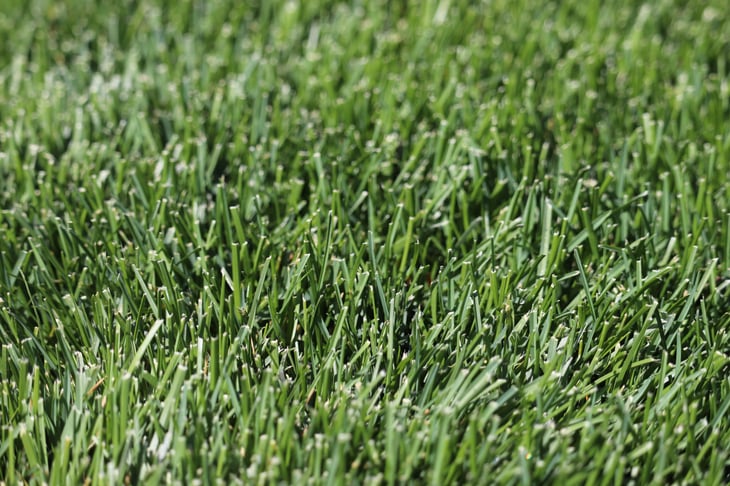
Prized for its soft, velvety feel and rich, emerald green color, Kentucky bluegrass is ideal for homes in northern regions. It forms a dense, fine-to-medium textured turf that feels incredibly lush underfoot, creating a comfortable, barefoot-friendly lawn.
Additionally, Kentucky bluegrass can self-repair, as it spreads via underground rhizomes. It’s a great choice for home lawns and open play spaces where beauty and comfort matter.
- Classification: Cool-season grass
- Best for: USDA hardiness zone 3-7
- Foot traffic tolerance: Low to moderate
- Maintenance needs: Moderate to high; regular mowing and fertilization
- Mowing height: 2.5 inches
- Watering needs: Moderate; 1 to 1.25 inches of water per week
- Shade tolerance: Low to moderate; at least 6 hours of sunlight daily
- Special features: Spreads through underground rhizomes, aiding in the natural filling of bare spots and fixing dry patches
To make barefoot walking on your lawn more comfortable, Jack Fry, turf Extension specialist from Kansas State University, suggests mowing your grass on the low end of its recommended range.
For example, the recommended mowing height for Kentucky bluegrass is 2.5 to 3.5 inches, so consider mowing it to 2.5 inches.
3. No-Mow Fescue Blends
Homeowners who want a barefoot-friendly, yet low-maintenance, lawn can choose no-mow fescue blends that stay low-growing. A mix of fine fescue grasses, fescue blends grow slowly, forming a soft, wispy lawn with a relaxed, meadow-like look. With a fine, silky texture, this cool-season grass blend feels light and airy underfoot.
But while no-mow fescue blends need minimal mowing, they’re prone to thatch. And if you want to enjoy barefoot walking on grass, Fry says to avoid thatch accumulation, regardless of your grass type.
- Classification: Cool-season grass
- Best for: USDA hardiness zone 3-7
- Foot traffic tolerance: Low
- Maintenance needs: Very low; mowing is optional or needed once or twice a year
- Mowing height: 2.5 inches
- Watering needs: Low; minimal watering once established
- Shade tolerance: High
- Special features: Dense growth suppresses weeds; deep root system enhances drought resistance

4. Perennial Ryegrass

Another cool-season grass ideal for walking on barefoot, perennial ryegrass has a fine to medium texture and a glossy, rich green appearance that stands out in any lawn.
It grows upright and dense, creating a soft, even surface that feels smooth under bare feet and looks manicured even with basic care.
Because of its rapid germination and quick establishment, perennial ryegrass is commonly used for overseeding and erosion control.
This grass performs well in less extreme northern regions and the transition zone. It’s ideal for home lawns, soccer fields, and public spaces where foot traffic tolerance and soft texture are priorities.
- Classification: Cool-season grass
- Best for: USDA hardiness zone 5-7
- Foot traffic tolerance: High; good wear tolerance, but damage must be overseeded
- Maintenance needs: Moderate; regular mowing and fertilization
- Mowing height: 1.5 inches
- Watering needs: Moderate; prefers consistent moisture but tolerates short dry periods
- Shade tolerance: Low; needs at least 4 hours of sunlight
- Special features: Fast germination (within 5-10 days); often used for overseeding
5. Turf-Type Buffalograss
A native warm-season grass, turf-type buffalograss has fine, narrow blades and a soft, cushiony feel that’s surprisingly comfortable underfoot. It grows low and evenly, forming a light green, barefoot-friendly landscape with a natural prairie look. Turf-type buffalograss cultivars like Sundancer and Cody can tolerate moderate foot traffic.
Well-suited for dry, sunny climates across the central and western U.S., this slow-growing grass requires little mowing, watering, and fertilizing. It’s a top pick for eco-conscious homeowners who want a beautiful, yet low-maintenance, lawn.
Note: Buffalograss is not a good choice for the Eastern U.S. due to high rainfall.
- Classification: Warm-season grass
- Best for: USDA hardiness zone 4-8
- Foot traffic tolerance: Moderate
- Maintenance needs: Very low once established; mowing is optional
- Mowing height: 2 inches
- Watering needs: Low once established; highly drought-tolerant
- Shade tolerance: Low; needs full sun (6+ hours daily)
- Special features: Native, requires less mowing, water, and fertilizer
6. Zoysiagrass
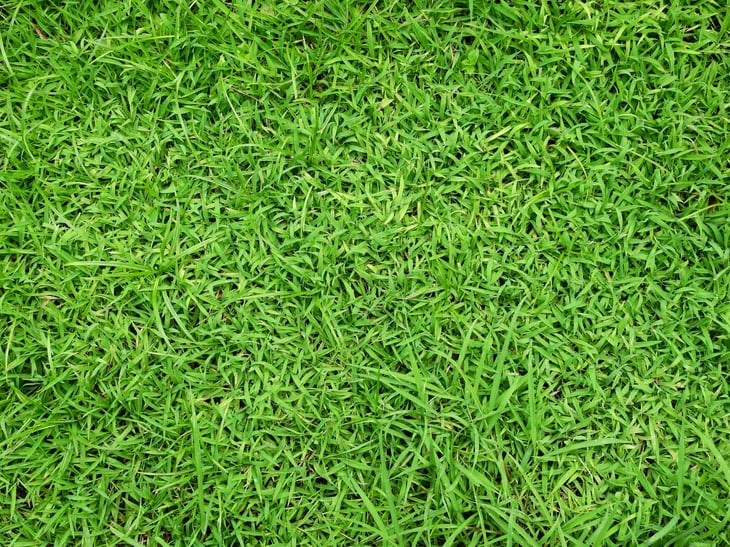
Known for its thick, carpet-like texture and soft to firm blades, Zoysiagrass creates a resilient, barefoot-friendly surface. It has a light to medium green color and forms a dense turf that resists weeds and handles wear exceptionally well.
Cultivars like Zeon and Emerald are both soft enough for barefoot walking and can tolerate moderate foot traffic.
Though it grows slowly, its ability to thrive in both sun and partial shade makes Zoysiagrass perfect for many homeowners in the southern U.S. and the transition zone. It’s ideal for home yards, sports fields, and sloped areas where you want a durable, attractive lawn.
This warm-season grass requires less watering and maintenance than other grass types. According to Fry, “Zoysiagrass requires minimal fertilization (1 to 1.5 lbs. of nitrogen/1,000 sq. ft. per year) after it’s established.”
- Classification: Warm-season grass
- Best for: USDA hardiness zone 5-11
- Foot traffic tolerance: Moderate to high
- Maintenance needs: Moderate; seasonal fertilizing and occasional dethatching
- Mowing height: 1 inch
- Watering needs: Low; prefers deep, infrequent watering
- Shade tolerance: Moderate
- Special features: Dense growth resists weeds

Add a Comment