


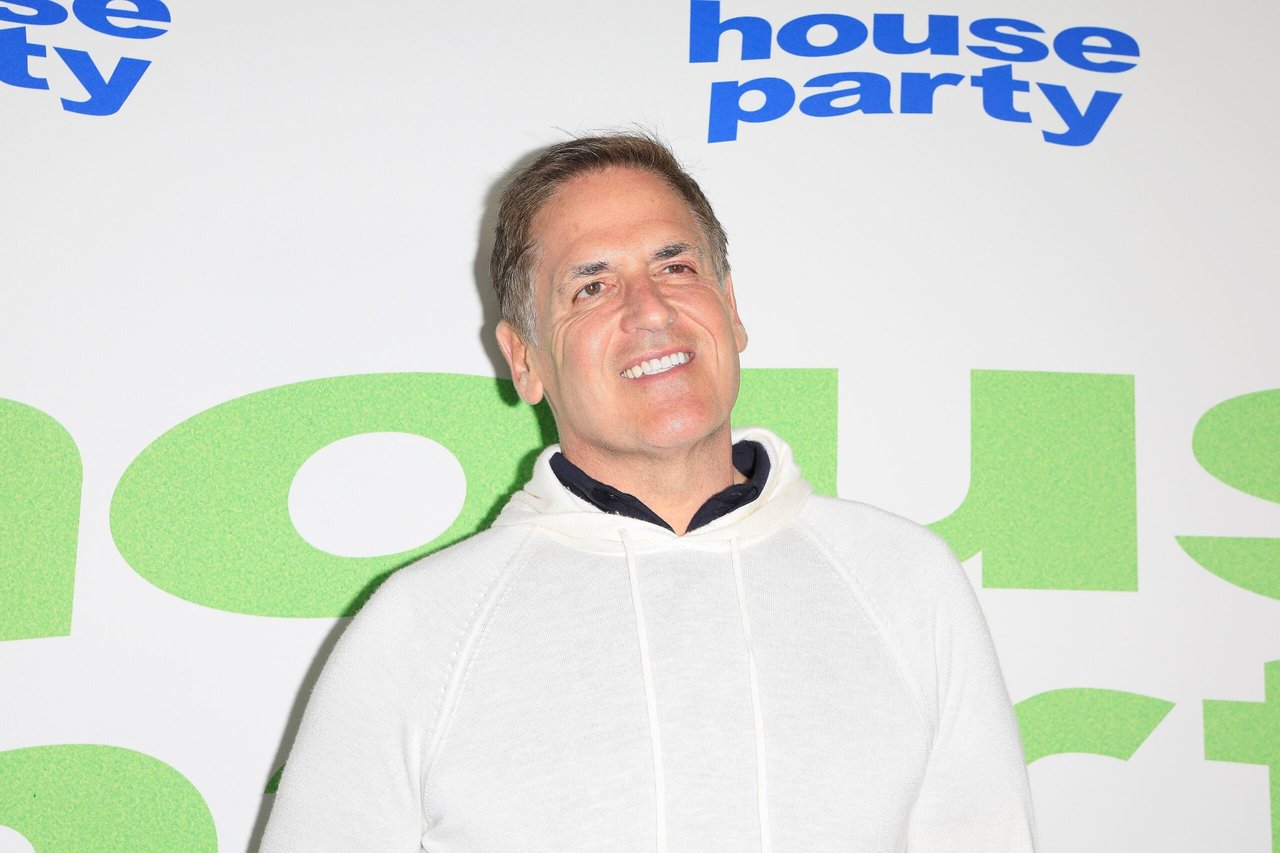
Mark Cuban and Rep. Ro Khanna have disagreed publicly on X over California’s proposed billionaire tax.
Cuban, worth about $10.6 billion, said that if the measure passes, “only idiot startup founders stay in Cali.” Khanna, who represents part of Silicon Valley and co-sponsors a federal version, defended it.
Regardless of how wealthy you are, past-due taxes can cause massive anxiety for working Americans. While most tax companies just put you on a payment plan and file your taxes for you, Alleviate Tax talks to the IRS directly. They can help you pay off your tax debt faster and potentially reduce what you owe.
To take advantage of this special program, you must owe more than $10,000 in past-due taxes. Answer a few questions to get started.
The issue is not taxation in itself
Cuban has said he does not object to paying taxes. His problem is with taxing wealth that exists only on paper.
Consider a founder whose startup is valued at $2 billion. A one-time 5% tax hands that founder a $100 million bill. If the $2 billion is locked in shares of a young private company, there may be no cash to pay it and no ready market for the shares, and selling a large stake may be hard to do without pushing the price down.
Cuban calls these founders “cash poor, stock rich.” They own a number, not a bank balance.
Khanna’s answer to the shortfall
California would lend illiquid founders the money, secured by their pledged shares, on a non-recourse basis running about 10 years. At the end, the founder repays in cash or the state takes the shares, according to the exchange reported by Bloomberg.
Cuban called this insane. As he framed it, the state would lend a founder money only to receive it right back as tax, collecting nothing new in the exchange. And if a founder defaulted, California would end up holding stakes in private companies, an outcome he doubted their other investors would welcome.
Khanna countered that most billionaires do not have this problem. He said roughly 72% of billionaire wealth sits in liquid public stock, and pointed to executives like Nvidia’s Jensen Huang and Alphabet’s Sundar Pichai, who could pay without strain.
Entrepreneur Palmer Luckey and investor Bill Ackman weighed in against the loan idea too. Both sides were partly right. The bind Cuban describes is real for a founder whose fortune is tied up in private company stock. But Khanna’s 72% figure measures where billionaire wealth sits, not how many billionaires are illiquid founders, and most of that wealth is in public shares that can be sold.
Wealth exits California
Anticipating the tax, some of the wealthiest Californians have already loosened their ties to the state before the cutoff that would decide who owes it.
The measure sets residency as of Jan. 1, 2026, and around that date Google co-founders Sergey Brin and Larry Page, investor Peter Thiel and others reduced their California ties or shifted their tax base to states with no income tax. California can still contest whether those moves hold, though.
Brin, whose net worth approaches $270 billion, could face a bill of more than $13 billion if the tax applied to him. He now lists Nevada as home and has put more than $100 million into defeating the measure.
Gov. Gavin Newsom, a Democrat, also opposes it, warning it would erode the tax base that funds schools and public safety. The state’s Legislative Analyst’s Office says the revenue is hard to predict but would likely run into the tens of billions, assuming enough billionaires stay to pay it.
Rival measures on the same ballot could void the tax outright if they draw more votes, and legal challenges over taxing wealth that has not been sold are all but certain.
Beyond California
The state is testing a mechanism that federal lawmakers and other states are already weighing, and it grew out of research showing billionaires can pay lower effective tax rates than the people who work for them. The fight over who should carry the tax burden is an old one.
Khanna and Sen. Bernie Sanders have introduced a federal bill, the Make Billionaires Pay Their Fair Share Act, that would levy a 5% annual wealth tax on the roughly 938 Americans worth more than $1 billion. Backers say it would raise about $4.4 trillion over a decade and fund one-time $3,000 payments to every person in a household earning under $150,000. It faces long odds in a Republican-controlled Congress.
Several states already tax their wealthiest residents, but with an income surtax, not a wealth tax. Maine added a 2% surcharge this year on very high incomes, starting above $1 million for single filers, and Washington and Massachusetts have adopted their own taxes on top earners. They work nothing like a wealth tax.
A surtax applies to money someone earned. A wealth tax reaches assets that may have never been sold, which is the exact problem Cuban and Khanna have argued about.
What a ‘yes’ vote will not settle
California voters get their say in November 2026. But even a yes would not end the argument. The tax would almost certainly land in court, and it could hasten the exit of the very people it aims to bill.
If you owe over $10,000 in past-due taxes, try Alleviate Tax now.


Add a Comment