


Editor's Note: This story originally appeared on LawnStarter.
The most wind-resistant trees have deep, extensive roots, strong trunks, and flexible wood that bends under wind pressure instead of breaking. Some good examples are the live oak, crape myrtle, and bald cypress.
But it’s not only the roots and wood fiber that make a tree resistant to hurricanes and tornadoes. How you choose, plant, and care for it also determines whether a tree will survive strong winds or break and fall, damaging your property.
Here are some of the most wind-resistant trees, listed by region and hardiness zone, along with what you need to know to keep them strong and healthy.
Pro Tip: Learn from your neighbors. Check which wind-resistant species do well in your community and have successfully survived windstorms. If you are unsure which trees fit your yard, consult a certified arborist or professional landscaper.
Best Wind-Resistant Trees for the Southwest (Hardiness Zones 8 to 10)
Many areas in the Southwest are drought-prone, so select naturally drought-resistant trees that can thrive without excessive irrigation, such as Canary Island Date Palm, crape myrtle, and sand live oaks.
Crape Myrtle (Lagerstroemia indica)

Also known as the “lilacs of the South,” crape myrtles provide abundant, colorful summer flowers from early summer to fall and are available in various sizes, easy to integrate in small and large yards.
“These small, ornamental trees are surprisingly tough,” says Whitney Laritson, merchandising and content manager at NatureHills.com in Nebraska, one of America’s largest online plant nurseries. In this case, the resilience is due to “flexible limbs and compact size” that help the tree avoid wind damage.
Pro Tip: Plant in groups of the same color (white, pink, purple, or red) for maximum visual impact in your hurricane-resistant landscape.
Wind-resistant features:
- Strong but flexible wood.
- Open, vase-shaped canopy that allows wind to pass through.
- Wide-spreading root system.
Characteristics:
- Hardiness zones: 7-10
- Mature size: 2-30 feet tall and 2-15 feet wide
- Foliage: Deciduous
- Bloom time: Early summer to fall
Growing Conditions:
- Sun exposure: Full sun.
- Soil: Prefers moist, well-drained soils.
- Watering: Drought tolerant. Water once a week until established and during dry summer spells.
- Potential hazards: No hazards.
Canary Island Date Palm (Phoenix canariensis)
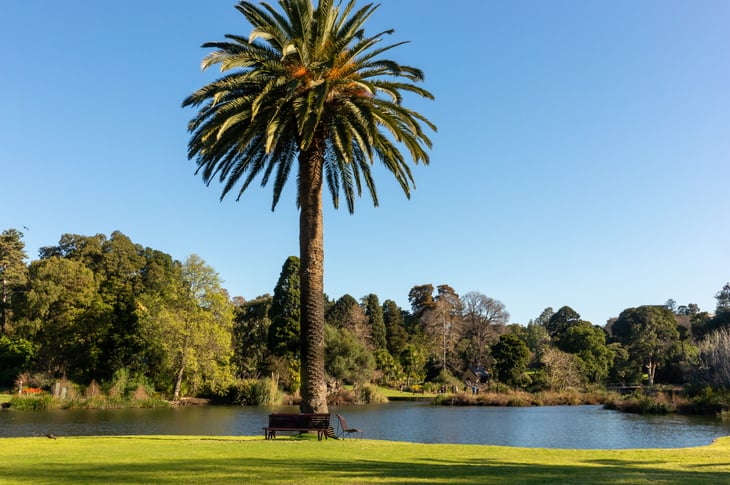
The Canary Island date palm has a pineapple-shaped trunk and large, deep green fronds, adding a luxurious, tropical vibe to Southwestern and Gulf Coast landscapes. Its flexible wood makes it one of the strongest trees to plant in hurricane-prone areas — it’ll bend like rubber instead of breaking. This reduces the risk of property damage and clean up after hurricanes.
Pro Tip: Monitor palm trees six months after windstorms; bud damage might show weeks to months after the event.
Wind-resistant features:
- Flexible trunk structure.
- Dense, fibrous root mass.
- Feather-like fronds can slightly fold, reducing wind resistance.
Characteristics:
- Hardiness zones: 9-11
- Mature size: 50-60 feet tall and 20-50 feet wide
- Foliage: Evergreen
- Bloom time: December-April
Growing Conditions:
- Sun exposure: Full sun.
- Soil: Well-draining sandy or loam soils.
- Watering: Drought-tolerant tree.
- Potential hazards: No hazards.

Live Oak (Quercus virginiana)
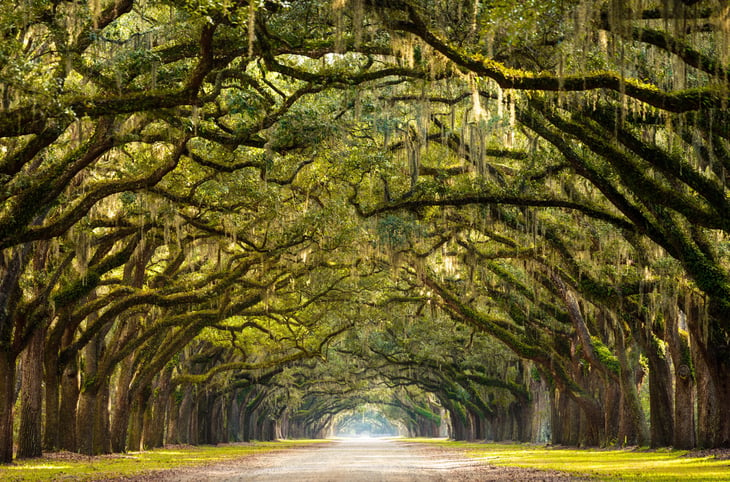
Thriving on the Southern coastal areas from Virginia south to Florida and west to Texas, the live oak is a majestic tree suited for large-scale landscapes.
According to the Arbor Day Foundation, it is “the most widely planted landscape tree in Texas,” mostly due to the vast areas of dense shade it can create. It’s a long-lived tree and can shelter your property for centuries if well cared for and properly trimmed.
Note: Live oaks can grow very wide. Make sure you have enough space or choose a smaller tree species.
Wind-resistant features:
- Deep taproot system with extensive lateral roots.
- Dense, strong, flexible wood.
- Low center of gravity.
- Horizontal limbs provide extra support.
Characteristics:
- Hardiness zones: 7-10
- Mature size: 60-80 feet tall and 60-120 feet wide
- Foliage: Evergreen
- Bloom time: Inconspicuous; spring flowering.
Growing Conditions:
- Sun exposure: Full sun and partial shade.
- Soil: Prefers well-drained, occasionally wet, clay, loam, or sandy soil.
- Watering: Drought-tolerant.
- Potential hazards: Live oak acorns can cause an upset stomach if ingested.
Best Wind-Resistant Trees for the Southeast (Hardiness Zones 7 to 10)
In the path of tropical storms and hurricanes, Southeastern homes are often damaged by fallen trees. Choosing wind-resistant species is one way you can prepare for hurricanes and reduce the risk but remember that correct planting and proper tree care are also important.
The following are some of the best hurricane-resistant species to consider.
Bald Cypress (Taxodium distichum)
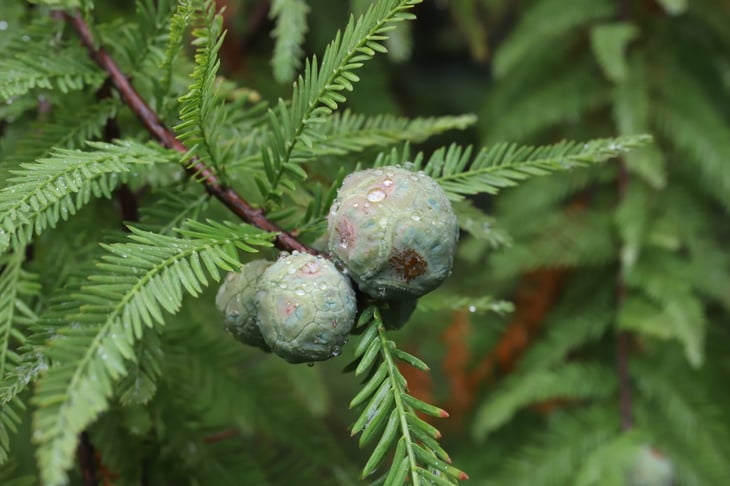
Its deep roots and flexible structure make bald cypress one of the top wind-resistant trees recommended by Broward County, one of the most hurricane-vulnerable counties in the US.
Native to the southern swamps, bayous, and rivers, the bald cypress has durable, rot-resistant wood and feather-like, light green leaves. It becomes the focal point of the landscape in the fall when its foliage blends shades of yellow, orange, and red into a vibrant crown.
Wind-resistant Features:
- Extensive root system.
- Flexible wood structure.
- Thick bark protects against wind damage.
- Strong central leader.
Characteristics:
- Hardiness zones: 4-10
- Mature size: 50-100 feet tall and 3-6 feet wide
- Foliage: Deciduous
- Bloom time: March-April
Growing Conditions:
- Sun exposure: Full sun or partial shade.
- Soil: Grows best in moist soils. Tolerates standing water and somewhat dry soil.
- Watering: Somewhat drought-tolerant.
- Potential hazards: No hazards.
Sabal palm (Sabal palmetto)
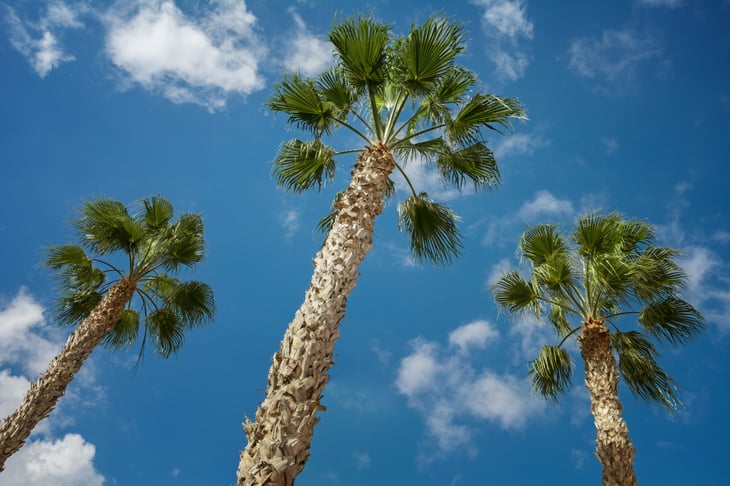
Sabal palms are evergreen perennials with puffball-like canopies and textured bark, adding an exotic vacation atmosphere to coastal yards. Thanks to their deep roots and bendy trunks, palms are remarkably hurricane-resistant. Their flexible structure helped 90% of sabal palms remain standing after Hurricane Andrew in 1992, despite the 145 mph winds.
Wind-resistant features:
- Flexible trunk structure (thousands of fibrous strands bundled together)
- Leaves with “hurricane-cut” design — fold up, reducing wind resistance
- Deep, extensive root system
- Self-pruning mechanism (sacrifices older fronds to protect the growing bud)
Characteristics:
- Hardiness zones: 8-11
- Mature size: 40-50 feet tall and 10-15 feet wide
- Foliage: Evergreen
- Bloom time: April-June
Growing Conditions:
- Sun exposure: Full sun.
- Soil: Prefers moist, well-draining sandy or loam soils.
- Watering: Drought-tolerant tree.
- Potential hazards: Might cause mild skin irritation upon contact.
Sand Live Oak (Quercus geminata)
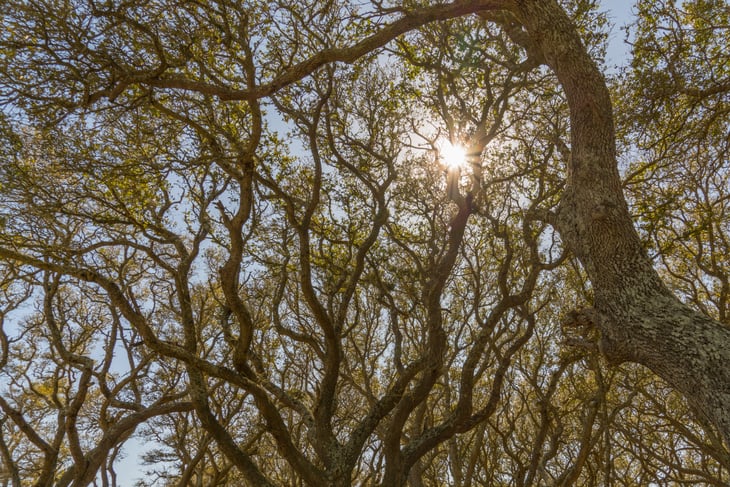
The sand live oak is a tough tree that tolerates sandy soils, strong winds, and salt sprays, making it perfect for the hurricane-prone coastal landscapes along the Gulf of Mexico and the Atlantic Ocean. It has boat-shaped leaves and a wide, spreading canopy with evergreen foliage that provides shade, screening, and wildlife habitat year-round.
Wind-resistant Features:
- Compact size.
- Low center of gravity
- Flexible wood.
- Strong, deep root system.
Characteristics:
- Hardiness zones: 7-10
- Mature size: 20-50 feet tall and 20-50 feet wide
- Foliage: Evergreen
- Bloom time: N/A; inconspicuous flowers
Growing Conditions:
- Sun exposure: Full sun or partial shade.
- Soil: Moist, well-draining, and acidic sandy, loam, or clay soils.
- Watering: Drought-tolerant tree.
- Potential hazards: Fruits and leaves are mildly toxic if eaten.
Southern Magnolia (Magnolia grandiflora)

Treasured for its huge, creamy white flowers set against a backdrop of deep-green leaves, the Magnolia grandiflora is one of the most wind-resistant trees in the Southeastern Coastal Plains.
Laritson says this tree is also less prone to leaf damage. “Its leathery foliage also tends to resist tearing better than softer-leaf species.”
Wind-resistant features:
- Deep, extensive roots.
- Pyramidal shape.
- Flexible branches.
- Strong, upright trunk.
Characteristics:
- Hardiness zones: 7-10
- Mature size: up to 90 feet tall and 40 feet wide
- Foliage: Evergreen
- Bloom time: April-June
Growing Conditions:
- Sun exposure: Full sun and partial shade.
- Soil: Moist, well-draining, and acidic sandy, loam, or clay soils.
- Watering: Water weekly for the first 2 years, then every other week.
- Potential hazards: No hazards.
Best Wind-Resistant Trees for the Northeast (Hardiness Zones 4 to 7)
While this region experiences fewer hurricanes than the Southeast, some travel up north, impacting the coastal areas as hurricanes or tropical storms. An easy way to protect your property from storm damage is to plant wind-resistant trees that can thrive in this area’s humid environment and handle its snowy winters.
American Beech (Fagus grandifolia)

The American beech is a sturdy, slow-growing tree that can withstand severe storms and provide blissful summer shade for your home. It has light gray bark that feels smooth and cool, even on hot days, and a large, spreading crown that turns into a blaze of golden and amber tones in the fall.
Wind-resistant features:
- Sturdy wood is able to withstand high wind pressure.
- Flexible branches.
- Deep, widespread root system.
Characteristics:
- Hardiness zones: 3-8
- Mature size: 50-80 feet tall and 40-80 feet wide
- Foliage: Deciduous
- Bloom time: March-May
Growing Conditions:
- Sun exposure: Full sun or partial shade.
- Soil: Moist, well-drained soils (sandy, silty, clay, or loam soils).
- Watering: It’s sensitive to drought and may need watering during dry spells.
- Potential hazards: Poisonous fruits can cause an upset stomach if ingested.
American Holly (Ilex opaca)
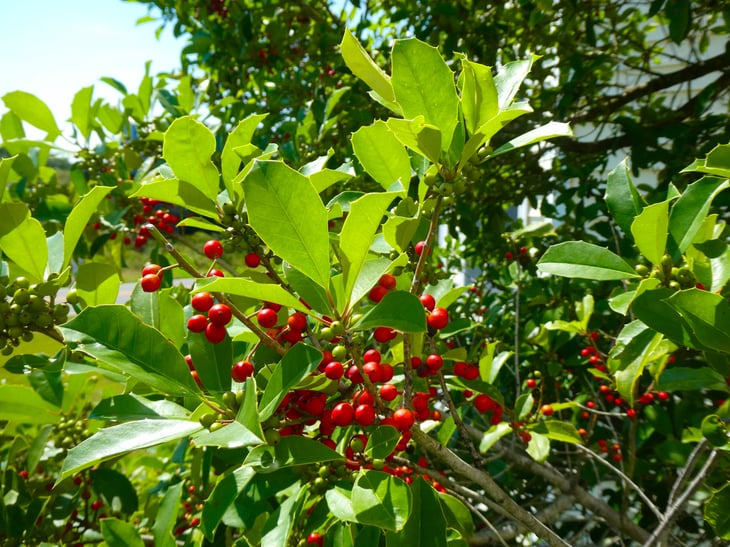
With its bright red berries and deep green leaves, the American holly is an excellent decoration for your snowy Christmas garden. It maintains its foliage year-round and is resistant to salt spray, making it one of the best trees for windy areas along the coast.
Wind-resistance Features:
- Deep root system.
- Dense, strong wood.
- Compact growth habit.
Characteristics:
- Hardiness zones: 5-9
- Mature size: 35-50 feet tall and 15-25 feet wide
- Foliage: Evergreen
- Bloom time: April-June
Growing Conditions:
- Sun exposure: Full sun, partial shade, or full shade.
- Soil: Tolerates well-draining sandy, loam, or rocky soils.
- Watering: Drought-sensitive tree. Requires watering during dry spells.
- Potential hazards: Poisonous fruit can cause nausea, vomiting, or diarrhea if eaten.
Flowering Dogwood (Cornus florida)
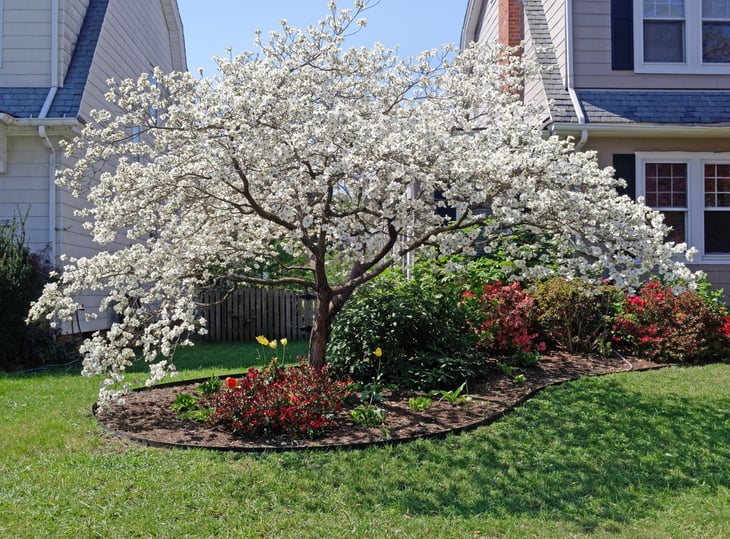
The flowering dogwood offers exceptional four-season interest that can enhance your property’s appearance and value. In spring, these hurricane-resistant trees turn into clouds of white, pink, or red flowers. Summer brings attractive dark green foliage, while fall rewards you with brilliant orange to red wine-like hues.
Wind-resistant features:
- Compact size
- Strong wood structure
Characteristics:
- Hardiness zones: 5-9
- Mature size: 20-35 feet tall and up to 25 to 30 feet wide
- Foliage: Deciduous
- Bloom time: March-June
Growing Conditions:
- Sun exposure: Prefers partial shade but also grows in full sun.
- Soil: Deep, rich, well-drained sandy or clay soil.
- Watering: May need to water once per week when there’s no rain.
- Potential hazards: Berries are potentially poisonous to humans and pets, and contact may cause skin irritation.
Best Wind-Resistant Trees for the Midwest (Hardiness Zones 3 to 6)
Due to its location far from the coast, folks living in the Midwest have little cause to worry about hurricanes but need to deal frequently with powerful tornadoes. Here are a few trees with a good chance of remaining standing after the strong winds in tornado season.

American Persimmon (Diospyros virginiana)

Besides being one of the most wind-resistant trees, the American persimmon produces uniquely flavored fruits with a honey-sweet, date-like richness that you can enjoy raw or in mouth-watering pies. The fruits are borne from fragrant late-spring flowers and are followed by a colorful display in the fall when the tree’s leaves turn yellow, orange, and red.
Note: Unless you buy a self-fertile cultivar like ‘Meader’ or ‘Prok,’ you will need both a female and a male tree for reliable fruit production.
Wind-resistant features:
- Strong, dense wood.
- Flexible branches.
- Deep, extensive, coarsely-branched root system.
Characteristics:
- Hardiness zones: 4-9
- Mature size: 30-80 feet tall and 20-35 feet wide
- Foliage: Deciduous
- Bloom time: May-June
Growing Conditions:
- Sun exposure: Full sun or partial shade.
- Soil: Does best in moist soil but tolerates dry, nutrient-poor soils as well.
- Watering: Water once or twice a week for the best fruit yield.
- Potential hazards: Persimmon seeds can be harmful to pets if eaten.
Dawn Redwood (Metasequoia glyptostroboides)
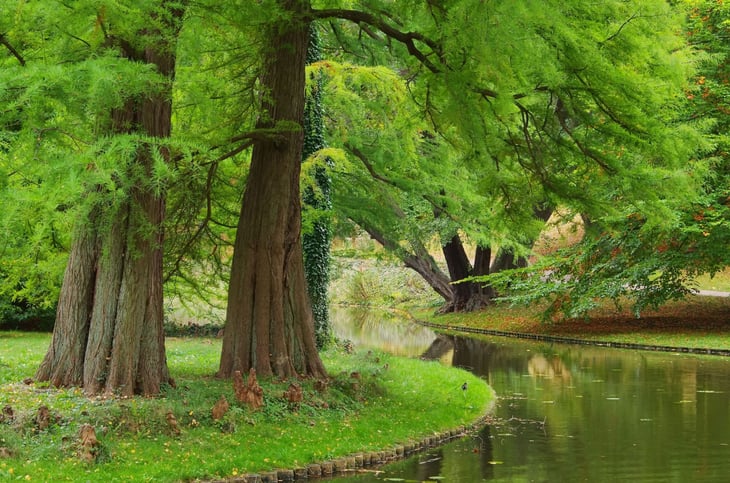
Native to south-central China, the dawn redwood is one of the few deciduous conifer species, meaning it loses its leaves during winter. While it looks delicate, the dawn redwood is relatively carefree, fast-growing, and can easily withstand the wet, cold winters of northern states such as Ohio or Michigan.
Wind-resistant features:
- Soft, flexible wood that can bend easily.
- Strong central leader.
- Deep, extensive root system.
Note: They grow taller than most trees and require protection from lightning.
Characteristics:
- Hardiness zones: 4-8
- Mature size: 70-100 feet tall and up to 25 feet wide
- Foliage: Deciduous
- Bloom time: N/A; Inconspicuous flowers
Growing Conditions:
- Sun exposure: Full sun.
- Soil: Tolerates a wide range of soil conditions.
- Watering: Mildly drought-tolerant.
- Potential hazards: No hazards.
Eastern Red Cedar (Juniperus virginiana)

An aromatic tree with scale-like evergreen leaves, the Eastern red cedar is well-known for its tolerance to wind, heat, and salt. It can be grown anywhere in the United States and is one of the best wind-resistant trees for cold climates. The strong wood, deep roots, and compact crown shape help it weather wild winds with minimal damage.
Wind-resistant features:
- Dense, strong, and flexible wood.
- Deep taproot with extensive lateral roots.
- Small leaves have less wind resistance.
Characteristics:
- Hardiness zones: 2-9
- Mature size: 40-50 feet tall and 10-20 feet wide
- Foliage: Evergreen.
- Bloom time: N/A; inconspicuous flowers
Growing Conditions:
- Sun exposure: Full sun or partial shade.
- Soil: Tolerates dry or moist sandy, loam, clay, silt, rocky, or limestone-based soils.
- Watering: Drought-tolerant tree.
- Potential hazards: Mildly toxic if eaten. Highly flammable.
Best Wind-Resistant Trees for the West (Hardiness Zones 3 to 9)
Climate varies widely across the Western region, so choose trees that fit your local weather.
If you live in California, Nevada, or Oregon, factor in the drought and mix species that can thrive with less water. With freezing winters in your calendar, check the cold hardiness before buying.

Chinese Juniper (Juniperus chinensis)
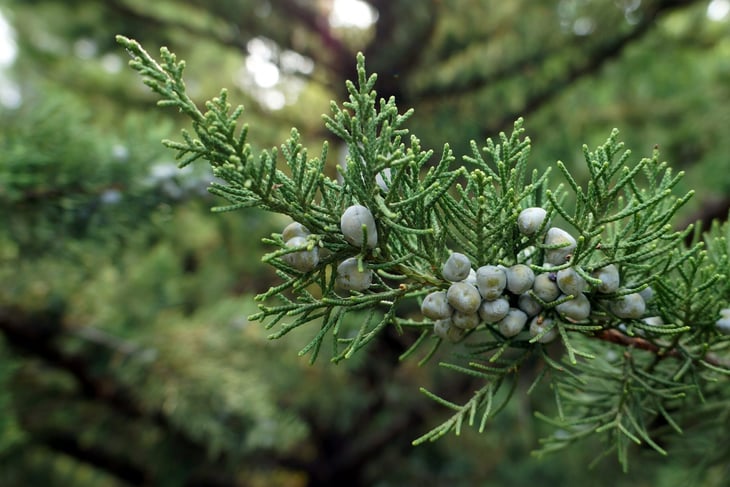
The Chinese juniper grows a bushy, conical crown that starts close to the soil, forming a natural shield against strong wind and curious neighbors. It has evergreen, scale-like leaves that shimmer between blue-green and silvery gray in the wind, and is often planted as a windbreak, a rock garden feature, or as a privacy hedge.
Wind-resistant features:
- Deep, adaptable roots that can secure against rocks.
- High wood density.
- A conical form that naturally sheds wind.
Characteristics:
- Hardiness zones: 4-9
- Mature size: 50-60 feet tall and 10-20 feet wide
- Foliage: Evergreen
- Bloom time: N/A; no flowers
Growing Conditions:
- Sun exposure: Full sun.
- Soil: Grows best in moist, well-drained soil.
- Watering: Drought-tolerant.
- Potential hazards: Needles and berries are mildly toxic if eaten.
Douglas Fir (Pseudotsuga menziesii)
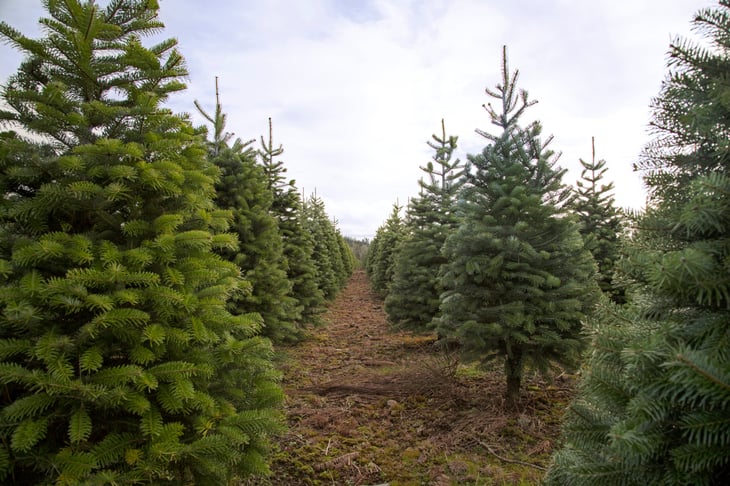
America’s most popular Christmas tree grows best in medium-sized to large yards, where its lower branches can spread fully, completing the tree’s natural pyramidal shape. There are two varieties of Douglas fir, so ensure you buy the right one.
Rocky Mountain Douglas fir: More cold hardy.
Coast Douglas fir: Better suited for milder climates with more temperate winters, such as coastal California.
Wind-resistant features:
- Needle-like foliage with low wind-resistance.
- Extensive root system as wide as the crown.
- Strong, flexible wood that bends in the wind.
Characteristics:
- Hardiness zones: 4-6
- Mature size: 40 to 80 feet tall and 15 to 25 feet wide (in home landscapes)
- Foliage: Evergreen
- Bloom time: N/A; inconspicuous flowers
Growing Conditions:
- Sun exposure: Full sun.
- Soil: Thrives in well-drained, acidic, clay, loamy, or sandy soil.
- Watering: Needs some watering during summer dry spells.
- Potential hazards: No hazards.
Other wind-resistant species suitable for Western landscapes are the live oak, Norway spruce, and Eastern redbud.
Olive Tree (Olea europaea)

Native to the rugged Mediterranean coasts, olive trees have deep, strong roots and a high drought tolerance. These small wind-resistant trees are both a joy to look at and a source of delicious olives. In the spring and summer, olive trees fill with fragrant white flowers. By fall, the branches are heavy with green olives that turn purple and brown when ripe.
Note: Olive trees love warm weather and thrive in southern California. They are less suitable for cold climates.
Wind-resistant features:
- Deep, robust root systems.
- Flexible branches.
- Small, narrow leaves with minimal wind resistance.
Characteristics:
- Hardiness zones: 8-10
- Mature size: 20-30 feet tall and 15-25 feet wide
- Foliage: Evergreen
- Bloom time: April-July
Growing Conditions:
- Sun exposure: Full sun.
- Soil: Prefers well-draining sandy, clay, or loam soil types that don’t become waterlogged; tolerates slightly acidic to slightly alkaline soils.
- Watering: Drought-tolerant.
- Potential hazards: Small children and pets can choke on the olive pits.
What Makes Trees Wind-Resistant?
Experts classify trees as “wind-resistant” when they remain “standing and living” after withstanding hurricane-force winds. That means they won’t easily break or uproot under the wind pressure.
Characteristics of wind-resistant trees include:
- Deep, extensive root systems that anchor them into the ground.
- Flexible wood that bends under wind pressure instead of snapping.
- A strong trunk, which can better face high wind pressure. Trees with a single trunk are more resilient than species with multiple trunks.
- Trees native to wind-prone regions are better adapted to withstand high winds.
- A low center of gravity also improves wind-resistance, according to Laritson: “Trees that are naturally shorter or wider are more stable than tall, top-heavy species.”
- Healthy, well-pruned trees have stronger roots and trunks and are more likely to survive severe winds than weak trees affected by pests and diseases.
- Young trees are more resilient than old trees. Pick wind-resistant trees with a long life span and replace old trees once they show signs of decay.
Does Planting Impact a Tree’s Wind Resistance?
Yes. If the tree doesn’t have enough lateral space to grow its roots and crown or deep soil to grow healthy roots, it will be less resilient to wind pressure. Choosing the right tree for the right place is essential for growing wind-resistant trees.
How Can You Tell If a Tree Is in Danger of Falling?
Several signs can tell you that a tree is in danger of falling, including:
- Exposed, damaged, or decaying roots
- Large areas with missing bark, cracks, seams, and dead branch stubs
- Dead branches or a dead portion of the tree
- Mushrooms or conks growing from the tree branches, trunk, or roots
- Your tree canopy is dying from the top down or on one side
- Cavities in the trunk
Why Consider Wind-Resistant Trees for Your Landscape?
Wind-resistant trees are less likely to break during a hurricane, tornado, or windstorm and damage your property.

Add a Comment