


Editor's Note: This story originally appeared on LawnStarter.
Use mosquito-repellent plants, such as lavender and geraniums, as natural ways to drive away mosquitoes. Here, we’ll discuss plants that repel mosquitoes. There are plenty to choose from and add to your garden.
Although plants in and of themselves won’t repel mosquitoes, various parts of them — usually the leaves — can be bruised and rubbed on your clothes, or they can be burned in the seating area around a fire pit to help keep bugs away in your backyard. You can even make essential oils that help stop mosquitoes in their tracks.
Keep reading for all the details.
How Plants Repel Mosquitoes
Some plants contain natural oils that can repel mosquitoes. However, there’s not enough evidence that plants themselves provide effective protection against them. To get the most out of a plant’s repelling properties, you need to crush (or bruise) the leaves or withdraw the oil.
With that in mind, you can add such plants to your garden as an easy-to-reach source for repellent oils. Combine these plants with other effective strategies to get rid of mosquitoes in your yard, such as eliminating standing water, for the best protection against bites.
1. Basil (Ocimum basilicum)

Basil oils contain linalool and estragol, which are repellent and toxic against mosquitoes. Additionally, studies show that basil leaf extract can kill mosquito larvae, prevent female mosquitoes from laying eggs, and even prevent the eggs from hatching if applied after the eggs have been laid.
Besides being used to flavor all kinds of foods, you can crush basil leaves to release the oil and rub them on your clothes, burn them, or set up a vase or bowl of water containing the bruised herb.
Sun: Full sun
Soil: Moist, well-drained soils
Duration: Annual or perennial, depending on the climate
Bloom time: Summer
Water needs: Average
USDA Hardiness Zone: 3 to 11
2. Lavender (Lavandula)

Used as a medicinal plant to reduce stress, lavender can also help reduce your stress by keeping mosquitoes and bugs away. A relative of the mint family, lavender has high linalool concentration, and its oil has been shown to repel a mosquito species from the Anopheles genus for up to 8 hours.
Sun: Full sun to partial shade (needs protection from the hot afternoon sun)
Soil: Well-drained
Duration: Perennial
Bloom time: Summer
Water needs: Low
USDA Hardiness Zone: 5a to 9b
3. Marigold (Tagetes)
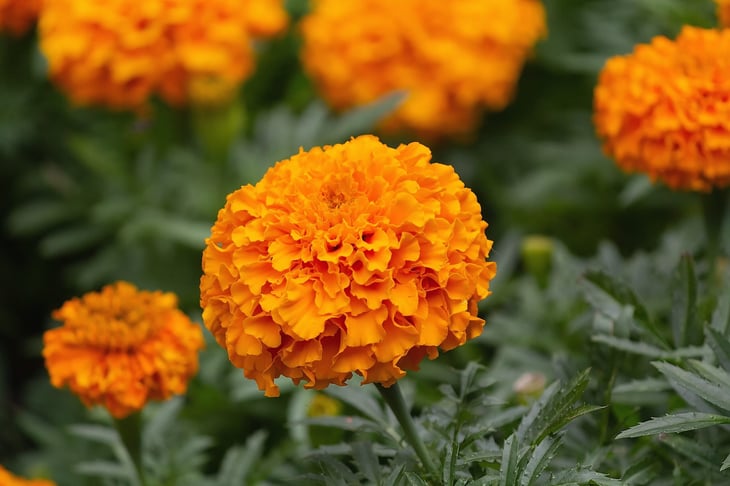
Yes, marigolds can also help keep mosquitoes away. Known for their bright gold and/or yellow colors, marigolds’ distinctive scent makes mosquitoes go the other direction. According to one study, for 50% essential oil of marigold the protection time was just over 2 hours compared to 6.2 hours for N,N-diethyl-3-methylbenzamide (DEET) 25%.
Sun: Full sun
Soil: Well-drained
Duration: Annual
Bloom time: Summer
Water needs: Moderate
USDA Hardiness Zone: 2a to 11b
4. Rosemary (Salvia rosmarinus)

In addition to its delightful taste, rosemary also helps keep bugs away (including the skeeters). In one study, a 20% solution of rosemary gave 100% protection against mosquitoes for 8 hours; in another, lower concentrations of rosemary repelled these insects for up to 1.5 hours.
Naturally aromatic as well as mosquito-repellent, rosemary works best when you crush or burn the leaves. This herb can be grown as a perennial in USDA Hardiness Zones 8 and higher; for other climates, it can be grown in pots and taken inside during the winter.
Sun: Full sun
Soil: Well-drained, dry, and slightly acidic soils
Duration: Perennial
Bloom time: Spring and summer
Water needs: Low to moderate
USDA Hardiness Zone: 8a to 10b
5. Catnip or Catmint (Nepeta cataria)
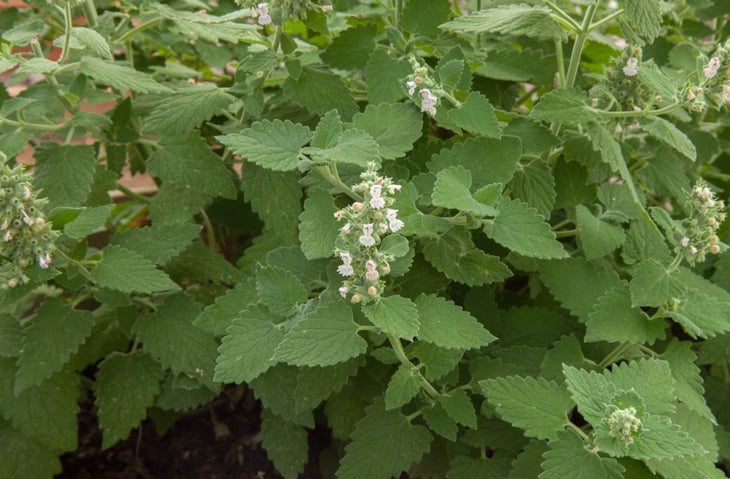
One of the reasons cats love catnip is because they also use it as a bug repellent. Similarly, catnip can also be used in humans to fend off mosquitoes. Catnip works by triggering TRPA, a chemical receptor, pushing back the mosquitoes.
In fact, catnip may be as effective as DEET, and the Food and Drug Administration (FDA) has approved catnip oil as an insect repellent.
Sun: Full sun to partial shade
Soil: Well-drained, dry soil
Duration: Perennial
Bloom time: Fall, spring, and summer
Water needs: Moderate
USDA Hardiness Zone: 3a to 9b
6. Lemongrass (Cymbopogon citratus)
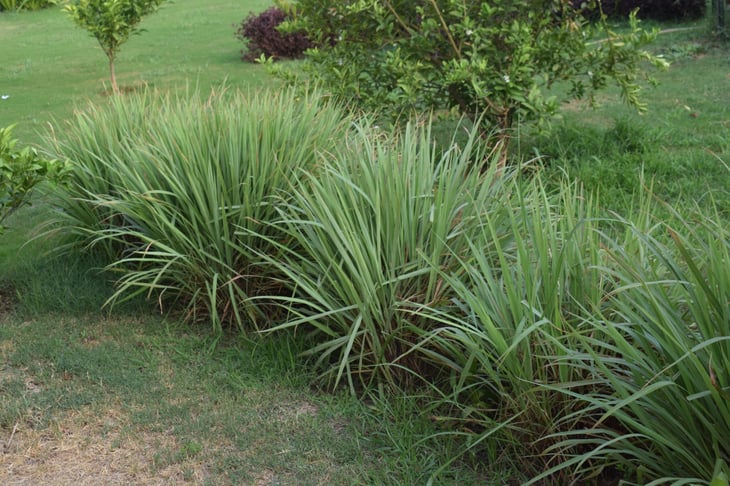
In one study, concentrations of 10% lemongrass oil repelled 100% of mosquitoes within 24 hours of exposure, similar to the results for citronella oil. Gardeners in USDA Hardiness Zones 10 and 11 can grow lemongrass year-round, but it needs to be brought inside in Zones 9 or below when nighttime temperatures drop below 45 degrees F.
Note: The plant itself can be toxic to dogs if they eat it in large quantities. See our article on Plants Poisonous to Dogs if you have a pet to protect.
Sun: Full sun
Soil: Well-drained, moist soil
Duration: Perennial
Water needs: Moderate
USDA Hardiness Zone: 8b to 11b
7. Peppermint (Mentha x piperita)
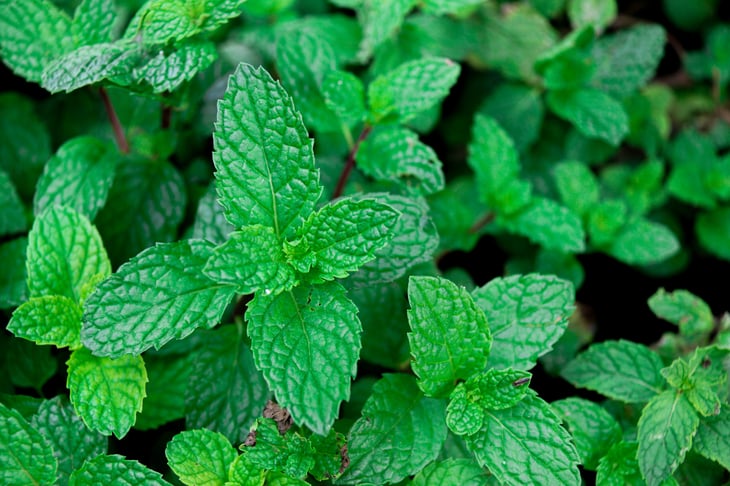
Peppermint oil fully protected against mosquitoes for 2.5 hours in one study. After the next 30 minutes, researchers recorded only one or two bites compared with 8 or 9 bites on arms without the oil. A shade plant that repels mosquitoes, you’ll need to grow peppermint in its own pot to keep it from spreading all over your garden.
Sun: Prefers partial shade but tolerates full sun
Soil: Rich, moist soil
Duration: Perennial
Bloom time: Flowers bloom in summer
Water needs: Moderate to high
USDA Hardiness Zone: 5a to 9b
8. Lemon Balm (Melissa officinalis)
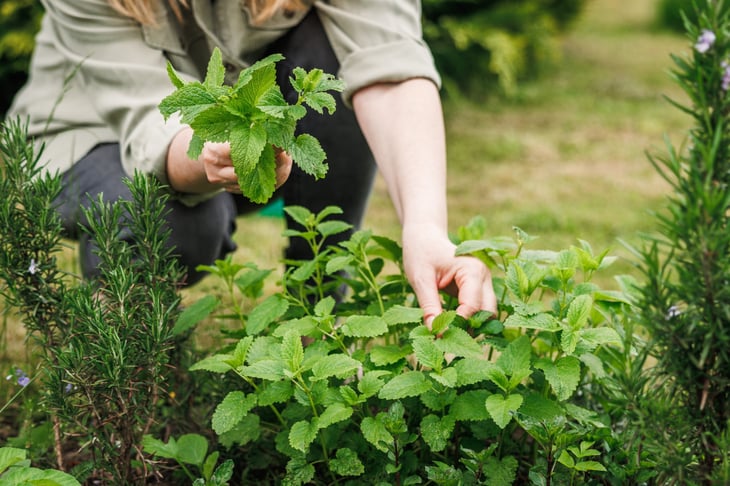
Lemon balm has a component of citronella (citronellal) that acts as a mosquito repellent. Some evidence even suggests it can be useful to treat Alzheimer’s. Originating in the Mediterranean to western and central Asia, lemon balm can remain outdoors in USDA Hardiness Zones 3 to 7 but can always be planted in indoor pots.
Sun: Full sun to partial shade
Soil: Well-drained, occasionally dry soils
Duration: Perennial
Bloom time: Summer and fall
Water needs: Low to moderate
USDA Hardiness Zone: 3a to 7b
9. Citronella Grass (Cymbopogon nardus)
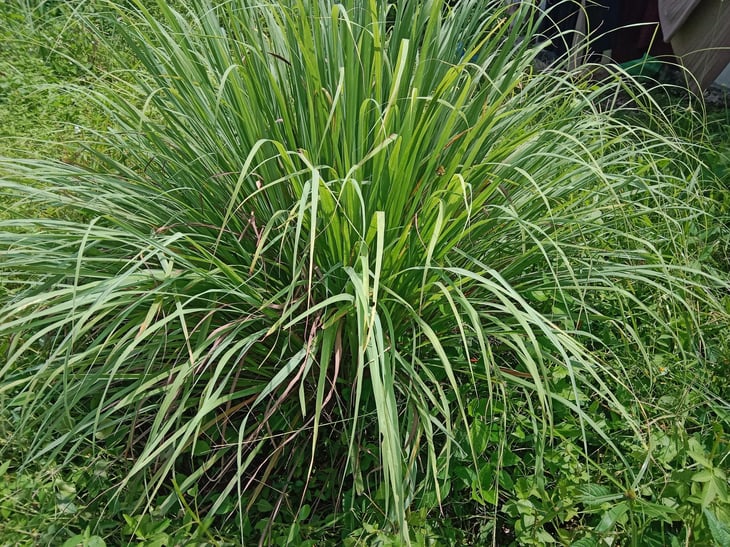
Commonly burned outdoors to ward off mosquitoes, burning citronella is more effective when the wind is calm. Or you can also take the crushed leaves and rub them on your clothes. One study found that citronella oil consistently drives away mosquitoes but not as long as DEET does, as another study showed.
The perennial grass grows in USDA hardiness zones 10-12, but potted grass can be brought indoors during the winter. Use on children younger than 6 months only under the advice of a physician.
Sun: Full sun to partial shade
Soil: Moist but well-drained soil
Duration: Perennial
Water needs: Moderate
USDA Hardiness Zone: 10 to 12
10. Lantana (Lantana camara)

Considered invasive in a couple of national parks and a few states, a study showed that lantana can repel Anopheles mosquitoes. Another study found that lantana flower extract mixed in coconut oil provided protection from Aedes mosquitoes.
Note: The American Society of Prevention of Cruelty to Animals considers lantana toxic to cats, dogs, horses, and livestock.
Sun: Full sun
Soil: Moist, but well-drained soil
Duration: Can be cultivated as annual or perennial
Bloom time: Summer and fall
Water needs: Moderate
USDA Hardiness Zone: 7a to 11b
11. Scented Geranium (Pelargonium ssp.)
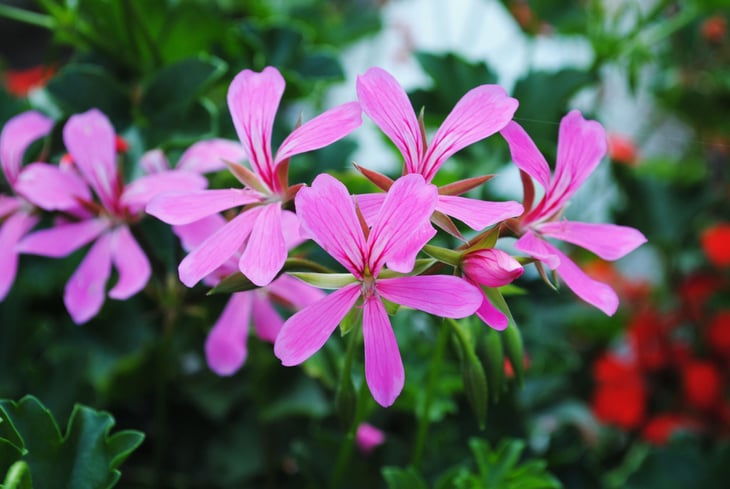
A great option as a houseplant or outdoors in landscaping beds, scented geraniums release a pleasant fragrance for us humans but a terrible smell for mosquitoes and other insects. There are several varieties of scented geraniums, each varying in fragrance, with some having a lemony or peppery scent, for example.
If you live in hardiness zones 8 and below, bring your geraniums indoors in the fall to protect them from winter temperatures. Otherwise, you’ll need to buy new plants next year.
Sun: Full sun
Soil: Fertile, well-drained soil
Duration: Annual in most climates; perennial in Zones 9-11
Bloom time: Spring to fall, depending on the variety
Water needs: Moderate
USDA Hardiness Zone: 9 to 11

12. Mums (Chrysanthemums)

Mums or chrysanthemums are flowers that repel mosquitoes and provide one of the oldest insecticides known to man. Cultivated for over 2,500 years around the world, crushed flowers of Dalmatian chrysanthemums (Chrysantemum cinerariaefolium) and Persian chrysanthemums (Chrysanthemum coccineum) contain pyrethrins, natural insecticides that repel biting insects.
Sun: Full sun but tolerates partial shade
Soil: High in organic matter and well-drained soil
Duration: Can be cultivated as annual or perennial
Bloom time: Summer and fall
Water needs: Moderate
USDA Hardiness Zone: 3a to 9b
13. Thyme (Thymus)
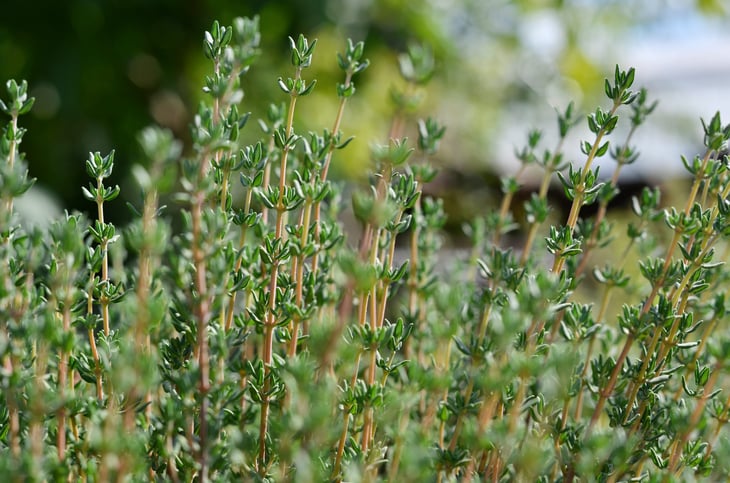
Thyme, as well as sage and rosemary, is a member of the mint family (Lamiaceae) and contains thymol and carvacrol, compounds that are known for their repellent and larvicidal effects against mosquitoes.
A low-maintenance plant, thyme includes around 350 different species, but 3 particular varieties have mosquito-repelling properties: common thyme (Thymus vulgaris), red creeping thyme (Thymus serpyllum ‘Coccineus’ or Thymus praecox ‘Coccineus’) and lemon thyme (Thymus citriodorus).
Sun: Full sun
Soil: Well-drained, dry soils
Duration: Perennial
Bloom time: Summer
Water needs: Low
USDA Hardiness Zone: 5a to 9b
Other Mosquito-Repelling Plants
Consider these additional options:
- Sage (Salvia ssp.)
- American beautyberry (Callicarpa americana)
- Bee balm (Monarda spp.)
- Floss flower (Ageratum houstonianum)
- Garlic (Allium sativum)
- Lemon-scented eucalyptus (Corymbia citriodora)
- Fennel (Foeniculum vulgare)

Add a Comment