


Buckle up — you might be in for a rough ride if you are flying into one of the bumpiest airports in America.
Recently, Turbli — a website that provides travelers with turbulence predictions — ranked 550 of the largest airports in the world to determine which are most turbulent for approaching and descending aircraft.
Turbulence is measured in eddy dissipation rate, which is based on the rate at which energy dissipates in the atmosphere, with 0 being the least turbulent rate and 100 being the most.
Based on Turbli’s research, these are the airports with the bumpiest rides in North America.
10. Boise Airport

Airport code: BOI
Location: Boise, Idaho, United States
Average turbulence for approach and descent: 15.475
Boise Airport served 4.75 million travelers in 2023 via nine airlines with routes to 26 nonstop destinations. The airport does not receive any funding from local taxes.
9. Reno-Tahoe International Airport

Airport code: RNO
Location: Reno, Nevada, United States
Average turbulence for approach and descent: 15.591
Reno-Tahoe International Airport hosts 11 airlines that fly nonstop to more than 20 destinations. Airport operations provide all funding for the airport, meaning it does not depend on tax dollars.
8. Seattle-Tacoma International Airport

Airport code: SEA
Location: Seattle, Washington, United States
Average turbulence for approach and descent: 15.779
Seattle-Tacoma International Airport is the eighth-biggest airport in the United States for passenger activity. More than 30 domestic and international airlines fly out of SEA Airport.
7. Harry Reid International Airport
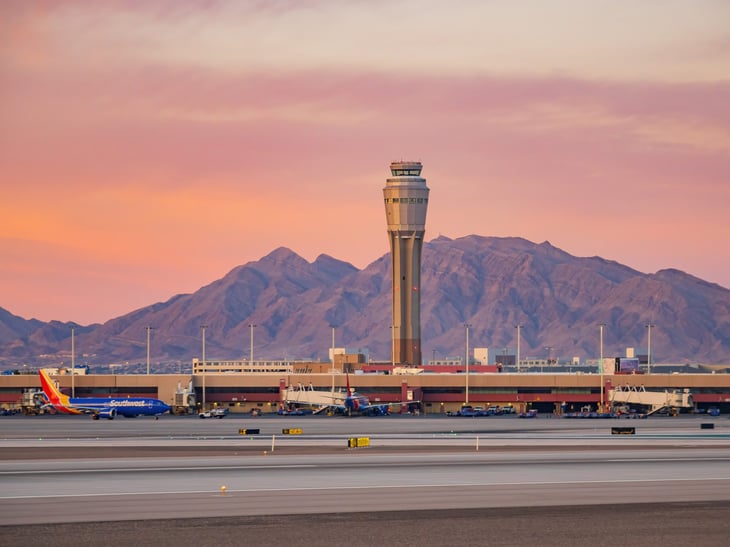
Airport code: LAS
Location: Las Vegas, Nevada, United States
Average turbulence for approach and descent: 15.837
Harry Reid International Airport served a record 58.4 million travelers in 2024. That same year, it also introduced online parking registration and a curbside concierge service that allows customers to drop off checked luggage.
6. Vancouver International Airport

Airport code: YVR
Location: Richmond, British Columbia, Canada
Average turbulence for approach and descent: 16.159
Vancouver International Airport welcomed more than 26 million passengers in 2024, a record for the second-busiest airport in all of Canada.
5. Jackson Hole Airport

Airport code: JAC
Location: Jackson, Wyoming, United States
Average turbulence for approach and descent: 16.391
Jackson Hole Airport is located within Grand Teton National Park — making it the only airport located inside a national park in the United States. It began commercial operations in 1946 and is the busiest airport in Wyoming.

4. Salt Lake City International Airport
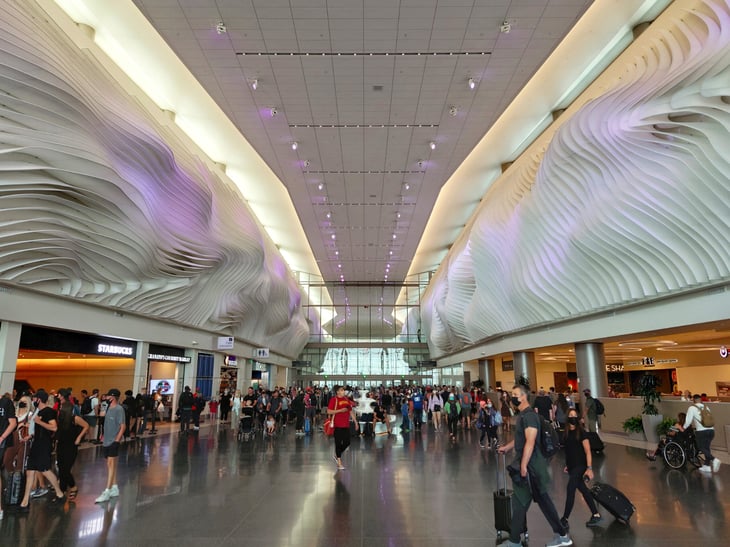
Airport code: SLC
Location: Salt Lake City, Utah, United States
Average turbulence for approach and descent: 16.56
Salt Lake City International Airport is the 23rd busiest airport in the nation. It saw a record 28.4 million travelers in 2024 and is in the midst of a $5.1 billion redevelopment program.
3. Albuquerque International Sunport

Airport code: ABQ
Location: Albuquerque, New Mexico, United States
Average turbulence for approach and descent: 16.62
Albuquerque International Sunport serves more than 5 million customers each year. Eight major airlines offer nonstop service to more than 30 destinations out of ABQ.
2. Bozeman Yellowstone International Airport

Airport code: BZN
Location: Belgrade, Montana, United States
Average turbulence for approach and descent: 17.556
Bozeman Yellowstone International Airport, located in the Gallatin Valley, is the only airport to offer year-round service to two entrances at Yellowstone National Park. It is Montana’s busiest airport.
1. Denver International Airport
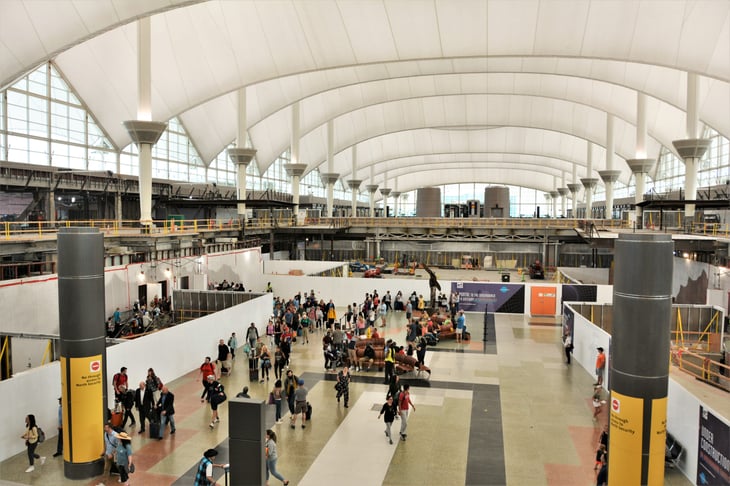
Airport code: DEN
Location: Denver, Colorado, United States
Average turbulence for approach and descent: 17.911
Denver International Airport opened in 1995 and has become a major travel hub. The airport served an all-time record of over 82 million passengers in 2025, making it one of the world’s busiest.

Add a Comment