


The sticker shock at grocery store checkout lanes has become all too familiar. According to a recent LendingTree survey, a staggering 88% of consumers have changed their shopping habits as inflation pushes food prices higher.
For those living on fixed incomes, these price increases are particularly concerning. Fortunately, resourceful shoppers are developing effective strategies to keep food budgets under control.
1. Switch to store brands and generics

Store brand products have evolved dramatically over the past decade. Today, 44% of Americans report choosing generic or store brands over name brands to combat inflation, according to LendingTree research.
This strategy is particularly effective in categories where quality differences are minimal—pantry staples, dairy, and frozen vegetables.
Many store brands are manufactured in the same facilities as their premium-priced counterparts, often with nearly identical ingredients but without the marketing markup. The savings typically range from 20-30% without a noticeable difference in quality.
2. Stick strictly to shopping lists

Impulse purchases can significantly inflate your grocery bill. Approximately 38% of Americans now report avoiding items that weren’t on their original shopping list, according to LendingTree’s survey.
Creating a detailed list before shopping helps plan meals around sales and items already at home.
For maximum effectiveness, take inventory of your pantry before shopping to prevent buying duplicates, and never shop hungry, a time-tested rule that many shoppers swear by to avoid unplanned purchases that break the budget.
3. Pay closer attention to prices

Nearly 30% of consumers report paying closer attention to grocery prices than before inflation hit, according to LendingTree’s research. This increased price awareness is driving more strategic shopping behaviors.
Rather than looking at package prices, savvy shoppers focus on unit prices (the cost per ounce or per item) to determine which size offers the best value.
Many are also tracking price fluctuations over time, which helps them recognize when “sale” prices truly represent savings and when they’re simply marketing tactics.
4. Reduce household food waste

With food costs rising, many Americans are focusing on reducing food waste, an economically and environmentally sound strategy. According to research cited in the LendingTree report, the average U.S. household wastes approximately $1,500 worth of food annually.
Practical approaches include planning meals around what’s already in your refrigerator, properly storing produce to extend freshness, and freezing leftovers before they spoil. Many shoppers report shopping more frequently but buying less each trip, ensuring fresher food and less waste.
Look for other ways to trim costs. If you’re paying more than $15 a month for your cell service, you may be able to lower that bill. Click here to save a bundle.
5. Use rewards credit cards strategically

According to LendingTree’s survey, 44% of Americans typically pay for groceries with debit cards. However, credit card rewards programs offer significant savings opportunities that many shoppers are beginning to leverage.
Grocery-specific rewards credit cards can provide 3-6% cash back on supermarket purchases, effectively giving you an automatic discount on everything you buy.
For a household spending $500 monthly on groceries, that could mean $180-$360 back annually. The key is paying balances in full each month to avoid interest charges that would negate the benefits.
6. Shop in bulk for non-perishable staples

Warehouse stores like Costco, Sam’s Club, and BJ’s offer significant savings for those willing to buy larger quantities. According to LendingTree’s research, shoppers save an average of 27% when buying in bulk.
For empty-nesters, the challenge is buying quantities they can reasonably use. Non-perishable household items like paper products, cleaning supplies, and pantry staples offer the best bulk-buying value.
For perishables, many shoppers report splitting large packages with friends or family members.
7. Embrace technology and shopping apps

Digital tools are becoming increasingly popular among tech-savvy shoppers looking to maximize savings without spending hours clipping physical coupons.
Store-specific apps often provide exclusive digital coupons and personalized deals based on purchase history. Price-comparison apps can help determine which nearby store offers the best overall value for your shopping list.
Some retailers also allow customers to order groceries through their app for pickup, potentially reducing impulse purchases that happen when wandering store aisles.
8. Explore farmers markets and food co-ops
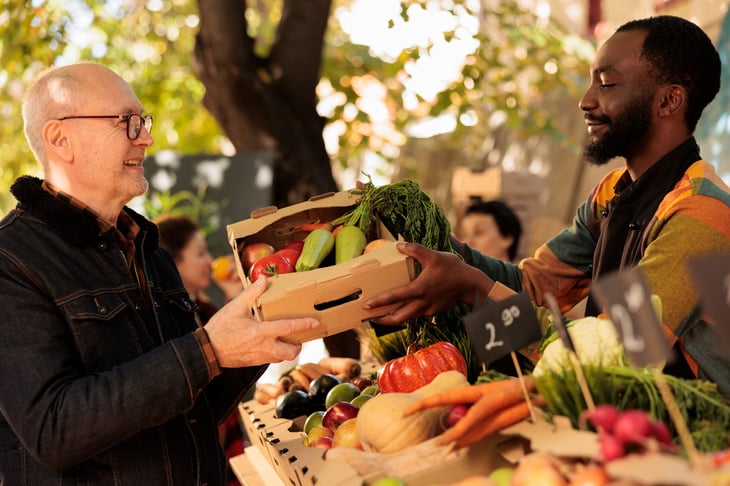
With 61% of Americans worried about affording groceries, according to LendingTree, many might want to think outside the traditional supermarket box.
Farmers markets often offer fresher, seasonal produce at competitive prices, especially when purchased near closing time.
Some communities also have food co-ops where members share buying power and sometimes volunteer time in exchange for discounted groceries. For those with flexible schedules, these alternative sources can provide significant savings and higher-quality fresh foods.
9. Shop during strategic markdown times

Experienced shoppers know that timing is everything when it comes to saving money on groceries.
As they approach their sell-by dates, many supermarkets mark down perishable items like meat and bakery products in the evening. Some stores have specific markdown days for different departments.
Building shopping routines around these schedules can yield significant savings, often 30-50% off regular prices on perfectly good food that needs to be used or frozen promptly.
10. Implement strategic meal planning

Meal planning isn’t just about deciding what to eat but optimizing grocery spending.
Many Americans are adopting the practice of planning meals around sales items first, rather than choosing recipes and then shopping for ingredients regardless of cost.
This “reverse meal planning” approach starts with checking store circulars or apps for the week’s best deals, then building menus around those items. The strategy helps reduce food costs while also minimizing waste.
11. Join and maximize store loyalty programs

Store loyalty programs have evolved beyond simply accumulating points. Sophisticated shoppers are strategically joining and maximizing benefits from these free programs.
Many stores now offer personalized discounts based on previous purchases, fuel points, and special member-only pricing. The key is concentrating spending at fewer stores to reach higher reward tiers rather than spreading purchases across many locations.
12. Focus on seasonal produce cycles

Experienced grocery shoppers know that buying produce in season isn’t just about freshness—it’s a significant money-saving strategy.
Out-of-season fruits and vegetables can cost 3-4 times more than when they’re locally abundant.
Many Americans are returning to seasonal eating patterns, purchasing extra produce during peak seasons when prices are lowest, then freezing or preserving for later use. This approach combines traditional wisdom with modern budget management.
Fighting inflation while protecting savings

The widespread changes in shopping habits reveal a fundamental shift in how Americans approach food purchasing. These strategies aren’t just about immediate savings—they’re about protecting hard-earned funds from the erosion of inflation.
By combining several methods tailored to your personal shopping style, you can significantly offset rising food costs without sacrificing nutrition or enjoyment.
With thoughtful planning and smart choices, you can keep your grocery budget under control despite inflationary pressures, ensuring your savings last longer.

Add a Comment