



President Donald Trump has grabbed the global economy by the tail and is giving it a good shake.
A flurry of tariffs from Trump has unleashed turmoil in global markets. While some experts are hopeful that Trump’s moves will pay off for the United States over time, others are concerned about what such changes mean for the U.S. economy in both the short run and over the long haul.
Even the president told Fox Business that there will be a “period of transition” when asked about the odds of the U.S. economy falling into a recession.
Now leaders of some major corporations are voicing concerns about how economic turbulence stemming from Trump policies and other factors soon could lead to slowing economic growth — and possibly even a recession.
Here are some of the leading companies that are warning of economic trouble.
Henkel
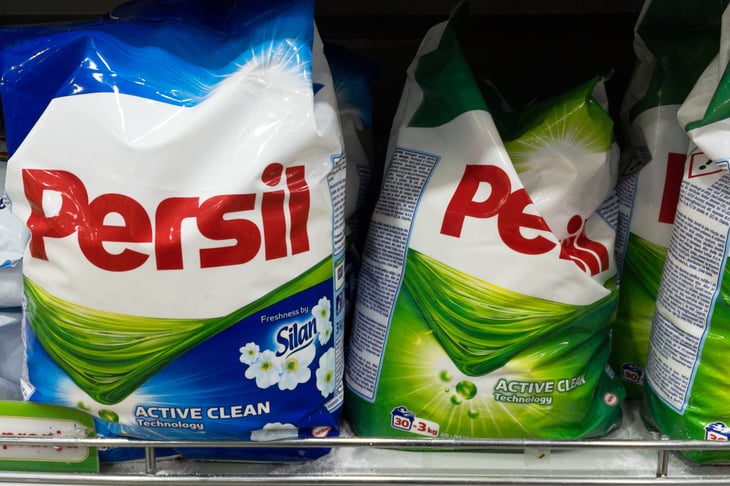
You might not have heard of the Germany-based adhesive and consumer goods company Henkel, but you likely know about some of its most famous brands, including Persil and All detergents, as well as Loctite glue.
Recently, Henkel CEO Carsten Knobel used a March 11 quarterly earnings call to warn that Trump’s trade policies might cause turmoil and contribute to a slow start to the year for the company. In the call, Knobel said:
“For sure what is happening in the U.S. in terms of decisions, that’s impacting especially the North American market overproportionally and is also impacting us.”

Moody’s
On March 10, Moody’s chief economist Mark Zandi posted on X that the U.S. economy would “likely suffer a downturn” if Trump sticks to tariffs for more than a few months. Zandi wrote:
“The risks of a U.S. recession starting in the coming year are uncomfortably high and rising. I would put them at 35%, up from 15% at the start of the year.”

Delta
Delta Air Lines recently cut its growth outlook roughly in half. In an interview with CNBC, CEO Ed Bastian cited “a pretty significant shift in GDP sentiment” during February and consumer confidence “coming down a little bit” as factors behind the company’s pessimism.
Bastian said “the uncertainty that’s out there” is weighing on Delta’s fortunes, adding:
“… consumers in a discretionary business do not like uncertainty. And while we do believe this will be a period of time that we pass through, it is also something that we need to understand and get to calmer waters.”

Newell Brands
Newell Brands makes products under about 30 brands, including household names like Ball, Coleman, Crock-Pot, Elmer’s, Graco, Mr. Coffee, Paper Mate, Rubbermaid and Sharpie and Yankee Candle.
Recently, the company’s CEO, Chris Peterson, told watchers and listeners of Yahoo Finance’s “Opening Bid” podcast that the way the Trump administration is trying to use tariffs has created, “at least in the short term, a lot more uncertainty.”
He said if he met Trump, he would have a message for the president:
“I would tell him that I think tariffs play an important role. I’m not against tariffs. I think tariffs are better applied selectively for strategic categories than universally; [that] is my personal point of view.”

JPMorgan Chase
At the beginning of the year, JPMorgan Chase economists pegged the chances of a recession at 30%. But the recent turmoil has caused them to bump that to 40%. In a recent note, their team wrote:
“We see a material risk that the U.S. falls into recession this year owing to extreme U.S. policies.”

Goldman Sachs

On March 7, Goldman Sachs economists issued a note in which they bumped up the odds of a U.S. recession from 15% to 20%.
They added that the odds of a downturn could go even higher if the Trump administration sticks with its policies “even in the face of much worse data.”

Morgan Stanley
Economists at Morgan Stanley recently released a March 5 note titled “2025 — A pivotal year” that predicted many current trends would “reverse, violently for some, slowly for others.”
In particular, the economists note that U.S. equities have outperformed global equities by 250% since late 2009, and that U.S. stocks are now “overowned and vulnerable to reversal.”
The economists are watching for potential signs of a turning tide on U.S. dominance, including the catalyst that:
“Trump’s policies turn out to be less pro-growth than expected. The economic hit from tariffs (both actual and uncertainty related to them), immigration, modest fiscal tightening to pay for the Trump tax cuts extension, and [Department of Government Efficiency] cuts to government spending and jobs could detract 75-100bps (basis points) from GDP growth over 12 months, causing the first U.S. growth disappointment in years.”


Add a Comment