


Urinary incontinence is a condition that quietly impacts a majority of women by the time they reach middle age.
More than half of middle-aged women and up to 80% of women in their 80s experience UI. But a recent study published in a scientific journal of the American College of Physicians and funded by the National Institutes of Health has found that two types of physical activity can reduce incontinence by around 60%.
That is on par with the effect of incontinence medications, which typically reduce symptoms by anywhere from 30% to 70%.
Types of urinary incontinence

There are two types of urinary incontinence:
- Stress incontinence, which happens in response to pressure in the abdomen, such as from coughing or sneezing
- Urgency incontinence, which happens when an overactive bladder causes you to feel the need to urinate more often than usual
Urinary incontinence can be inconvenient at best and can disrupt life at worst. It is associated with bone fractures due to falls after rushing to the bathroom, according to Stanford Medicine. It can also lead to social isolation.
In a summary of the study findings, Dr. Leslee Subak — the study’s senior author and chair of obstetrics and gynecology at Stanford Medicine — says:
“It takes away independence. My patients will say, ‘I can’t stay with my kids or grandkids because I’m afraid I’ll wet the bed, and I can’t talk about it; it’s too embarrassing.'”
Fortunately, two types of exercise can help reduce the frequency of UI.
1. Yoga
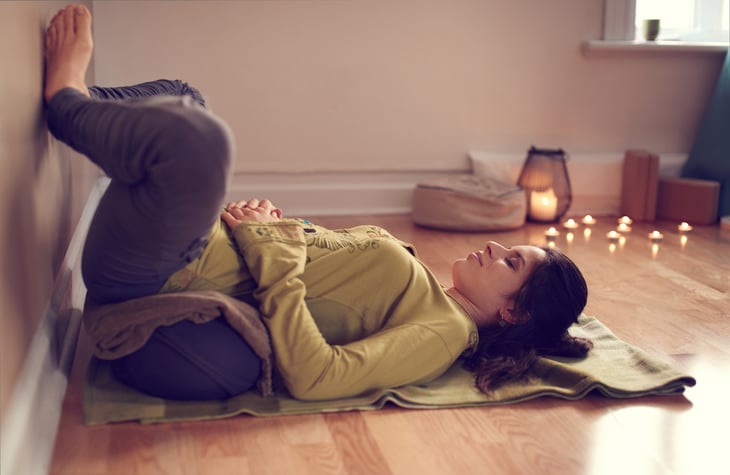
The women who participated in Subak’s study were 45 to 90 years old, with an average age of 62. At the start of the study, they experienced 3.4 episodes of urinary incontinence per day, on average.
About half of the participants (121 women) participated in 12 weeks of low-impact yoga. After the yoga program, these women had 1.1 episodes of incontinence per day, on average.
The women engaged in 16 hatha yoga poses intended to strengthen the pelvic floor during twice-weekly 90-minute sessions. They also were asked to practice yoga for at least one hour weekly on their own.
Subak says:
“Our study was testing the kind of yoga that just about anyone can do, with modifications for different physical abilities. What I love about it is that it’s safe, inexpensive, doesn’t require a doctor and it’s accessible wherever you live.”
2. Physical conditioning
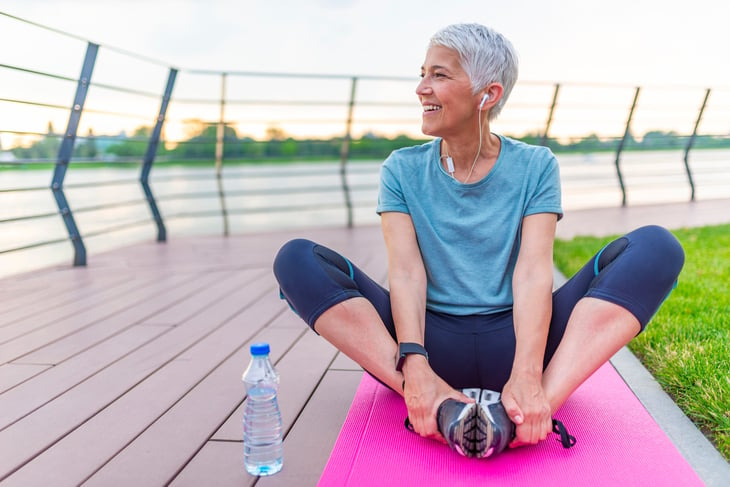
The other half of the study participants (119 women) were assigned to a physical conditioning control group. They also saw urinary incontinence decrease, recording 1.5 episodes per day after the program, on average.
The participants in the physical conditioning control group engaged in general stretching and strengthening activities for 12 weeks. These classes lasted the same length of time as the yoga sessions, and they were also asked to do an extra hour of conditioning on their own each week. But unlike with the yoga classes, these control group exercises did not engage the pelvic floor.
The pelvic floor refers to the muscles at the base of the pelvis. They hold the pelvic organs — including the bladder and urethra — in place.

The bottom line

Subak also noted that her prior research has found that weight loss can be an effective treatment for urinary incontinence. In addition, medications often result in a 30% to 70% improvement in UI symptoms, she says.
All of these findings suggest that women who struggle with urinary incontinence do not necessarily have to resort to surgery and can improve their situation by making relatively easy changes in their lives.
Subak says:
“I’m impressed that exercise did so well and impressed that yoga did so well. One of the take-home messages from this study is ‘Be active!'”

Add a Comment