



High blood pressure is a very common problem, affecting about 47% of adults in the U.S.
In 2020, it contributed to more than 670,000 deaths in America.
Health care professionals, as the Cleveland Clinic reports, even call it the “silent killer,” as there are often no warning signs or symptoms. A patient could have high blood pressure — also called hypertension — for years without knowing. According to the World Health Organization, about 46% of adults aren’t aware they have the condition.
Doing what you can to stave off hypertension can sound overwhelming, but at least there are small steps you can take.
Plenty of delicious foods can help lower blood pressure. Who can pass up a good snack with health benefits?
Science shows that the following foods are just that, so let’s get into it.
Blueberries

A study by researchers at King’s College London found that eating 200 grams (about 0.4 ounces) of blueberries every day for a month is beneficial for the circulatory system.
The study followed 40 healthy volunteers, who were given a daily drink containing blueberries or a control drink (which contained fiber, minerals or vitamins but not blueberries specifically) for a month.
The research team monitored chemicals in their blood and urine. They also kept tabs on dilation of the brachial artery — in other words, how well this major artery widens with increased blood flow. It’s an important marker of cardiovascular disease risk.
Researchers concluded that those who consumed 200 grams of blueberries daily saw improved blood vessel function and a decreased systolic blood pressure.
Systolic blood pressure is the number at the top of a blood pressure reading and measures the pressure in the arteries when the heart beats.
The effects work quickly, too, as researchers noticed improvement in blood vessel function within two hours after participants had the blueberry drinks. The benefits were sustained for a month, even after overnight fasts.
By the end of the month, blood pressure was reduced by 5 mm Hg (a way to measure pressure), which researchers described as comparable to medication that lowers blood pressure.

Yogurt

A study from a University of South Australia and University of Maine collaboration found that habitual yogurt consumption is associated with lower blood pressure in those diagnosed with hypertension.
Even just a small amount of yogurt incorporated into the diet demonstrated blood pressure improvement, but daily yogurt consumption was even more effective. Those in the latter group had blood pressure readings nearly 7 points lower than those who didn’t have yogurt.
“This is because dairy foods contain a range of micronutrients, including calcium, magnesium and potassium, all of which are involved in the regulation of blood pressure,” researchers write. “Yogurt is especially interesting because it also contains bacteria that promote the release of proteins, which lowers blood pressure.”

Soy

A study at Baylor College of Medicine in Houston — funded by the National Institutes of Health — is focusing on lowering high blood pressure in menopausal women in ongoing research.
The study aims to build on previous research that found soy consumption can improve abnormal blood pressure in adults.
The chemical abundant in soy that researchers will focus on is isoflavone, which is part of a group of chemicals called phytoestrogens.
One previous review found that soy isoflavones have a “beneficial effect on systolic blood pressure (the pressure when the heart pumps) during early menopause.”
And another small study of nearly 100 women found that the same compound can decrease diastolic blood pressure — that’s the pressure when the heart is at rest.

Sunomono
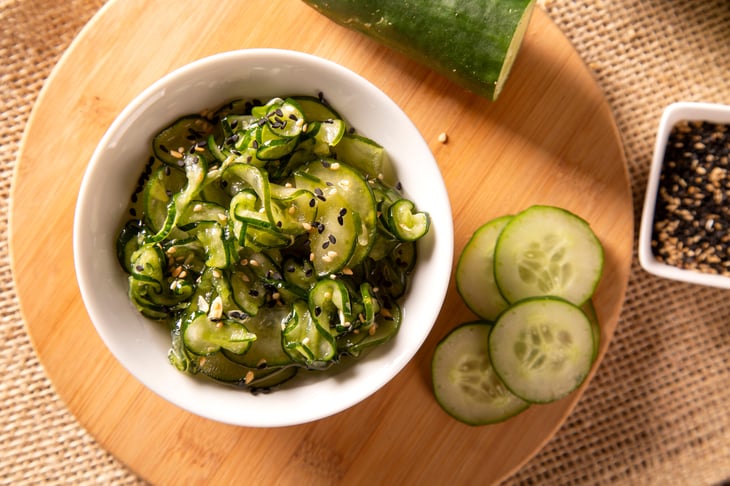
Research from Osaka Metropolitan University associated regular consumption of sunomono — a Japanese dish of vinegar-based cucumber or seaweed — with lower blood pressure in men over the age of 40.
The benefits, due to the amount of vinegar in sunomono, were noticeable among men who ate the dish just once a month.
Previous studies showed that those who consumed 30 milliliters of vinegar daily (about 2 tablespoons) had lower blood pressure. Researchers from the Osaka study were inspired by that to lead the first observational study of vinegar’s benefits and didn’t ask participants to change their existing diets.
Researchers theorize the benefits of vinegar are because it promotes the growth of good gut microbiota — microorganisms in the digestive tract that aid with digestion, healthy immunity and overall health.


Add a Comment