


As fears of another recession intensify — stoked by President Donald Trump’s erratic economic policies and ensuing stock market plunges — some Americans are already bracing for the worst.
No one wants to try to manage their money — or their lives — through a recession. However, it’s not all doom and gloom.
There are some things that actually improve during a recession. So while we don’t wish difficulty on anyone, the following are some silver linings that accompany an economic downturn.
1. Cheap stocks
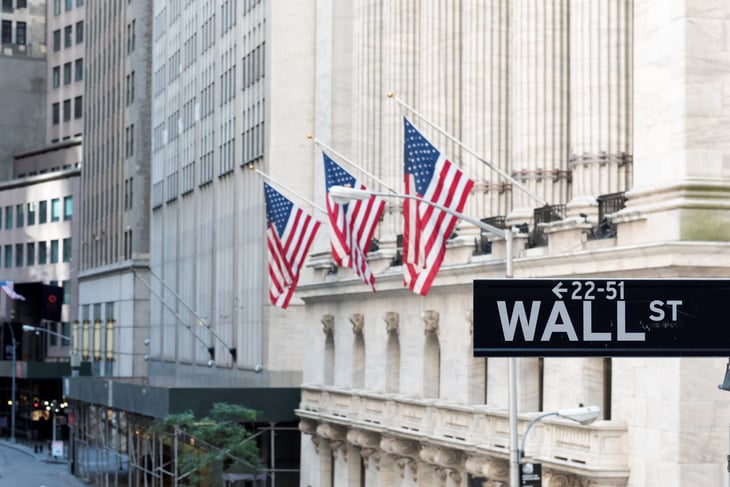
For those hoping to boost future portfolios, a recession is a time to go bargain hunting. As the stock market drops, you might be tempted to sell and abandon what feels like a sinking ship. However, instead of locking in losses, recessions can be a time to look for good deals and buy more stock while shares are cheaper.
Markets go up and down, and there is no guarantee that what happened in the past will repeat in the future. However, history has shown that buying when the market is low can pay off down the road.
Of course, you won’t be able to predict exactly when the market bottom will arrive, but you can still get a good deal on stocks if you buy them when they’re at a lower price.

2. Lower death rate

Interestingly, the mortality rate can fall during a recession. Between 2005 and 2010, a time period that included the Great Recession, mortality rates actually fell as unemployment in urban areas rose, an academic study found.
The biggest contributor to a lower death rate was a decline in heart disease-related deaths. Car accident-related deaths also fell, a trend associated with rising unemployment.
While there isn’t a direct link between a recession and a lower death rate, one of the study’s authors shared a theory with NPR about why mortality might decrease during times of economic distress.
“When the economy is worse, people have less money to spend. They may go out and have unhealthy meals less often. They may smoke less or drink less. They may drive less. That’s kind of what people have in mind when they’re thinking about why increases in unemployment are linked to decreases in mortality.”
We probably need more information to figure out the causes of a lower death rate during a recession. However, a decrease in mortality might be one of the positive aspects of an economic slowdown.

3. Re-evaluation of what matters

Many people re-evaluate their lives in times of stress and reconsider their budget priorities.
Additionally, they might also think about other life choices during a recession. The New York Times Magazine reported that many people rethink what it means to have a good life during tough economic times.
“And yet, despite this bleak reality, some talk persists of silver linings: less cash to spend means less materialism, a real change to ‘the definition of living well,’ as Jim Taylor, a vice president of Harrison Group, a market research firm in Waterbury, Conn., told The Times as the big banks melted down in the fall of 2008.”
It’s not all sunshine and rainbows, but there are those who find that economic stress causes them to look at what really matters — time with family and friends.

4. Increased savings rate

In mid-2009, during the thick of the Great Recession, the savings rate increased to 6.9% — its highest level since 1993 That also represented a jump from the near-zero savings rate of early 2008.
This steep rise suggests that as people feel more concerned about economic conditions, they shift their priorities to thrift.
During the COVID-19 pandemic, savings rates topped out at more than 30%, according to the Federal Reserve Bank of St. Louis. Even though the savings rate has fallen since the pandemic, a new recession could potentially push savings rates higher, helping more households stabilize.

5. Increased efficiency

With a recession, it’s possible that businesses could become more efficient. According to an analysis of 4,700 public companies by the Harvard Business Review, about 9% of companies come out of a recession stronger.
Additionally, a recession can be a way of resetting the playing field and getting rid of dead weight in the markets. The Harvard Business Review analysis also found that 17% of public companies don’t survive a recession, but that doesn’t necessarily mean they went bankrupt. Some were acquired while others went private.
Few people really look forward to recessions. And one might not even be on the way.
A Money Talks News podcast episode looked at the likelihood of a recession in 2022 — and what you can do to prepare your finances in the event that a recession materializes. Recessions are rarely fun, but for those who are prepared, it’s possible to find a few silver linings.

Add a Comment