



Editor's Note: This story originally appeared on The Penny Hoarder.
As simple words go, “retirement” carries a lot of weight and a lot of baggage.
Now that retirement is bouncing around in your mind, and you entertain the thought of giving up your day job, you ask yourself:
- Are my retirement income and Social Security going to be enough for my preferred lifestyle?
- What am I going to do with myself every day?
One answer responds to both questions. You can retire, collect Social Security, still work and be productive. The trick is there’s a limit to how much you can make depending on your age.
If you are at what Social Security deems full retirement age, you can collect and keep your full Social Security benefits and make as much money as you want.
If you are not yet at full retirement age but are receiving Social Security benefits, you can make up to $24,480 a year without penalty in 2026. That’s $2,040 a month.
We get into more details later in this post of what happens when you go over that amount.
How you can work and collect Social Security

So let’s dive into the particulars that allow you to work while you are retired and collecting Social Security. And then let’s consider some types of work you can do in retirement to bring in some extra income.
The meaning of retirement

What it means to be officially retired can be open-ended, and it is mostly up to you when you retire.
You just decide one day you don’t want to work at the job or in the field to which you dedicated the first 30 or 40 years of your professional life. Often this coincides with your 65th birthday, because that’s when you qualify for Medicare.
However, you can start taking Social Security benefits before 65, beginning at 62.
Full retirement age

The Social Security Administration website is clear and precise about making money while accepting benefits, but here is what you need to know:
Your full retirement age: If you were born Jan. 2, 1959, through Jan. 1, 1960, your full retirement age for retirement insurance benefits is 66 years and 10 months.
Every year earlier reduces the full retirement age by two months. Born in 1958, 66 years and 8 months. Born in 1957, 66 years and 6 months, and so on.
If you were born after the 1959 date, your full retirement age is 67 years old. If you were born 1943 to 1952, your full retirement age is 66.
The government has changed the full retirement age stipulations because people are living longer.
Salary restrictions for 2026

You could make up to $23,400 a year without penalty in 2025. It’s going up to $24,480 for 2026.
If you make more than that, your benefits are reduced by $1 for every $2 you make over $24,480.
But get this: Once you reach full retirement age, the money that was subtracted from your Social Security benefits previously is refunded to you. You never really lose those funds, they are just held from you until you reach that magic age.
There are special rules depending on whether you receive a salary or are self-employed when you are working, but they differ based on when they are counted (when you earn the money versus when you get paid). The Social Security Administration website can address those particular items for you.
Suggestions for work before you reach full retirement age

Here are some suggestions of part-time jobs that can bring in some extra money. They may be more about what you want to do than what you have been doing.
Check out these ways to make money you might not have thought about.
1. Indoor work

According to the AARP, bookkeeping is the most popular part-time position for workers of a certain age.
This makes some sense: It is not physical, requires patience and is likely not a popular job among younger people.

2. Proofreader

Are you good at spotting typos? Maybe a little too good? Well, guess what? You can totally get paid for that superpower.
Proofread Anywhere’s General Proofreading course can help you hone your proofreading skills and transform them into your own small business. Students can earn between $500 to $3k a month on their own terms.
3. Health care

Perhaps knowing that you may someday require health care assistance, it becomes attractive to offer help to those already in need. Older people are encouraged to apply for jobs as assistants to nursing homes and hospitals.
Certainly, certifications will make you more attractive as an employee, but there are jobs specifically for those people who want to help but did not originally work in health care and don’t have licenses or certificates.
There may also be opportunities in a less structured way.
If you have a friend, or a friend of a friend, with an older family member or neighbor who needs assistance during the day, let them know you are looking for work. You can offer your services to drive them to medical appointments, make lunch or simply provide a few hours of companionship.
4. Work with children

School administrations offer several positions for older people interested in part-time work.
While “crossing guard” may be the first thing that comes to mind, schools, colleges and universities need staff that can provide some level of security for special events, and older people who may have grandchildren of their own have built-in radar for the well-being of children.
5. Outdoor work
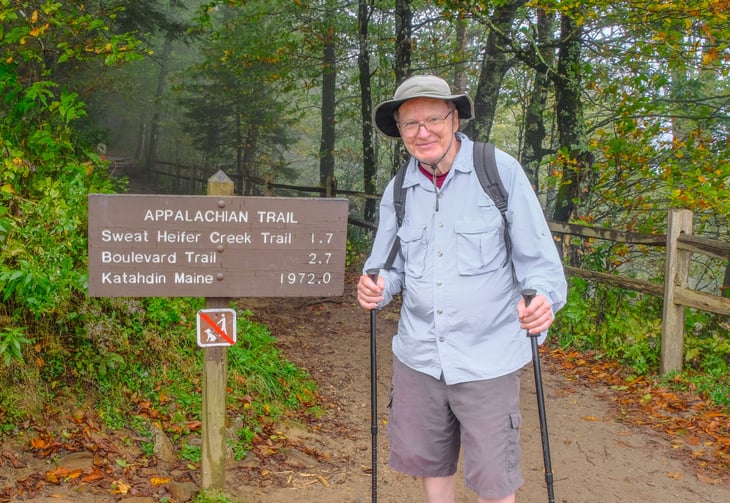
Your city or county leisure services or parks department may have work for you. If there’s a forestry department in your area, contact them.
From cleaning parks to walking through wooded areas looking for environmental concerns (downed trees, unexpected flooding, etc.), being paid to take a walk in nature is not a bad way to spend a day.
6. Helping other seniors

Many communities have senior centers that provide activities and services. Yes, there are people at senior centers playing bridge, canasta and chess.
But senior centers are also one of the first places employers turn when looking for people to fill paid positions that require attendance and attention. Consider your local senior center as a resource for finding a position that suits your interests.

Add a Comment