



World Book Day, also known as World Book and Copyright Day, is a celebration of literature observed annually on April 23 in the U.S. It’s a great reminder to include personal finance topics in your reading list.
Each author brings unique perspectives that can help you develop healthier money habits, make smarter investment choices, and work toward achieving millionaire status.
Pro Tip: Want to turn financial knowledge into real results? If you have over $150,000 in investments, WiserAdvisor can match you with a professional advisor in your area — free of charge. Pairing great reads with expert guidance can fast-track your money goals.
1. Rich Dad, Poor Dad, by Robert T. Kiyosaki
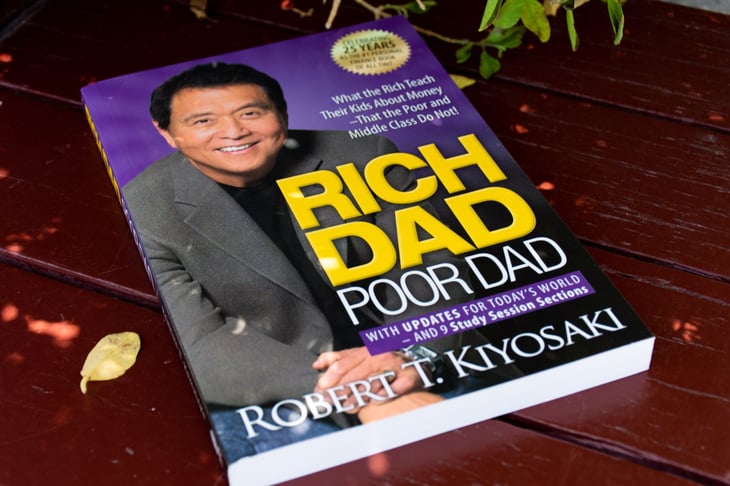
Kiyosaki challenges conventional wisdom about money through contrasting perspectives of his two father figures. His biological father struggled financially despite his education, while his friend’s father became wealthy with less formal schooling.
The book’s central message focuses on financial literacy and distinguishing between assets and liabilities. Kiyosaki emphasizes that the wealthy make money work for them through investments and businesses rather than working for money.
Pro Tip: Gold can offer a strong defense against economic downturns. If you’re concerned about inflation or market shocks, consider safeguarding your savings by opening a gold IRA.
2. The Psychology of Money, by Morgan Housel

Housel explores how personal experiences and emotions influence financial decisions more than mathematics. Through engaging stories, he demonstrates that managing money effectively depends more on behavior than knowledge.
The book offers wisdom on luck versus skill in financial success and why “enough” may be better than “more.” His approach to risk management makes exploring diverse investment options particularly relevant.
Pro Tip: Explore diverse investment options with an expert. If you’ve got at least $100,000 in investments, check out a free service called SmartAsset. You fill out a short questionnaire and instantly get matched with up to three vetted financial advisors in your area.
3. Die with Zero, by Bill Perkins

Perkins challenges traditional wealth accumulation with a fresh perspective on optimizing both money and experiences. He argues that many people die with substantial unused assets they could have enjoyed.
His balanced framework focuses on spending money at optimal times to maximize fulfillment, considering factors like declining health and energy as we age.
Pro Tip: Don’t let your assets go to waste. Save time, money, and stress while protecting your family. Where there's a will, there's a way.
4. I Will Teach You to Be Rich, by Ramit Sethi

Sethi delivers practical financial guidance, focusing on automation and psychology. Unlike advisors who preach extreme frugality, he encourages spending on what you love while cutting costs on things you don’t value.
His actionable advice covers negotiating, eliminating debt, setting up automated investments, and optimizing credit cards. A core principle is maximizing returns on your money, starting with everyday banking.
Pro Tip: Earn as much as possible on your emergency savings. For example, SoFi Checking is offering 3.8% interest, plus a potential $300 signup bonus. (May change without notice.)
5. The Savage Truth on Money, by Kathryn Pomroy

Pomroy cuts through financial jargon with straightforward advice for everyday money management. This guide addresses common challenges with honest guidance that helps readers confront financial realities.
Her approach combines tactical strategies with psychological insights about our relationship with money. She emphasizes sustainable habits over quick fixes and the importance of addressing debt directly.
Pro Tip: If you have more than $20,000 in unsecured debt, get some professional help. National Debt Relief is a trusted source for free advice and assistance.
6. The Total Money Makeover, by Dave Ramsey

Ramsey offers a structured path to financial freedom through his seven “Baby Steps” approach. His plan guides readers through building an emergency fund, paying off debt using the “debt snowball” method, and building wealth through investing.
This book combines simple financial principles with emotional motivation, acknowledging that money management involves behavior change as much as financial knowledge.
Pro Tip: A home equity loan is a great way to access fast cash. Take a minute right now and see how much you can get, how fast you can get it and how little you'll pay.
7. The Millionaire Next Door, by Thomas J. Stanley and William D. Danko

This research-based study reveals that most millionaires aren’t living lavishly — they’re unassuming neighbors practicing frugality and discipline. The authors identify seven common traits among successful wealth-builders regardless of income level.
The book demolishes wealth myths, showing that most millionaires build their fortunes through consistent savings and modest living rather than high salaries or inheritance.
Pro Tip: Slash expenses on dining, travel, eyeglasses, prescriptions and more with AARP – Just $15/year with auto-renewal. Join now and save hundreds.
8. Financial Feminist, by Tori Dunlap

Dunlap addresses women’s unique financial challenges, examining systemic issues like the gender wage gap and investing disparities while providing practical navigation strategies.
The book combines education with empowerment, encouraging women to view financial independence as activism. Dunlap highlights creating multiple income streams as a path to security, including side hustles that supplement primary income.
Pro Tip: Looking for a way to earn income with barely any effort? Over $55,000 is paid daily to this company's members who take surveys in their free time.
9. Get Good With Money, by Tiffany Aliche

Aliche draws from her own journey to create a comprehensive “financial wholeness” program. Rather than focusing solely on wealth accumulation, she promotes ten key areas of overall financial health.
Her book stands out for its accessibility and practical steps, emphasizing foundational planning — including estate documents and emergency preparedness — before diving into advanced strategies.
Just like having a solid financial plan, protecting yourself from unexpected car repair costs is part of building long-term stability.
Pro Tip: Car repair bills aren’t what they used to be. One auto shop told Consumer Reports their average job rose from $1,600 a decade ago to $4,000 today. Endurance gives you access to thousands of ASE-certified repair shops and pays the bill upfront, so you’re only responsible for the deductible. Get a free quote today!
10. The Algebra of Wealth, by Scott Galloway

Galloway distills complex economic principles into a straightforward formula for financial security based on four elements: focus, stoicism, time, and diversification.
The book cuts through financial noise with data-driven insights and observations about capitalism, success, and life satisfaction, emphasizing that true wealth includes protecting what you’ve built from unexpected expenses.
Pro Tip: Paying more than $15 a month for your cell service? Stop that. Click here to save a bundle.
Your financial library: The gift that keeps giving

Building your financial knowledge through these books can be one of your most valuable investments.
Financial education is an ongoing journey, and insights from these books can compound, much like well-managed investments, providing returns throughout your life.
Pro Tip: Waiting on retirement saving? Every year costs you. Start today with matched contributions and watch your money grow! Sign up for a SoFi IRA and take advantage of compounding interest so you can retire comfortably. The longer you wait, the less you’ll earn. Get started today.

Add a Comment