



What if the same techniques artists use to challenge perception could revolutionize your relationship with money?
The creative mindset doesn’t just belong in galleries—it offers powerful tools for breaking through financial limitations and seeing opportunities others miss.
Artists have spent centuries developing methods to shift perspective, question reality, and create meaning from chaos—skills remarkably suited for today’s complex financial landscape.
Pro Tip: Great artists preserve their masterpieces for future generations. Safeguard your financial future with precious metals, adding stability in uncertain times. If you’re over 50, now’s a great time to get your FREE 2025 Gold Information Kit—qualified purchases may even earn you up to $10,000 in free metals.
1. Negative space: Finding hidden financial opportunities

In art, negative space—often overlooked—creates meaning. The same applies to finance, where hidden opportunities exist beyond obvious market trends.
During the pandemic, while tech stocks soared, savvy investors found value in overlooked sectors like home improvement, outdoor recreation, and telehealth.
To spot financial negative space, look beyond the headlines. What’s not being discussed? Which needs remain unmet? The best opportunities often lie in the gaps between conventional investments.
Pro Tip: Negative space isn’t empty—it holds hidden value. The same goes for your finances. If you have at least $100,000 in investments, SmartAsset can match you with up to three vetted financial advisors to help you uncover overlooked opportunities in your portfolio.
2. Perspective shift: Viewing money challenges from different angles

Renaissance artists mastered linear perspective to create depth on a flat surface. In finance, shifting perspective can turn overwhelming problems into manageable challenges.
Take debt—viewed head-on, it often triggers shame. But seen as leverage, like wealthy investors do, it becomes a tool to assess whether each borrowed dollar generates more value than it costs.
Try this: Write down your biggest financial challenge and consider how a banker, entrepreneur, retiree, or your future self might see it. A new perspective can reveal solutions invisible from your current viewpoint.
Pro Tip: Expanding your financial perspective can open doors to unconventional investments. Vinovest lets you start investing in wine and whiskey with as little as $1,000—turning alternative assets into potential long-term growth opportunities.
3. Color theory: Understanding emotional reactions to financial decisions

Artists use color to evoke emotions, just as financial decisions carry emotional “colors” that shape behavior, often subconsciously.
Paying bills might feel like restrictive red, while receiving income registers as expansive green. Decisions made in “red” states tend to be overly cautious, while “green” states can lead to overconfidence.
Map your own financial color wheel by noting emotions tied to money tasks. Before making key decisions, identify your emotional “color” and assess whether waiting for a more neutral state would lead to a better choice.
Pro Tip: Diversify and balance your color palette with hues of gold by opening a gold IRA. You can help protect your wealth by offering a hedge against recessions and economic downturns.
4. Contrapposto: Finding balance in your financial portfolio
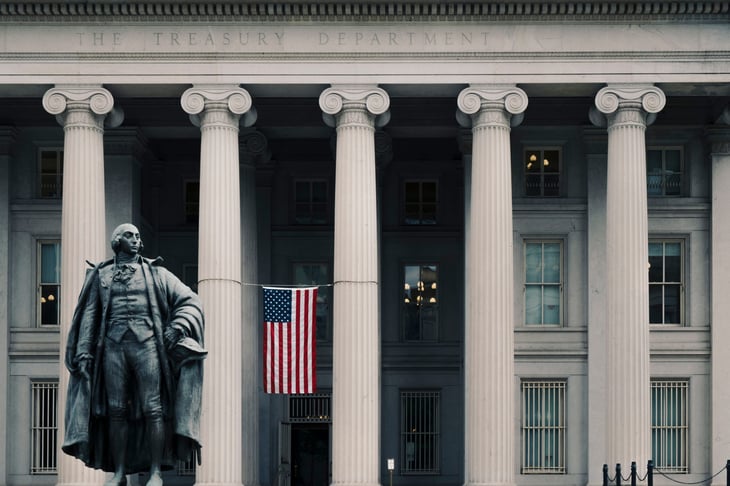
Ancient Greek sculptors used contrapposto—a weight-shifted stance—to create balance in static forms. This equilibrium mirrors healthy portfolio construction.
Many investors avoid tension, favoring a single approach. But contrapposto portfolios blend opposing elements—growth and value, domestic and international, traditional and alternative assets—building resilience across market shifts.
Assess your portfolio’s balance. Are all your assets leaning the same way, exposed to the same risks? True stability comes not from rigidity but from dynamically balancing complementary forces.
Pro Tip: Balance and diversify your portfolio with modern investments like real estate and venture capital. Fundrise offers opportunities starting at just $10.
5. Trompe l’oeil: Recognizing financial illusions

Trompe l’oeil (“deceive the eye”) techniques create lifelike illusions, just as financial markets craft deceptive appearances that mislead inexperienced investors.
Bull market rallies foster the illusion that investing is easy, while complex financial products often mask hidden risks behind enticing features and jargon.
To spot financial illusions, ask: What’s being concealed? What assumptions must hold true? Which perspective exposes the flat reality behind the promise? Separating illusion from reality is key to successful investing.
Pro Tip: Struggling with back taxes? Alleviate Tax works directly with the IRS to help reduce or resolve what you owe. If you’re $10,000+ behind, answer a few questions to see if you qualify today!
6. Golden ratio: Applying perfect proportions to your budget

You’ve probably heard of the 50/30/20 budget rule (50% needs, 30% wants, 20% savings), but there’s a more elegant way to divide your savings. Natural and art patterns inspire the golden ratio approach.
Instead of forcing your money into fixed percentages, consider your savings proportions. Here’s how it works: If your emergency fund is 1 unit, your medium-term goals (like saving for a down payment) would be about 1.6 units, and your long-term investments (retirement) would be 2.6 units.
These proportions follow the Fibonacci sequence, which creates a balanced, natural progression. So if you’re putting $5,000 in your emergency fund, you’d aim for $8,000 in your medium-term savings and $13,000 in long-term investments. The beauty is that these proportions work whether you’re saving $500 or $50,000 — the ratio stays the same while growing with your income.
Pro Tip: There’s good financial news for those with hearing concerns. The FDA has a new rule allowing people with hearing loss to buy top hearing aids without a prescription, potentially saving thousands in specialist visits while maintaining your health and budget balance.
7. Chiaroscuro: Embracing contrast in financial risk management

Renaissance painters used chiaroscuro—light and dark contrast—to create depth. The same applies to risk management, where clear contrasts build financial resilience.
Instead of settling for moderate risks and returns, a chiaroscuro approach pairs ultra-safe assets (high-yield savings, government bonds) with carefully chosen high-risk, high-reward investments.
This contrast fosters both stability and growth, creating a portfolio with real depth rather than flatlined mediocrity.
Pro Tip: Risk fuels creativity in art, but your finances need a safety net. Maximize your emergency savings with SoFi Checking, offering 3.8% interest, plus a potential $300 signup bonus. (May change without notice.)
8. Surrealist automatism: Unleashing unconscious financial habits

Surrealists like André Breton used automatism—creating without conscious control—to uncover hidden truths. The same applies to finances, where unconscious habits shape spending.
Try this: Track every transaction with a one-word emotional response for one month without budgeting. This financial automatism reveals patterns linking emotions to spending.
Once uncovered, these triggers can be redirected. If stress leads to impulse buys, replace the habit with a walk or a text to a friend while automating transfers to turn “therapy spending” into investments.
Pro Tip: Make your spending work for you. Get 0% intro APR for purchases and balance transfers for 15 months and earn 20,000 bonus miles after spending $500 within 3 months.
9. Collage thinking: Piecing together diverse investment strategies

Collage artists create meaning by combining existing elements in unexpected ways—just like financial innovation, which thrives on blending established strategies.
Today’s smartest financial tools are collages: robo-advisors merge index investing with behavioral psychology, while crowdfunding opens real estate investing to the masses through online platforms.
To create your own financial collage, ask: What strategies from different fields can I combine? A business owner might mix subscription models with airline-style pricing, while an investor could blend real estate income with stock diversification. The best opportunities often lie at these intersections.
Pro Tip: Diversification is key to a well-balanced portfolio. Add a resilient asset that can help hedge against economic downturns and uncertainty by opening a gold IRA.
10. Fourth dimension: Adding time as a crucial element in financial planning

Cubist painters captured multiple perspectives at once, attempting to integrate time—the fourth dimension—into static images. Likewise, time transforms financial plans from flat projections into dynamic realities.
Most advice focuses on spatial factors like asset allocation, but time reshapes everything: volatility smooths over decades, small savings compound, and financial priorities shift with life stages.
Strengthen your financial fourth dimension by structuring portfolios around different time horizons. Maintain separate mental or actual accounts, each tailored to its unique temporal needs.
Pro Tip: A long-term perspective is key to financial success. If you have over $150,000 in investments, consider talking to a professional financial advisor. WiserAdvisor is a free service that will match you with a pro in your area.
11. Abstract expressionism: Embracing uncertainty in financial markets

Abstract expressionists like Jackson Pollock embraced spontaneity, finding beauty in unpredictability—just as financial markets thrive on volatility.
Traditional planning aims to eliminate uncertainty, yet history’s greatest wealth opportunities often emerge from chaos, from the rise of the internet to cryptocurrency.
Instead of resisting uncertainty, allocate 5-15% of your portfolio to emerging trends, disruptive tech, or contrarian plays. This isn’t reckless speculation but a strategic way to harness unpredictability for potential growth.
Pro Tip: Turn market unpredictability into opportunity. Start with just $1 and invest with zero commissions! Diversify across stocks, bonds, ETFs, crypto, and art with this popular app - sign up today.
Your financial canvas awaits

Like art, personal finance isn’t about rigid rules but a creative expression of values and vision. The space between where you are now and where you want to be is a canvas for financial reinvention.
Adopting an artistic mindset allows you to view money in new ways and uncover solutions that traditional approaches often overlook.
Pro Tip: Your financial future is a work in progress—start shaping it today. The longer you wait to save for retirement, the more you miss out on compounding growth. Take advantage of matched contributions and build a secure future with SoFi IRA. Get started today!

Add a Comment