


If you love to travel, there’s a good chance you have suffered through an airplane flight or two that has encountered significant turbulence.
This shift in the motion of air can causes jerking movements inside an airplane, leading to an uncomfortable ride for passengers. In a worst-case scenario, serious injuries or even deaths can result.
Recently, Turbli — a website that provides travelers with turbulence predictions — analyzed around 10,000 routes connecting the 550 largest airports in the world to determine which routes put flyers at the highest risk of turbulence.
Turbulence is measured in eddy dissipation rate, which is based on the rate at which energy dissipates in the atmosphere, with 0 being the least turbulent rate and 100 being the most.
Based on Turbli’s research, these are the most turbulent airplane flight paths in both the United States and around the world. We start with the most turbulent routes in North America and before moving on to the most turbulent routes worldwide.
1. Albuquerque to Denver

Route: Albuquerque International Sunport (ABQ) to Denver International Airport (DEN)
Distance: 561 kilometers (349 miles)
Average turbulence: 17.751
The skies are sunny in Albuquerque on an average of 310 days each year. Meanwhile, at an elevation of 5,280 feet — exactly 1 mile — above sea level, Denver has fully earned its nickname as the Mile High City.

2. Denver to Jackson
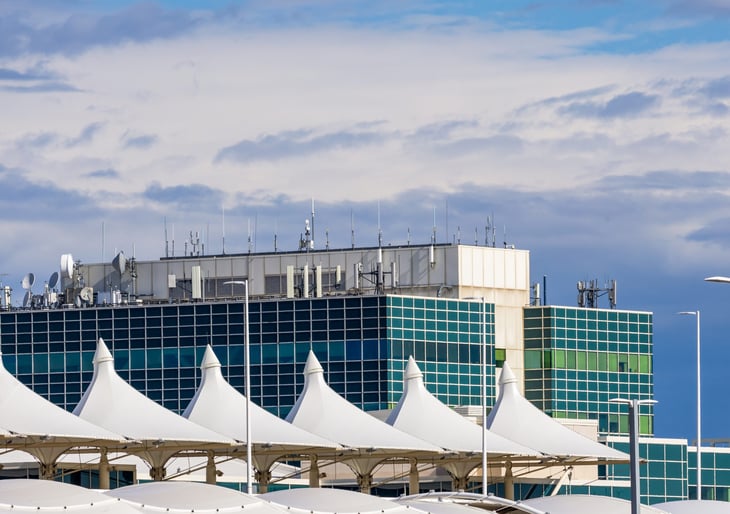
Route: Denver International Airport (DEN) to Jackson Hole Airport (JAC)
Distance: 653 kilometers (406 miles)
Average turbulence: 17.454
Those flying from the Mile High City to Jackson will land at Jackson Hole Airport — the only commercial airport in the U.S. located inside a national park. The airport was placed in its current spot prior to the expansion of Grand Teton National Park’s borders.

3. Jackson to Salt Lake City

Route: Jackson Hole Airport (JAC) to Salt Lake City International Airport (SLC)
Distance: 329 kilometers (204 miles)
Average turbulence: 17.419
Flying from Jackson to Salt Lake City takes you to one of the nation’s best areas for skiing. Storms that pass over the Great Salt Lake pick up moisture before dumping snow in the Wasatch Mountains that is exceptionally light and perfect for skiing.

The rest of the top 10 in North America
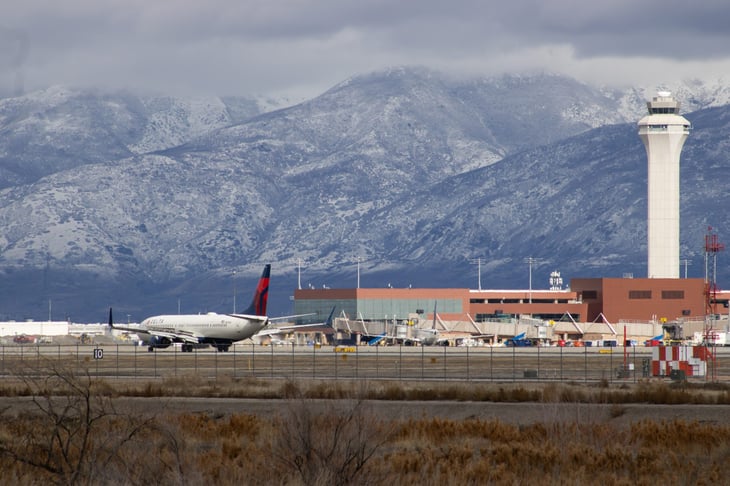
Here are the rest of the bumpiest North American routes:
- Denver International Airport (DEN) to Salt Lake City International Airport (SLC): Average turbulence of 16.948
- Bozeman Yellowstone International Airport (BZN) to Denver International Airport (DEN): 16.688
- Ontario International Airport (ONT) to San Diego International Airport (SAN): 16.439
- Boise Airport (BZN) to Salt Lake City International Airport (SLC): 16.305
- Bozeman Yellowstone International Airport (BZN) to Salt Lake City International Airport (SLC): 16.252
- Harry Reid International Airport (LAS) to Reno-Tahoe International Airport (RNO): 16.068
- Harry Reid International Airport (LAS) to Salt Lake City International Airport (SLC): 15.875

The most turbulent routes in the world

Here are the routes throughout the world where you are most likely to encounter a bumpy ride:
- Mendoza, Argentina (MDZ) to Santiago, Chile (SCL): Average turbulence of 24.684
- Cordoba, Argentina (COR) to Santiago, Chile (SCL): 20.214
- Mendoza, Argentina (MDZ) to Salta, Argentina (SLA): 19.825
- Mendoza, Argentina (MDZ) to San Carlos de Bariloche, Argentina (BRC): 19.252
- Kathmandu, Nepal (KTM) to Lhasa, China (LXA): 18.817
- Chengdu, China (CTU) to Lhasa, China (LXA): 18.644
- Santa Cruz, Bolivia (VVI) to Santiago, Chile (SCL): 18.598
- Kathmandu, Nepal (KTM) to Paro, Bhutan (PBH): 18.563
- Chengdu, China (CTU) to Xining, China (XNN): 18.482
- San Carlos de Bariloche, Argentina (BRC) to Santiago, Chile (SCL): 18.475


Add a Comment