



Even when focused on national and international affairs, American presidents have shared insights that translate surprisingly well to personal finance.
Their words on leadership, decision-making, and planning offer valuable lessons for your wallet. This presidential wisdom can guide your financial journey, from budgeting basics to investment strategies.
Pro Tip: Even without presidential commentary, it is wise to earn as much as possible on your emergency savings. For example, SoFi Checking is offering 3.8% interest, plus a potential $300 signup bonus. (May change without notice.)
1. “Sometimes by losing a battle, you find a new way to win the war”

Donald Trump’s insight reminds us that when to cut losses is as important as when to invest. Emotional attachment to underperforming investments can drain your portfolio and prevent better opportunities.
The principle applies beyond investments. Maybe a failed business venture teaches valuable lessons that lead to future success. Perhaps a budget shortfall forces creative thinking about income streams.
Financial resilience isn’t about avoiding all losses but learning and adapting from them.
Pro Tip: Even experienced investors know that guidance can make all the difference when navigating market volatility. If you’ve got at least $100,000 in investments, check out a free service called SmartAsset. You fill out a short questionnaire and instantly get matched with up to three vetted financial advisors in your area.
2. “Don’t tell me what you value. Show me your budget, and I’ll tell you what you value”

Joe Biden’s practical insight cuts to the heart of financial planning. Your spending habits reveal your true priorities, regardless of what you claim to value. Review your recent bank and credit card statements – do your expenditures align with your stated priorities?
Creating a budget isn’t just about restriction but also intentional allocation. Building wealth is important, so your budget should reflect consistent saving and investing.
If family security matters, life insurance and education funds should be prioritized. Your financial choices tell your real story.
Pro Tip: You can slash your budget for dining, travel, eyeglasses, prescriptions and more with AARP – Just $15/year with auto-renewal. Join now and save hundreds.
3. “You can’t just sit back and wait for luck to see you through”

Barack Obama’s wisdom reminds us that financial security doesn’t happen accidentally. Proactive planning beats passive hoping every time. Emergency funds don’t build themselves, retirement accounts don’t auto-fill, and debt doesn’t magically disappear.
Taking the initiative means establishing automatic savings transfers, researching investment options, and learning about personal finance.
Even small, consistent actions compound over time. The financially secure aren’t necessarily the luckiest – they’re often just the most prepared and proactive.
Pro Tip: Don’t rely on luck. Explore diversification options like precious metals investments, with opportunities to receive up to $10,000 in free metals through qualified purchases. If you’re over 50 and curious about investing in Gold, now is a great time to get your FREE 2025 Gold Information Kit and protect your future with physical precious metals!
4. “Prosperity results from hard work and initiative”

George W. Bush emphasized that financial literacy requires effort. Building wealth demands both labor and learning. The financially successful typically invest time understanding markets, tax strategies, and economic trends.
Initiative in finance means seeking knowledge beyond your comfort zone. It might mean learning about index funds, understanding debt-to-income ratios, or exploring real estate fundamentals.
Pro Tip: Make investing easy and start with zero commissions! Start small with just $1 and diversify across stocks, bonds, ETFs, crypto, and art using this popular app - sign up today.
5. “The price of doing the same old thing is far higher than the price of change”

Bill Clinton’s wisdom applies perfectly to personal finance, where adaptation is essential. Financial markets evolve, economic conditions shift, and sticking to outdated strategies can be costly. The inflation rate changes, interest environments shift, and tax laws are revised regularly.
The cost of financial inflexibility might mean keeping cash in low-yield accounts while inflation erodes its value or failing to adjust retirement allocations as you age.
Regularly reviewing your financial approach ensures that you’re responding to current conditions and not fighting yesterday’s battles with outdated tools.
Pro Tip: Adapting to new investment opportunities can significantly enhance your portfolio’s diversity and resilience. One modern way to diversify is with real estate and venture capital. Companies like Fundrise offer investments as small as $10.
6. “Don’t confuse being ‘soft’ with seeing the other guy’s point of view”

George H.W. Bush’s perspective offers valuable guidance on financial relationships that require boundaries and empathy. When lending to family or negotiating with creditors, understanding others’ financial circumstances doesn’t mean compromising one’s own security.
This balance appears in many money situations – helping adult children without enabling dependency, negotiating fair prices without exploitation, or setting household spending limits that respect everyone’s needs.
Financial empathy creates sustainable relationships, while maintaining necessary boundaries protects your financial foundation.
Pro Tip: If debt has become overwhelming, understanding your options is essential—and sometimes professional help is the most empathetic choice for yourself. Get professional help if you have more than $20,000 in unsecured debt. National Debt Relief is a trusted source for free advice and assistance.
7. “Trust, but verify”

Ronald Reagan’s famous Cold War phrase applies perfectly to financial oversight. Trust your financial institutions and advisors, but regularly verify your accounts, statements, and fees.
Automatic payments deserve periodic review, investment performance requires benchmarking, and even tax preparers make occasional errors.
This verification habit prevents small problems from becoming major issues. Credit reports should be checked annually, investment fees should be compared to industry standards, and insurance coverage should be reviewed regularly. Financial vigilance isn’t paranoia – it’s prudent protection of your hard-earned assets.
Pro Tip: The verification principle extends to protecting your investments — like your home and its systems. Consider a home warranty: Example? First American covers everything from home appliances to heating and cooling. Take a second and see what policies cost and what they cover.
8. “Goals must be neither too vague nor unrealistic”

Jimmy Carter’s wisdom suggests that effective financial goals need specificity and achievability. “Saving more” or “being wealthy” are financial goals that are too vague to achieve. Conversely, “becoming a millionaire by 30” might be unrealistic for many.
Specific, measurable, achievable, realistic, and time-bound (SMART) goals work in finance as in other areas.
“Saving $6,000 for a vacation by December” provides clarity and motivation that vague aspirations lack. Clear financial milestones create both direction and satisfaction when reached.
Pro Tip: When it comes to retirement planning, setting specific goals with concrete timelines is particularly crucial. Start today with matched contributions and watch your money grow! Sign up for a SoFi IRA and take advantage of compounding interest so you can retire comfortably. Get started today.
9. “Things are more like they are now than they ever were before”
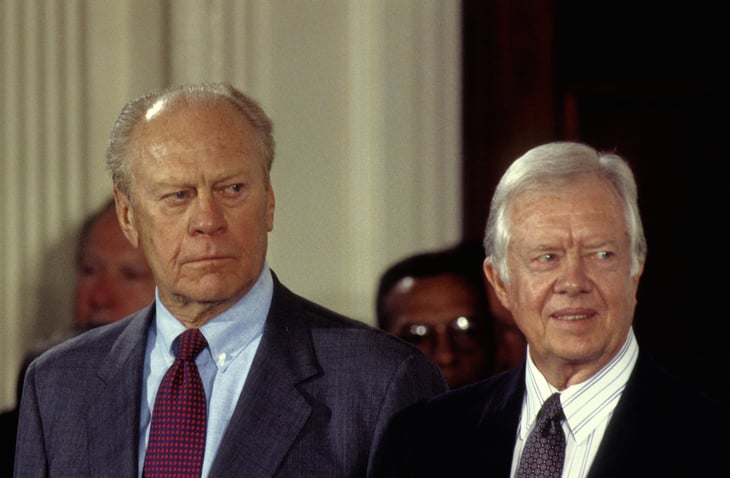
Gerald Ford’s quirky observation reminds us that present patterns often continue unless deliberately changed. Your current financial habits – good or bad – will likely persist without intervention. This applies to spending patterns, saving rates, and investment behaviors.
Understanding this inertia allows you to leverage it positively. Making automatic your desired financial behaviors – from retirement contributions to debt payments – turns the status quo into an ally rather than an obstacle.
Financial improvement rarely happens accidentally; it requires conscious pattern disruption.
Pro Tip: You have to shop, but you can boost your spending power: Get 0% intro APR for purchases and balance transfers for 15 months. Plus, earn a bonus of 20,000 miles once you spend $500 on purchases within 3 months from account opening.
10. “The answer is to have a strong dollar”

Richard Nixon discussed national currency, but his principle applies to personal financial strength. A “strong dollar” in personal finance means maintaining purchasing power through wise management. Inflation, poor investments, and excessive debt all weaken your financial position.
Building your “strong dollar” requires diversification, inflation-beating growth, and debt management. Like a nation’s currency, your financial foundation should inspire confidence and withstand economic pressures.
A balanced approach across savings, investments, insurance, and spending creates resiliency regardless of market conditions.
Pro Tip: In volatile economic times, protecting your wealth against inflation and market downturns becomes even more important. Protect your wealth with an asset that can hedge against the damaging effects of a recession and financial calamity by opening a gold IRA.
Presidential wisdom for everyday wallets

These presidential insights go beyond politics and offer real-world financial lessons. Whether it’s smart spending, adapting to change, or planning, their words can help you take control of your money.
Strong financial habits don’t happen by chance—they’re built through smart decisions and consistent action.
Applying these leadership principles can help you grow and protect your wealth, no matter where you are on your financial journey, from budgeting wisely to investing for the future.
Pro Tip: Protect your wealth with an asset that can hedge against the damaging effects of a recession and financial calamity by opening a gold IRA.

Add a Comment