



Donald Trump’s name evokes strong reactions across the political spectrum, but his decades in business have produced financial philosophies worth examining.
His sometimes controversial and headline-making statements may hide money management principles that translate surprisingly well to personal finance.
From knowing when to walk away from poor investments to understanding how your personal brand affects your earning potential, these insights offer a framework for more confident financial decision-making regardless of your political position.
Pro Tip: One measure of financial success if how long your emergency savings could keep you afloat. Earn as much as possible on your next egg. For example, SoFi Checking is offering 3.8% interest, plus a potential $300 signup bonus. (May change without notice.)
1. You have to think anyway, so why not think big?

This principle from Trump’s 2007 book Think Big and Kick Ass in Business and Life applies surprisingly well to personal finance. Many people limit their financial goals based on what seems reasonable rather than what they truly want to achieve.
Consider creating a specific, ambitious 5-year financial vision—whether that’s saving $100,000, eliminating all debt, or building multiple income streams. Then break this big goal into smaller, manageable monthly targets to make the seemingly impossible become achievable over time.
Pro Tip: If you have lofty goals for your personal financial situation and at least $100,000 in investments, check out a free service called SmartAsset. You fill out a short questionnaire and instantly get matched with up to three vetted financial advisors in your area.
2. Sometimes your best investments are the ones you don’t make.

This straightforward insight from a 2008 Fortune interview reveals an important truth: avoiding financial mistakes is often more powerful than making perfect decisions. The wealthiest people aren’t just smart investors—they’re disciplined about saying “no” to poor opportunities.
Implement a personal 24-hour “cooling off” period before any significant purchase or investment. This simple pause can prevent costly impulse buys and questionable investment schemes.
Pro Tip: When you do spend, boost your shopping power: Get 0% intro APR for purchases and balance transfers for 15 months Plus, earn a bonus of 20,000 miles once you spend $500 on purchases within 3 months from account opening.
3. Money was never a big motivation, except as a way to keep score.

Wealth certainly matters to Trump, but this quote from his 1987 book The Art of the Deal highlights how financial metrics serve as benchmarks rather than ends in themselves.
There’s wisdom in viewing money as a measuring tool rather than the ultimate goal. Instead of obsessing solely over your salary figure, develop a broader scorecard for financial success.
Track meaningful milestones like percentage of debt eliminated, number of passive income sources established, or months of emergency savings built. These progress indicators often provide more meaningful feedback than just watching account balances rise.
Pro Tip: Need cash, debt relief, or help funding a major expense? Find the best options tailored to your needs—fast, easy, and secure. Explore financial solutions here.
4. Know when to walk away from a deal.

Trump shared this advice during a 2007 Larry King Live interview, and it’s perhaps one of the most valuable financial principles anyone can follow.
Too many people stay committed to poor financial choices out of pride or fear of acknowledging a mistake.
In your personal finances, this means being willing to cut losses on bad investments, walk away from high-interest loans, and ignore “too good to be true” schemes.
Pro Tip: You also need to know when to close a deal. Boost your shopping power: Get 0% intro APR for purchases and balance transfers for 15 months Plus, earn a bonus of 20,000 miles once you spend $500 on purchases within 3 months from account opening.
5. I’ve made tough decisions with an eye on the bottom line.

This no-nonsense approach from Trump’s 2004 book How to Get Rich reminds us that financial success often requires difficult choices and ruthless prioritization.
In personal finance, this means creating—and actually sticking to—a budget that reflects your true priorities. Take a hard look at your spending and be willing to cut non-essential expenses that don’t align with your long-term goals.
Automate your savings so they happen before you can spend the money. While budgeting isn’t glamorous, it’s the foundation upon which financial independence is built—even for billionaires.
Pro Tip: To help improve your bottom line and find new sources of income Earn up to $1000 per month doing simple tasks with KashKick!
6. Without passion, you don’t have energy. Without energy, you have nothing.

This insight from Trump’s 2004 book The Way to the Top might seem disconnected from finance, but it contains an important money lesson: sustainable wealth-building requires passion and energy.
Pure money motivation rarely provides enough fuel for long-term success. Consider investing time and resources in building skills you’re genuinely interested in.
Passion-driven side hustles and career paths are more likely to succeed because you’ll naturally put in the extra effort they require.
Pro Tip: Turn your passion into a part-time or work-from-home job. FlexJobs lets you browse and apply to verified jobs around the corner and around the world.
7. It’s not always about money. It’s about the deals.

In a 2016 CNN interview, Trump highlighted something savvy consumers understand: the negotiation process itself can be as valuable as the money involved.
Too many people accept stated prices without question, leaving significant savings on the table. Make negotiation a regular part of your financial life.
Call service providers annually to lower bills, ask medical offices about cash discounts, request interest rate reductions on credit cards, and consider refinancing loans when conditions improve.
Pro Tip: Some deals have already been negotiated for you. You can slash your expenses on dining, travel, eyeglasses, prescriptions and more with AARP – Just $15/year with auto-renewal. Join now and save hundreds.
8. Debt is dangerous if you don’t know how to use it.
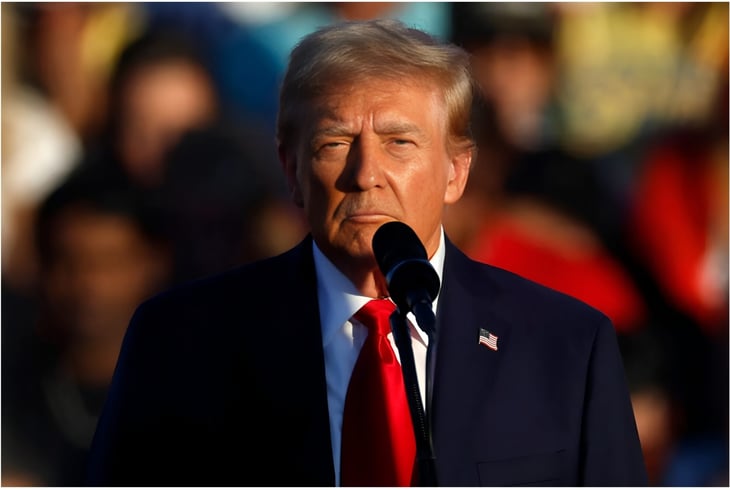
This nuanced take on debt from a 2016 CNBC interview reflects Trump’s sophisticated understanding of leverage. Unlike simplistic “all debt is bad” advice, he acknowledges that debt can be either a powerful wealth-building tool or a destructive force—depending on how it’s used.
Low-interest loans used to purchase appreciating assets (like real estate or education that increases earning potential) can create wealth.
High-interest consumer debt for depreciating goods typically destroys wealth. Structure your financial life to eliminate the latter while strategically using the former.
Pro Tip: For homeowners looking to leverage their equity wisely, a home equity loan is a great way to access fast cash. Take a minute right now and see how much you can get, how fast you can get it and how little you'll pay.
9. Branding is everything.

Trump shared this insight during a 2015 campaign rally, highlighting how perception and reputation can dramatically impact economic value.
While he was referring to business branding, the concept applies equally well to personal finance through your professional reputation. Invest time building your brand through LinkedIn, industry associations, or social media platforms relevant to your field.
A strong professional reputation translates directly into better job opportunities, higher compensation, and more clients if you’re self-employed.
Pro Tip: While building your brand, don’t forget to protect your savings. Explore diversification options like precious metals investments, with opportunities to receive up to $10,000 in free metals through qualified purchases. If you’re over 50 and curious about investing in Gold, now is a great time to get your FREE 2025 Gold Information Kit and protect your future with physical precious metals!
10. I don’t do it for the money. I’ve got enough.

This 2016 statement to Forbes reveals an important truth that many financial advisors emphasize: there’s a point where accumulating more wealth should become secondary to enjoying what you have.
The ultimate goal of money management isn’t endless acquisition but rather achieving personal freedom. Calculate your own “enough” number—the amount of savings that would allow you to walk away from a toxic job, retire early, or pursue less lucrative but more fulfilling work.
Understanding your personal financial finish line prevents the common trap of endlessly postponing life satisfaction for marginally more wealth.
Pro Tip: Once you’ve determined your financial goals, consider this option if you have over $150,000 in savings: talk to a professional financial advisor. Zoe Financial is a free service that will match you with a pro in your area.
Beyond the bluster: Financial fundamentals

Trump’s financial approach may be more flamboyant than most of us would choose, but these quotes reveal fundamental principles that can benefit anyone’s money management.
The most important takeaway isn’t about emulating Trump’s investment choices or lifestyle.
Instead, it’s about adopting a more strategic mindset toward money—one that combines ambition with careful evaluation, leverages opportunities without taking foolish risks, and ultimately uses wealth as a tool for creating the life you want to live.
Pro Tip: If you are passionate about wine and whiskey, this might be a good time to consider an investment in them. Vinovest can get you started with as little as $1,000.

Add a Comment