



Retailers are gearing up for tariffs — and you can too.
For them, that often means raising prices or changing their supply chain. Your options are thankfully less complicated.
President Donald Trump’s administration has initiated tariffs on products like aluminum, steel and automobiles. There’s also a 25% tariff on imports from Canada and Mexico.
As of April 2, the White House is also implementing reciprocal tariffs — in other words, if a country levies tariffs on the U.S., the U.S. will do the same back.
The U.S. is one of the largest importers in the world, so a trade war stands to affect the wallets of all Americans.
Here are a few ways you can change your shopping habits to avoid price hikes spurred by expanding tariffs.
Find alternative produce

A 25% tariff on Mexican imports will likely have a hefty effect on produce in America, as most of our produce is from Mexico. Between 2019 and 2021, 88% of avocado imports were from Mexico.
That’s not the only type of fresh produce for which the U.S. relies heavily on its neighbors: 95% of broccoli, 68% of string beans and 90% of tomatoes imported to the U.S. come from Mexico. Cabbage imports are split about 50/50 between Mexico and Canada.
So, these goods are more likely to see price hikes due to tariffs, and you’ll want to replace them when possible if you’re trying to keep costs down.
If you often reach for broccoli, for example, consider replacing it with cauliflower, since most cauliflower consumed in the U.S. is grown in California or Arizona.

Switch to canned or frozen produce

You can’t simply substitute everything, unfortunately, but your favorite produce is likely available frozen or canned instead of fresh.
It varies by item and season, but processed produce can be more wallet-friendly. According to a 2024 report from the USDA (using 2022 data), fresh spinach costs almost $2 per cup, but frozen spinach is just over $1 per cup. Canned spinach is less than $1.
But while processed spinach was more affordable, the opposite was true for carrots. So, compare grocery prices at your go-to store.

Try a ‘Dry April’

Many types of alcohol will be affected by Trump’s tariffs on Canada, Mexico and Europe, so manufacturers are likely to increase their prices. In some cases, prices hikes of up to 10% are expected, as we reported in “6 Types of Alcohol That Could Cost More Come August.”
The most basic way to avoid these rising costs is to skip alcohol altogether. “Dry January” is a thing, so why not “dry April”?

Stick to American-made alcohol

If you’re not ready to miss an evening out or swap to a non-alcoholic beverage, you still have options. American-made alcohol should be less affected by tariffs.
Tequila is one alcohol likely to see price hikes this spring, since it’s made in Mexico. Modelo Especial (the most popular beer consumed in the U.S.) may also become more expensive for the same reason.
Canadian whiskys will also likely be more expensive. Popular brands include Fireball, Crown Royal and Black Velvet.
Although “true” tequila can’t be replicated in America because the blue agave plant it’s made from only grows in a certain area of Mexico, America does have its own homegrown whiskey options, at least.
Forbes lists American-made whiskey, vodka, gin and other spirits.

Avoid aluminum cans
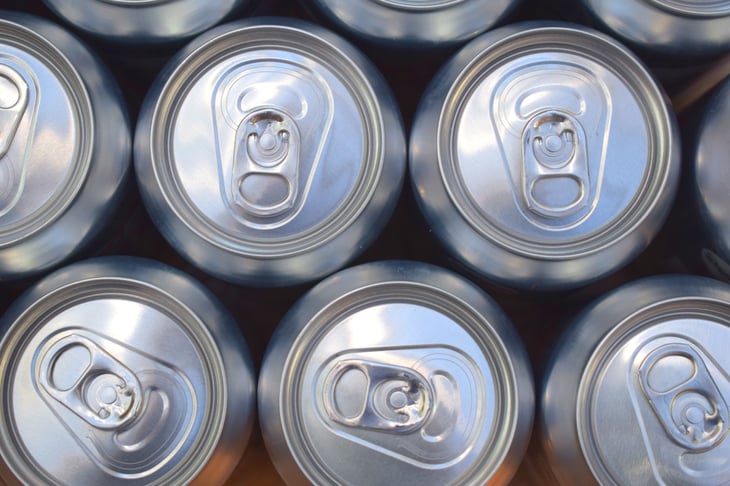
If your favorite soda, alcohol or bubbly water comes in a can — watch the price tag.
Trump imposed a 25% tariff on imported aluminum. A lot of drinks have glass or plastic alternatives, though, so opt for those when possible if they are cheaper. Or, consider giving up your favorite canned beverage for a spell.

Skip the new-car smell

A 25% tariff has been applied to all imported passenger vehicles (sedans, SUVs, crossovers, minivans, cargo vans) and light trucks, as well as automobile parts like engines, transmissions, powertrain parts and electrical components.
The unfortunate truth is that no car is 100% American-made. Even if a vehicle is fully assembled in America, at least some of its parts are imported. Cars.com has a Made in America Index, which ranks vehicle models based on how many of their parts are from the U.S.
If you don’t need a new car, don’t buy one.
However, most cities in America aren’t designed for residents to be able to fully rely on public transportation and walking. So, skipping a car entirely isn’t an easy task.
Ride-sharing apps like Uber can be a good option for those who only need a car once or twice a week, but otherwise, those costs can really add up.
So, if you need to buy a car, opt for a used one instead. Thankfully, used car prices have fallen after a period of high inflation.

Delay your tech upgrades

America gets a lot of its technology from China, so a blanket 25% tariff on imports stands to raise tech prices.
About 70% of lithium-ion batteries imported to the U.S. are from China. These batteries are essential for everyday devices like laptops and smartphones. Not only are certain parts imported, but many smartphones and laptops as a whole are imported from China.
Don’t rush to upgrade your devices as soon as new models are released.
If you need to buy a phone or computer, look for used or refurbished items. Online platforms like Facebook Marketplace are generally great spots to find used items. (Just make sure you don’t get scammed.)
Larger retailers like Amazon and Best Buy offer refurbished gadgets. Amazon’s refurbished section even includes blenders, Ring cameras, air fryers and other everyday tech.


Add a Comment