


Republican presidential candidates including Donald Trump made some bold promises concerning immigration, like saying, “on Day 1, I will launch the largest deportation program in American history to get the criminals out.”
That may sound like justice served, but some workers — U.S. citizens included — might want to think twice before celebrating these plans.
“Mass deportation would exacerbate ongoing U.S. labor shortages, especially in industries that rely heavily on undocumented immigrant workers,” Nan Wu, research director of the American Immigration Council (AIC), said in a statement. “It is estimated that the U.S. GDP would shrink by $1.1 trillion to $1.7 trillion over 10 years under mass deportation.”
Regardless of whether any administration or political party could pull off a mass deportation, experts and labor specialists say that just deporting any immigrant workers already in the U.S. could create a lot of problems for the economy.
1. Cheaper (but illegal) labor could go away

Just over a quarter of the estimated 11 million immigrants in the U.S. are suspected to be undocumented (illegal) workers, according to the Economic Policy Institute.
A skills-based immigration policy would require “serious immigration enforcement that prevents people from working illegally,” a policy brief from the conservative think tank American Compass says.
The brief recommends mandatory, nationwide use of the E-Verify system by employers and severe penalties for undocumented workers who break immigration laws. Among its chief concerns is businesses being able to use undocumented job applicants to drive down U.S. workers’ job opportunities and wages.
2. Mass employment openings could occur
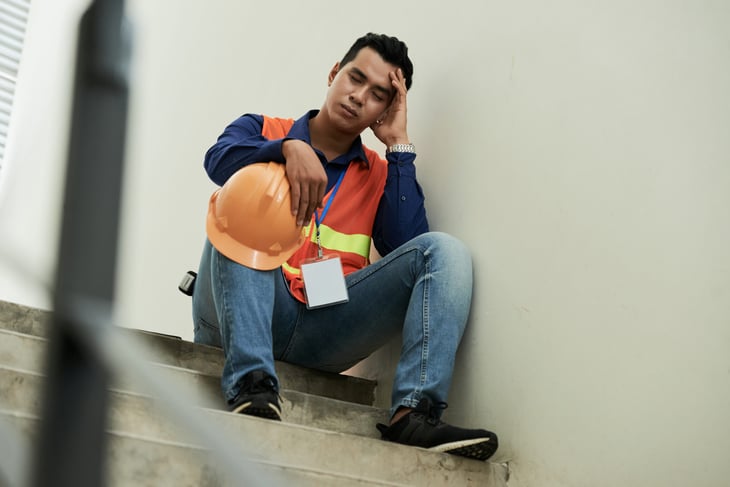
As a source for cheap and illegal labor, undocumented immigrants play a big part in how the economy functions. They are, in fact, good for many businesses where U.S. workers can’t (or don’t want to) meet the demand, and pushing them out of the workforce would make that worse.
“Do we pull talent from one area to another, but then someone else loses it,” Jason Leverant, president and COO of the AtWork Group, a franchise-based national staffing agency, said in a statement to CNBC.
The construction industry, for example, is short about 250,000 workers, according to Wu. She notes that 14% of construction workers in the U.S. are believed to be undocumented immigrants.
Mass deportation would directly affect many immigrants and other workers they replace — and indirectly affect the consumers who have to pick up the bill for higher costs.
3. It might be hard to find someone to hire for low-skilled jobs

Immigrants are integral to the construction industry, according to immigration groups.
They also are an important part of the farming industry. An estimated 30% to 40% of domestic farmworkers are undocumented immigrants, according to multiple sources including the U.S. Department of Agriculture. CNN also noted that immigrants make up more than 60% of the dairy industry’s workers.
As well, the AIC explains that immigrants include high percentages of the U.S. hospitality industry’s workers, caregiving industry’s workers, laundry services’ workers, and meat, poultry and fish processing workers.
4. It might be hard to find someone to hire for high-skilled jobs

Higher education prepares U.S. students to fill jobs in many science, technology, engineering and math (STEM) fields — advanced education jobs such as engineering, medical science, artificial intelligence, economics, physics and more.
But, as noted by EPI staff members and university presidents, the U.S. doesn’t generate enough educated workers to keep up with demand for economic growth.
Despite statistics showing that American-born students are actually increasing their efforts to obtain higher education, immigration restrictions continue to make it harder for talented workers to come to America. This is bad news for places like universities, as it cuts the headcount of international students.
5. Rates of American companies outsourcing jobs could continue to grow

With regard to restrictions on employing undocumented immigrants, a trend of U.S. companies outsourcing their jobs has emerged.
As the U.S. grapples with how many workers to let in, immigration restrictions remain an opportunity for places like the U.K., Canada and Australia, which have more liberal immigration rules.
Spain recently revamped its immigration policy to allow more skilled workers and business opportunities to enter legally. Germany created an agreement with Mexico to recruit nursing professionals to work and live there. And Canada is pursuing recruitment of African engineers and U.S. university graduates.
The U.S. Chamber of Commerce wrote in the summer of 2023 that a foreign talent exodus and business outsourcing of workers would negatively affect the U.S. economy, such as by allowing innovative and critical science and technology discoveries to occur elsewhere.

Add a Comment