


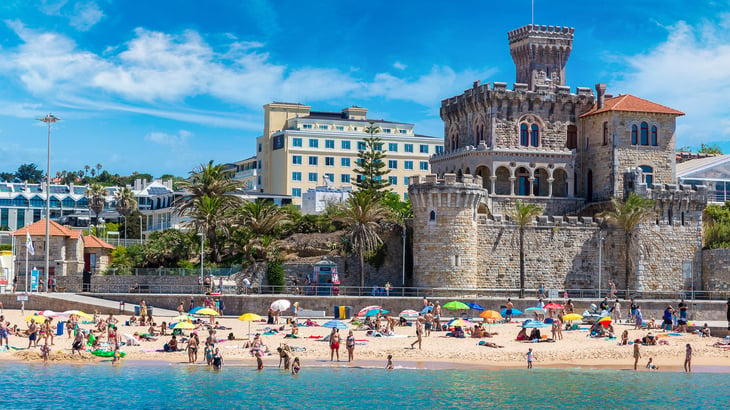
Editor's Note: This story originally appeared on Live and Invest Overseas.
Portugal’s southern coast has become a go-to for turnkey travels in recent years … between its stunning scenery, spas, and delicious seafood, it’s become a favorite of mine for easy, family-pleasing vacations.
Flights from Paris are often very cheap (though, in some cases, not so much — our flight there was only 59 euros per ticket, but coming back was twice that), and they are short and painless, with quick cab rides on either side, making it an easy option even with small children.
Frankly, Portugal is a first choice for holidays throughout much of Northern Europe for these reasons — and I haven’t even mentioned the beaches yet.
With more than 1,000 miles of coastline and beaches, many of them award-winning for cleanliness, accessibility, and environmental awareness, Portugal truly is a beach lover’s paradise.
While the country boasts beaches from the north to the southern coast, the Algarve is by far the most famous beach destination.
Most folks don’t travel much further west than Lagos when they visit the Algarve, which is a shame. Some of the most spectacular beaches and prettiest towns are nestled along the furthest southwest and western Algarve coastlines.
With a little insider knowledge, you can really take advantage of all that Portugal’s diverse coasts can offer. Let’s dive in.
Beaches for Everyone: Algarve Accessibility
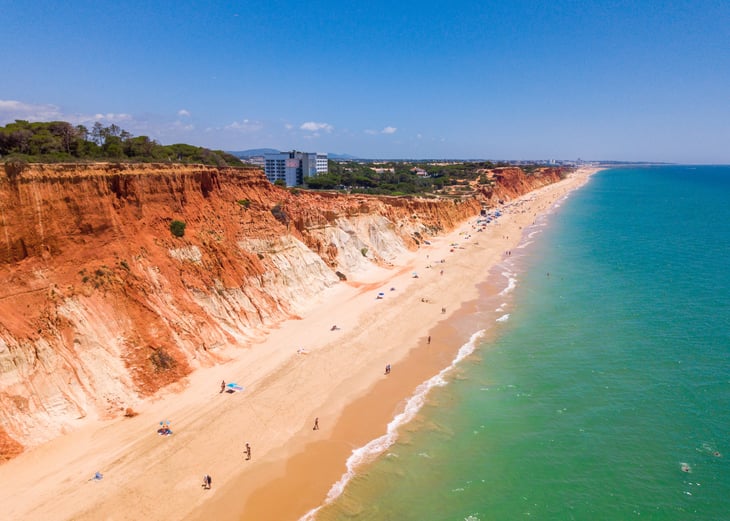
The Algarve Tourist Board website lists 47 accessible beaches in the region, each clickable with details on the beach, the location, how to get there, parking, its amenities, activities available, and lots more information.
They even include a series of accessible itineraries for the regions of Faro, Tavira, Vilamoura, Portimao, and Lagos.
In general, you can expect: “On beaches flying the ‘Accessible Beach’ flag, people with limited mobility will find access ramps, walkways, handrails, disabled toilets, reserved parking spaces, and restaurant tables that are unobstructed and appropriately sized. Most of the accessible beaches also have an amphibious wheelchair.”
Many beaches also have wooden boardwalks, even if they aren’t official accessible beaches.
Sun’s Out, Buns Out: Portugal’s Nudist-Friendly Shores
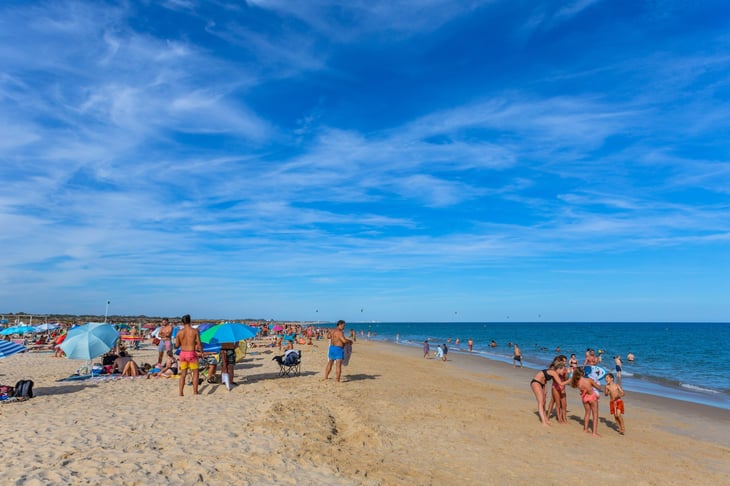
Portugal has surprisingly few official nudist beaches. However, the country has a relaxed attitude towards nudism, and it’s acceptable to go without clothes on plenty of beaches.
In fact, over 50 beaches are welcoming to nudists even if they do not have an official nudist-friendly status.
Praia do Homem Nu is one of the official nudist beaches of the Algarve. The name translates as “Beach of the Naked Man,” in case there was any confusion about what to expect. The beach is located in Tavira, and it’s an easy trip from the nearby tourist villages. A Blue Flag beach, with white sands and clean, bracing waters.
Praia de Faro is the beach of the Algarve’s capital city, Faro. The beach spans several miles, and tucked away at the far end, away from the tourists, is the nudist beach.
Praia do Barril is located on the Ilha de Tavira, just west of the town of Tavira. This beach has a huge stretch of white sand, and you’re almost guaranteed some peace and quiet here. The western end of the beach is an official nudist beach.
The beach is most famous for its Anchor Graveyard, or “Cemiterio das Ancoras,” hidden amongst the dunes. The sight of hundreds of rusting and rotting anchors all lined up in rows is quite something.
The area used to be a major tuna fishing area, and the anchors were used to tie the tuna nets in place. With the decline of the industry, they left the anchors to rot, and they are still there to this day.
This is a country that stays pretty warm even in winter, with temperatures rarely getting below the 50s … so flaunting your form is almost always in season here.
Wild, Windswept, and Wonderfully Quiet: The Secret Vicentine Coast
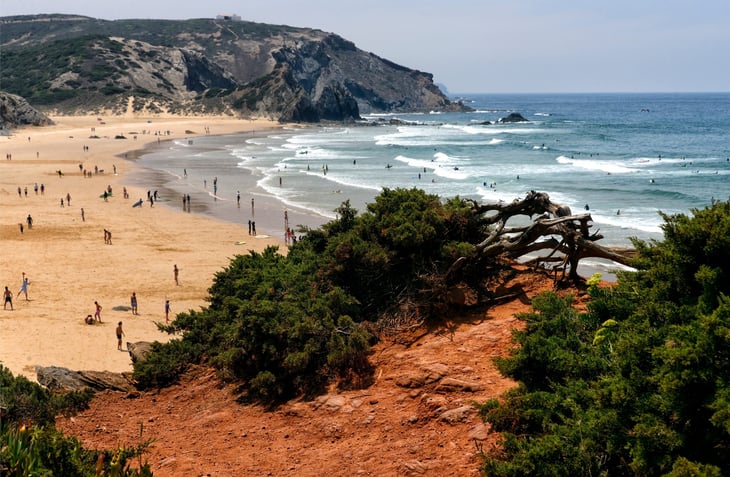
If you’re looking more for nature and solitude than amenities and crowds from your coastline, head straight to Algarve’s western corner.
The Costa Vicentina, stretching along Portugal’s southwestern coast, beginning about an hour from the southernmost tip, is a wild, rugged region that boasts dramatic cliffs, golden sandy beaches, and a laid-back coastal lifestyle, complemented by fishing villages and small towns.
Enjoy scenic hikes along the cliff tops, discover hidden coves and remote beaches, watch breathtaking sunsets, and experience world-class surfing conditions. This coast has an unspoiled feel, with wide, sandy beaches bracing themselves against the full force of the Atlantic Ocean.
Beaches here have a couple of cafes, a restaurant, toilets, and lifeguards in the summer. But it is in winter when these beaches come to life, with Atlantic swells and bracing fresh air. It’s the perfect place to wrap up and go for a walk along the sand.
Catch the Ferry, Dodge the Crowds: Unknown Island Beaches
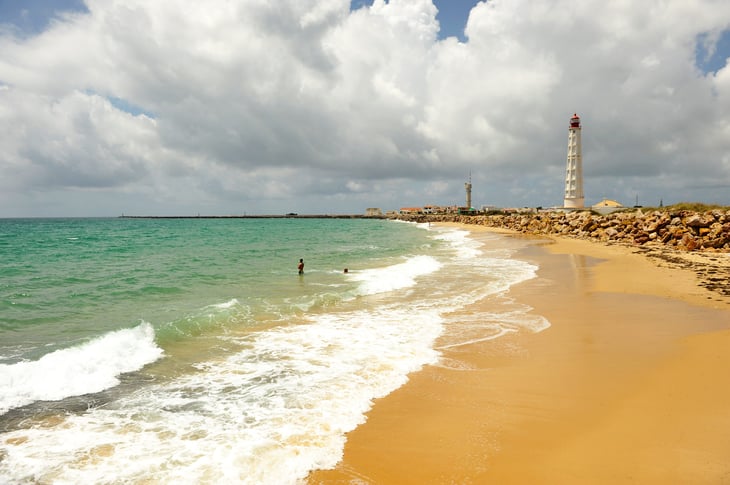
Your average tourist doesn’t come to Olhao because they say there is no beach. They don’t know that, just a short ferry ride away and a stroll across the dunes, there are two of the best beaches in Europe, on Armona and Culatra Islands, both car-free and worth a visit in themselves.
These offer a chance to get completely away from the crowds. The beaches on this little island are pristine, white-sand stretches with very few visitors at any time of year.

Crowd-Pleasing and Amenity Rich: The Tourist Beaches
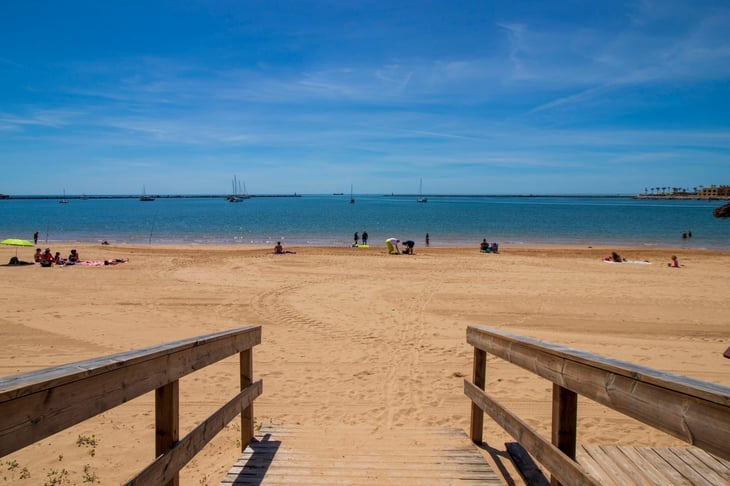
As the rest of this list shows, it’s easy to find beaches that aren’t overrun by tourists, even in the high season; you just have to know where to look.
But there’s a reason the popular beaches attract so many visitors — they offer the largest spaces, the calmest waters, and come with lots of conveniences, like restaurants, shops, toilets, beach clubs, lifeguards, playgrounds, sports facilities, and more.
These aren’t hard to find; they’ll be the most often recommended beaches mentioned online or in guidebooks.
Ferragudo’s Praia Grande, for example, situated on the eastern shores of the mouth of the River Arade, at Ferragudo and just across the water from Praia da Rocha and Portimao, is a wide sandy stretch that attracts many.
It translates as “big beach” and is over half a kilometer long. It has soft sand, a protected bay for swimming, beachside cafes, and the picturesque Algarve look, with boats moored in the harbor and craggy cliffs behind.
There’s a wooden walkway that covers about half of the length of the beach, which allows easy access for families or people with reduced mobility. It is the perfect beach to stroll along at sunset or in the early morning in the winter months. At low tide, you can walk through the rock pools all the way round to Praia de Molhe beach.
Most vacationers only walk from the end of the wooden boardwalk to the nearest sun lounger though, so if you’re willing to walk a little way further, you can find yourself an unoccupied stretch of beach.
Praia Grande is a popular spot and is quite busy in the summer, but it’s a great beach for families, with water sports, a lifeguard, and a relatively safe bay for swimming.
The northern end of the beach has the imposing feature of the 16th-century fort of Sao Joao do Arade. Originally built to defend the coast from pirates, the fort is now privately owned and has been lovingly restored.
Whatever kind of coast or beach you’re looking for — Portugal has it.

Add a Comment