


Editor's Note: This story originally appeared on LawnStarter.
Ornamental grass care is easy as pie: Cut back dry stems in the spring, water and control weeds and pests during summer, and let the plants be in fall and winter.
Of course, there are exceptions, like invasive grasses, floppy bundles, and sensitive species. But even so, ornamental grasses are low-maintenance and perfect for the beginner gardener. Learn from this guide how to care for ornamental grass with great results, even if it’s your first try.
We’ll start with seasonal maintenance and then move on to special considerations and problem-solving.
Spring Care

In my garden, spring care starts with thorough cleanup, pruning and dividing mature plants. That’s also what your ornamental grasses need in the early season:
Cut back the dead foliage. It gives your grasses a tidy look, improves airflow, and lets more sunlight reach the crown and new shoots, speeding up growth by a few weeks.
- When to cut back ornamental grasses: Prune cool-season grasses in late winter to early spring. Warm-season grasses can be cut back from late fall to mid-spring, but spring is the best time.
- How far to cut back ornamental grasses: Cut warm-season grasses down to 3 to 6 inches and cool-season grasses down to 1/3 of their height.
- How to cut back ornamental grasses: Put on leather gloves and long sleeves to avoid grass cuts, bundle tall grasses (to keep the stems together), then cut with a hedge trimmer.
Divide overcrowded clumps. Divide mature grasses that are 3 to 4 years old — ideally before the grasses are overgrown and die back in the center. Old, dense grasses are harder to dig out.
- How to divide ornamental grasses: Cut the bundle 6-8 inches above the soil. Dig the roots with a shovel or a spade and pull out the clump. Divide into smaller plants.
- Replant as soon as possible or share with neighbors and friends.
Clean up the base. Remove fallen leaves, twigs, and debris inside and around the grass bundles. All that dead material can attract pests and diseases.
Apply fertilizer once a year (only if necessary). Most ornamental grasses don’t require fertilizer, but, as with watering, there are some exceptions when a light application can help:
- Grasses that grow on poor, sandy soil.
- Ornamental grasses grown in containers.
- Newly planted grasses.
Use organic fertilizers such as rotted manure, mushroom compost, leaf mold, or a balanced (e.g., 10-10-10) synthetic slow-release formula.
Summer Care

Unlike turfgrass and vegetables, ornamental grasses need little care during summer. Just keep an eye out for pests and diseases, and water if there’s a prolonged dry spell.
Water if necessary. Most ornamental grasses are drought-tolerant, making them top plant choices for xeriscaping and rock gardens. Once established (after the first year), they can thrive on natural rainfall alone with some exceptions:
- New grasses: Water every other day during the first week after planting and twice a week for the rest of the growing season.
- Most cool-season grasses during summer: Water every 3 weeks if it’s a dry, hot summer to prevent the plants from entering dormancy and turning brown.
- Water-loving grasses, sedges, and rushes during dry periods (e.g. moor grass, wood rush, hook sedge).
Apply mulch to improve drought tolerance. A light layer of mulch moderates soil temperature and keeps moisture in.
- Useful for moisture-loving species like the morning star sedge, creeping red fescue, and wood oats.
- Don’t mulch right to the plant’s crown. It can lead to root rot and fungal diseases, especially in small types of ornamental grasses like little bluestem.
Note: The grass crown is the plant’s growing point from which all stems and roots develop.
Monitor for pests and diseases. Ornamental grasses are more resilient than turf, but some pests and diseases can still damage them, such as:
- Root-munching pests like gophers, voles, and rabbits. Ornamental grasses are deer-resistant plants.
- Aphids, armyworms, lace bugs, mealybugs, and spider mites.
- Fungal diseases such as leaf spot, powdery mildew, root rot, and leaf rust. Crowded, shaded, and overwatered grasses have a higher risk of infestation.
Remove weeds. Grassy weeds growing inside the bundle can turn into a real headache. If they spread among the plant’s stems and leaves, you’ll need to dig out the plant and divide it to eliminate them. Also remove weeds around the plant to improve air circulation and reduce competition.
Avoid trimming your ornamental grasses during summer. The bundle will look bad the entire season, and it can also disrupt the plant’s growing cycle:
- The additional stress can lead cool-season grasses into dormancy.
- Warm-season grasses invest energy in regrowth and might not have time to prepare for the cold-season.
Fall and Winter Care
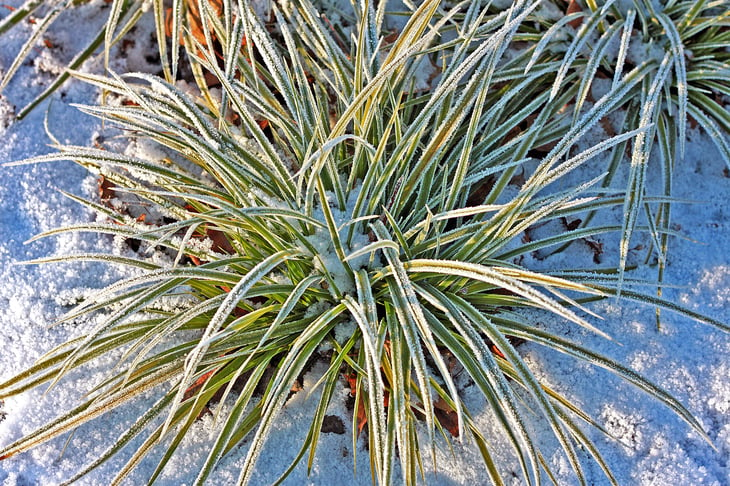
Leave the foliage intact until spring pruning. The stems and leaves protect the crown from freezing temperatures and dry winds. They also add color and texture to your winter landscape.
Exceptions:
- Wildfire-prone areas: Cut back warm-season grasses as soon as they dry out. Dry material can easily spread a fire.
- Wet winters: Heavy snow can weigh down softer grasses, making spring care more difficult.
- You really want a neat winter yard.
Reduce watering: Temperatures are dropping, so water doesn’t evaporate as fast. Reduce watering or stop it altogether.
Avoid heavy mulching: A thick layer of mulch can easily lead to root rot once the temperatures drop and water evaporates slower.

Special Maintenance Considerations
How to care for ornamental grasses in pots:
- Water regularly, when the top few inches of the soil dry out. Reduce watering during winter.
- Apply fertilizer once a year, in the spring.
- Bring the container inside during winter if the plant is not hardy in your zone.
Caring for specific varieties:
- Maiden grass: Limit fertilizer. Excessive feeding reduces the grass’s ability to withstand winter cold and winds.
- Mexican feather grass: Don’t overwater. Its wiry blades might flop.
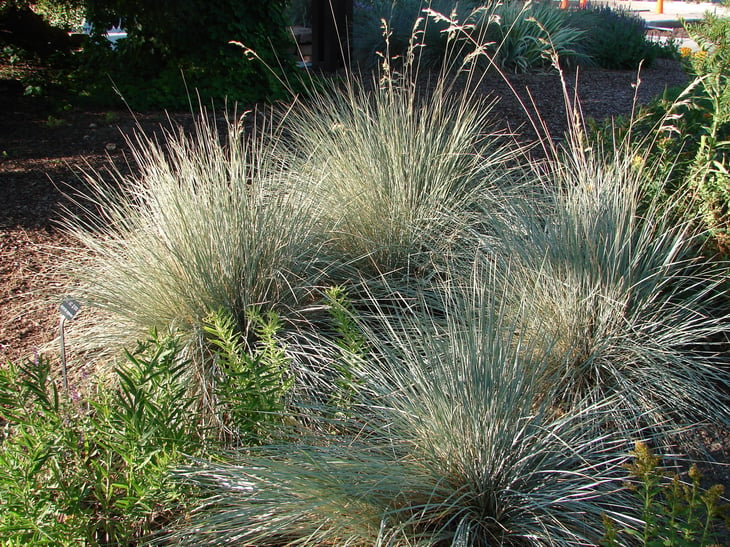
- Blue oat grass: Water regularly during dry spells to keep its deep blue-green color from fading.
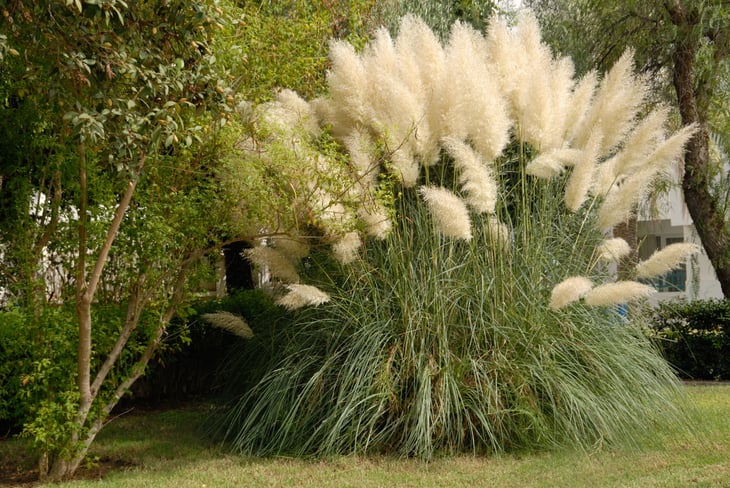
- Pampas grass: Avoid nitrogen applications. Excess can prevent the plant from blooming.
- Indian grass: One of our best native ornamental grasses, Indian grass might require staking since some varieties have softer, less stiff stems when mature.
Common Maintenance Problems
Flopping or sprawling
- Overfertilization — Stop fertilizing
- Insufficient sunlight — Trim trees. Move to a sunnier spot. Support the bundle with stakes.
Center die-out
- Dense, overgrown foliage — Repair (dig out the center root mass and fill the hole with garden soil) or dig out the plant and divide it.
Invasive spreading
- Runners or heavy seeders in a favorable environment — Pull out new seedlings. Cut the flower heads before seeding.
Browning tips
- Winter-desiccation — Cut back in the spring
- Underwatering — Water during dry spells
- Overwatering — Reduce or stop irrigation
- Excess nitrogen — Irrigate to dilute the fertilizer
- Insects on the grass — Wash the plant with the garden hose
- Fungal disease — Divide the plant to improve air flow. Treat with fungicide.

Add a Comment