


If you stare at the ceiling for hours, unable to fall asleep, or wake up during the night, you would probably do anything to get a good night’s sleep. After all, sleep deprivation doesn’t just make you cranky the next day. Not getting enough sleep is also bad for your health.
Adults need at least seven hours of nightly sleep to recharge and restore, according to the Centers for Disease Control and Prevention (CDC). When you sleep, your body — including your heart, lungs and immune system — recharges and restores.
Quality sleep also acts as a housekeeper for your brain, removing brain toxins that build up during the day and creating new pathways in your brain for better memory function, according to the National Institute of Neurological Disorders and Stroke (NINDS).
On the other hand, not getting enough sleep negatively affects concentration and response time, says the NINDS. So, if you’re driving or operating machinery while sleep-deprived, you’re putting yourself and others at risk of an accident.
If your bed has become a torture chamber instead of a restful sanctuary, do your body and mind a favor and try the following sleep tricks that actually work.
Shut down electronics
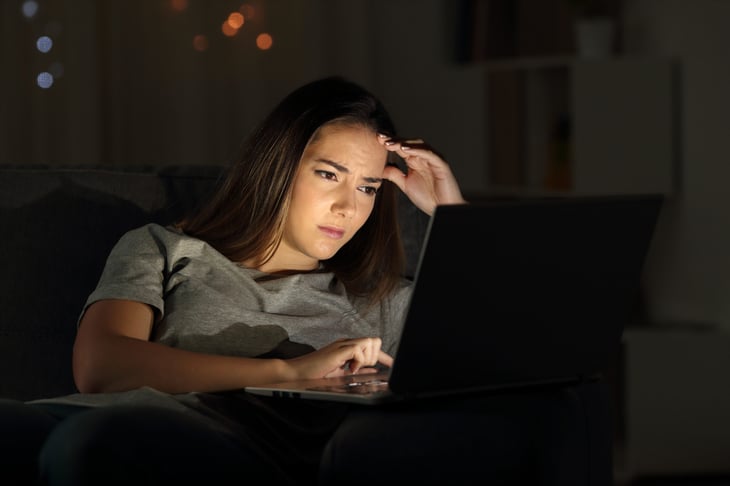
Instead of checking your phone, gaming or binge-watching your latest streaming addiction before bed, shut down screen time at least an hour before bedtime to fall asleep faster and sleep longer.
A study published in PLoS One found that participants who stayed off their phones 30 minutes before their usual bedtime for four weeks fell asleep about 12 minutes earlier and slept around 18 minutes longer. As a result, their moods and working memory improved.
The National Institutes of Health recommends opting to read a book, listen to calming music or enjoy another relaxing activity instead of staring at screens before bed.
Be consistent
While it may be tempting to stay up later or sleep in on weekends if you don’t have to work, resist the urge to do so if you’re trying to improve or maintain better sleep.
Going to bed early some nights while staying up late on others can get in the way of quality sleep, according to the American Academy of Sleep Medicine, which recommends sticking to a consistent sleep schedule for better sleep.
Your body sets your sleep-wake cycle and circadian rhythm (your body’s biological clock) based on daylight patterns, according to the U.S. Department of Health and Human Services. This internal clock helps make you sleepy when it’s dark and alert during the day.
Getting up regularly at the same time each day, seven days a week, can help you fall asleep faster each night and align your sleep-wake cycle, according to Harvard Health Publishing.
Exercise

Exercise may help you sleep better if you have insomnia, according to a study in the journal Cureus. You don’t have to exercise like a fiend to get in those extra winks, either. According to the study, 90 minutes per week did the trick over two months.
Moderate-intensity exercise in particular seems good for sleep, the study suggests. And as little as a 10-minute walk can improve sleep, says the CDC.
Some research indicates that vigorous or high-intensity exercise too close to bedtime may interfere with sleep. But a study in the journal Sports Medicine suggests exercising close to bedtime can result in better sleep quality if the workout is more than one hour before bedtime.
To find what works best for you, experiment with different exercise times to find the time that helps you fall asleep and sleep throughout the night.
Get out in the sun

Research shows that exposure to sunshine each day, especially in the morning, can help you feel more alert during the day and get sleepy when it’s time for bed. “Your body’s internal clock, known as its circadian rhythm, relies on natural sunlight to stay in sync,” says the Cleveland Clinic.
Soaking up 10 to 30 minutes of sunlight is all it takes.
While you’re outside, fit in a short walk, bike ride or another outdoor activity to get a double dose of sleep-enhancing methods.

Wear socks to bed
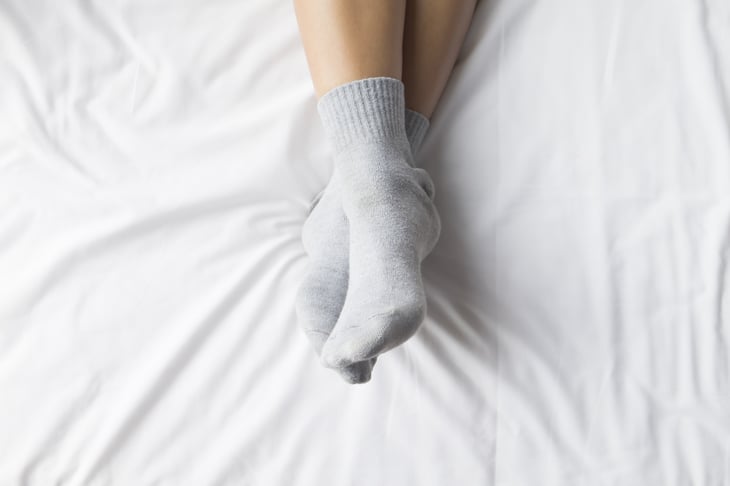
Warming your toes with a cozy pair of socks can help you fall asleep faster and not wake up as often during the night, according to the Cleveland Clinic.
In fact, a small study in the Journal of Physiological Anthropology found that participants who wore socks versus not wearing socks during two seven-hour sleep periods in a cool (about 73 degrees Fahrenheit) room fell asleep on average about eight minutes faster than the barefoot control group.
Participants wearing socks also had fewer sleep interruptions and snoozed for 32 minutes longer.
When your feet are warm, blood vessels that constrict in the cold widen and relax. This can improve circulation and lower your core body temperature, which could help you sleep better, according to the Cleveland Clinic.
So, next time you slip under the covers, tuck your icy toes in too — with a toasty pair of socks — for faster sleep onset and more shut-eye.
Use blackout curtains

Hanging blackout curtains, closing the windows and blinds and shutting off all lights in the bedroom can reduce noise and light to create the dark, quiet and relaxing environment for sleep recommended by the CDC.
Sleeping in a darkened room is also good for your heart, blood and blood vessels and may decrease insulin resistance, according to a study in the journal PNAS (Proceedings of the National Academy of Sciences).
If you don’t have blackout curtains, consider purchasing and installing them to darken your bedroom.
You can also wear a sleep mask for a similar effect — or combine blackout curtains with a sleep mask to sleep in complete darkness.
If the morning sunlight wakes you up too early each day, perhaps you can move your bed to a part of the room where you won’t be disturbed by morning light.
Clear your head with a to-do list

Does trying to remember all those tasks you have to do tomorrow keep you wide-eyed until the wee hours? Jotting down a to-do list before hitting the sack may help you fall asleep faster, according to a study from Baylor University in the Journal of Experimental Psychology: General.
The study measured sleep patterns of 57 young adults who spent five minutes before bedtime writing down either tasks they’d completed in the last few days or the ones they needed to complete over upcoming days.
Participants who jotted down the tasks they must do over the next few days fell asleep “significantly faster” than those who didn’t make a list, according to the study. The more specific participants were in the details of their list, the faster they fell asleep.
Try spending five minutes on a to-do list for a few days before bedtime. You may find that without all those upcoming tasks cluttering your mind, you can drift off faster. That way, you’ll have more energy and focus to get those jobs done so they’re not keeping you awake the next night.

Add a Comment