


Editor's Note: This story originally appeared on Boldin.
The news of the tariffs and their impact on the financial markets have dominated headlines recently, and the unease is bleeding into everyday life.
There are legitimate concerns, but the big question: will these tariffs hold and are we looking at complete upheaval of the world economy, or is this just another short dip in a long road upward?
Let’s hear what the press and some legendary personal finance experts have to say about the market turmoil.
Here is some useful advice and insightful commentary on tariffs and market volatility from thought leaders. We think you will find the range of views valuable to put the news in context.
1. Remember Core Investing Principles

If you follow the financial planning space, you’ve likely come across Michael Kitces, a widely respected thought leader and financial planning industry researcher.
His platform regularly features in-depth insights from top financial experts, and recently, he invited James Liu, CEO and founder of Clearnomics, and Lindsey Bell, chief market strategist, to share their perspectives on recent market volatility.
There’s plenty of valuable insight in the article, but three key principles stand out as especially important to keep in mind during times of uncertainty:
- The power of diversification
- The inevitability of market corrections
- The importance of staying invested for long-term financial success

2. Know the Role of Diversification in Market Stability

History consistently proves that no single asset class outperforms forever, which is why diversification is necessary to manage risk effectively.
In recent years, if the majority of your stock allocation was made up of U.S. stocks (i.e., the S&P 500), you likely fared well. However, when U.S. stocks struggle, other types of investments can help balance things out and reduce the overall ups and downs in your portfolio.
By investing your money across different asset classes, you can build a more resilient portfolio that can handle market ups and downs while maintaining long-term growth potential.

3. Market Corrections Happen Faster Than You Think
It’s never easy to watch your retirement savings or investment portfolio take a hit during a market downturn. Seeing your hard-earned savings quickly fall can be stressful, and it’s completely understandable to feel concerned. However, history has shown us that these market dips are a natural part of investing — and they don’t last forever.
The typical S&P 500 correction has seen a drop of around 14%, but historically, the market has bounced back in under four months. Take 2020 as an example — who could have predicted a global pandemic that year?
At the time, you might have assumed it would take years for your investments to recover, but the market rebounded in just four months.
While these downturns are understandably unsettling, they help adjust market prices and create new investment opportunities for long-term investors who stay the course.

4. Time in the Market Beats Timing the Market

During periods of market volatility, the urge to “do something” with your investments — like selling to avoid further losses — can be tempting. But timing the market successfully requires getting two nearly impossible decisions right: when to sell and when to buy back in.
Missing just a handful of the market’s best-performing days can have a serious impact on your long-term investment returns. Selling during market downturns can cause you to miss the critical rebound periods that follow.
Staying the course, even when the news looks grim, has historically been the best way to build long-term wealth. Not only that, but it also provides peace of mind by avoiding the stress of constantly trying to predict market movements.
5. Don’t Let the Market Influence Your Decisions

Morgan Housel is the author of the acclaimed and best-selling book: “The Psychology of Money: Timeless Lessons on Wealth, Greed, and Happiness.” He was recently quoted in Barron’s, commenting on the market volatility.
He said, “I have lots of takes. I follow the stock market very closely. I check it all day, every day, but it never influences the decisions that I make as an investor. I dollar-cost average into index funds that I hope to own for the next 50 years. I don’t think that’s a contradiction, because markets are a window into human behavior that are so fascinating.”
However, after the recent market drop, he tweeted more direct commentary on the tariffs that is either optimistic or pessimistic depending on how you read it.
He wrote: “Spoke to an investor who said if the market actually processes what happened yesterday it would be down 30%-40%. The fact that it’s not is either denial or a belief that it will soon be reversed.”

6. Downturns Are Short-Lived

Ben Carlson, CFA, is currently the Director of Institutional Asset Management at Ritholtz Wealth Management and the author of the blog “A Wealth of Common Sense.” He provides commentary on how today’s markets are different and how volatility clusters are becoming more common.
He writes, “I don’t know if this will turn into another bear market, but I’m not surprised that these big moves are happening more often.”
He talks about how downturns are more frequent and more short lived.

7. Stress Test Your Retirement Plans

Joe Kuhn says that your retirement plan is wrong — you need to routinely update and stress test to failure.
Check out his video on the importance of stress testing your retirement plans and scenarios to run.
8. Don’t Try to Time the Market

Jean Chatsky, the CEO of HerMoney and host of the podcast HerMoney was interviewed by CNBC and she reminded everyone of an old adage: “With these volatile markets, you do not want to time the market. Timing the market doesn’t work — it’s time in the market.”
She also advised that “Taking action is the best way to feel more resilient.”

9. Understand How Tariffs Can Impact Your Finances

“The riskiest economic experiment of our lives has begun.”
Azul Wells is a new partner to Boldin. In a video posted April 3, 2025, Azul discusses Trump’s tariffs and what impact they may have on your finances.

10. Think About Investments and Allocations

Rob Berger has been posting on investments and allocations. And his insights are likely useful in light of the tariff news.
He recently posted:
- “Stock vs. Bond Allocation According to Paul Merriman“
- “How I’d Invest a 401(k) Rollover Today“
- “What are the Best Investments to Hold in a Roth IRA?” (A discussion with Andy Panko)
11. Don’t Panic

Don’t let a bad market ruin your retirement plans. Devin Carroll assures you that you don’t have to panic and hit the brakes on your retirement plans.

12. Keep Investing

Michelle Singletary writes the nationally syndicated personal finance column “The Color of Money,” which appears in The Washington Post on Wednesdays and Sundays.
She offered advice that included a plea to younger Americans to keep investing in the stock market. She said, “If you’re in your 20s, 30s, or early 40s, don’t let what’s happening now scare you away from the stock market. Keep investing.”
Singletary continued, “As a young adult investor, you have available to you an important investing strategy that older investors don’t. You have time on your side. Consistently investing over a 30- or 40-year career can result in a seven-figure retirement account.”
And, for everyone else, she advised, “don’t look.” And, if you do look, be sure to look at where you stand over 10-15 years ago. Odds are you are still way up.

13. Keep Your Head
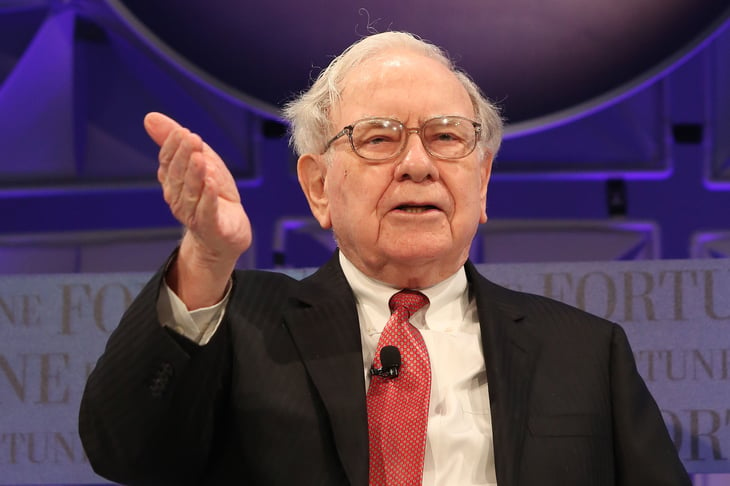
In early March of this year, Warren Buffett called Trump’s tariffs “an act of war.”
However, his advice from a 2017 letter to Berkshire Hathaway shareholders is being widely quoted as sage advice even now. In the letter, Buffett warned against becoming rattled by “scare headlines and breathless commentary when the stock market drips.”
And he proceeded to quote Rudyard Kipling’s poem, “If.”
“If you can keep your head when all about you are losing theirs … If you can wait and not be tired by waiting … If you can think – and not make thoughts your aim … If you can trust yourself when all men doubt you … Yours is the Earth and everything that’s in it.”


Add a Comment