


Editor's Note: This story originally appeared on LawnStarter.
Composting is an easy and eco-friendly way to reduce yard and kitchen waste while creating nutrient-rich soil for your lawn, garden, and flowerbeds. But knowing what you can put in a compost bin is essential for maintaining the right balance of materials.
Brown materials — such as dried leaves, shredded newspaper, and cardboard — provide carbon. Green materials — like fruit and vegetable scraps, coffee grounds, and grass clippings — provide necessary nitrogen. Avoiding items like meat, dairy, and greasy foods prevents pests.
By adding the right ingredients and steering away from the not-so-good ones, you can speed up decomposition and turn everyday waste into useful compost.
Brown Materials You Can Compost

Brown materials in a compost bin add high amounts of carbon that the microbes can use as an energy source and for the formation of new cells. These items are usually “dry,” hence why they are called brown materials.
They also add structure to the pile, increase air flow, and absorb moisture.
- Dry leaves
- Brown cardboard, both corrugated and non-corrugated (shredded, non-glossy)
- Newspapers with black ink
- Printer paper
- Unbleached paper towels, napkins, and tissues (that aren’t greasy or oily)
- Cotton swabs with paper stems
- Unbleached paper coffee filters
- Small twigs and branches you’ve pruned from your trees
- Straw and hay
- Sawdust from untreated wood
- Peat moss
- Dried corn husks and cobs
- Pine needles (in moderation; too many can make the bin too acidic)
- Fireplace or other wood ashes
- Hair and animal fur
- Plant-based bedding from pets that eat a vegetarian diet (hamsters, guinea pigs, rabbits)
- Natural fibers like wool, silk, leather, and cotton
- Dryer lint
- Kitty litter made of plant-based material, if it’s free of fragrances and chemical additives (with the feces removed)

Green Materials You Can Compost
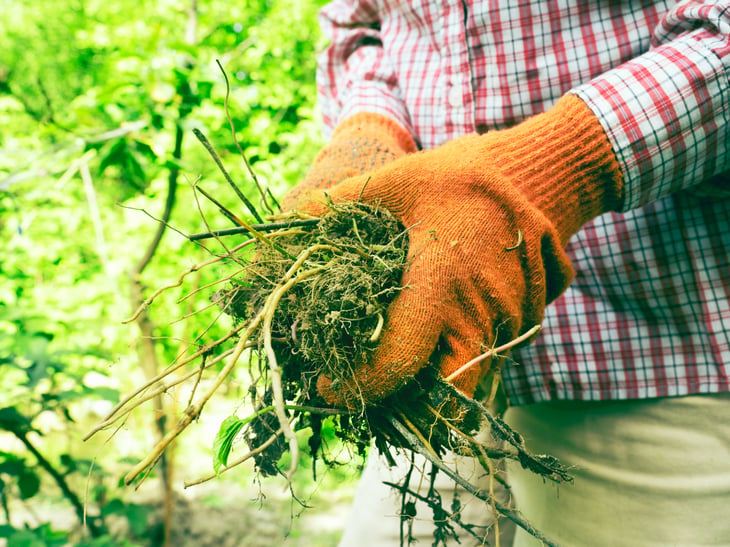
Along with the brown materials, you want to add what is classified as “green” items to your compost bin. These materials are nitrogen-rich and are used by the microbes as building blocks to grow and reproduce, facilitating decomposition.
Nitrogen is needed as it is a key component in proteins and other crucial compounds necessary for life functions.
- Fruit and vegetable scraps (banana peels, apple cores, etc.)
- Food scraps
- Bread
- Cooked pasta and rice
- Freezer-burnt foods
- Gelatin
- Coffee grounds
- Eggshells (rinse them first)
- Tea bags (remove the metal staples that attach the tag)
- Grass clippings
- Fresh, green leaves
- Plant trimmings
- Fresh flowers
- Manure from herbivorous animals (cows, horses, rabbits)
- Poultry manure

Brown Materials That Can’t Go in a Compost Bin
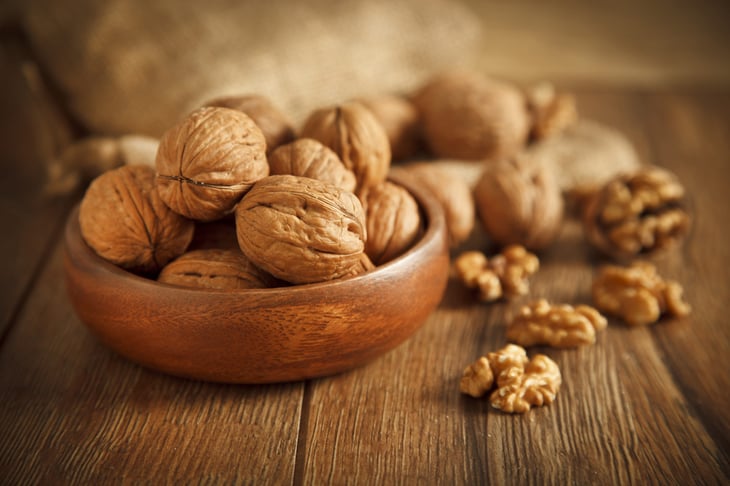
Not all carbon-rich materials are suitable for your compost bin because they can introduce harmful substances, take too long to decompose or attract pests. Avoid putting the following brown materials in your bin.
- Treated lumber
- Fresh black walnut leaves, husks, and shells (black walnut contains juglone, which is toxic to some plants)
- Glossy/coated paper products
- Coal ashes

Green Materials That Can’t Go in a Compost Bin
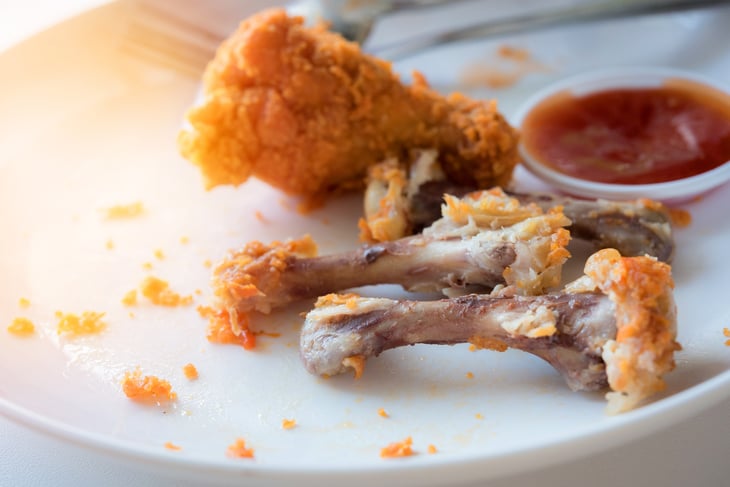
Some nitrogen-rich green materials shouldn’t go in your bin, either. The following items can attract pests, create foul odors, or introduce harmful bacteria or compounds to your compost.
- Meat scraps
- Dairy products
- Bones
- Oily or greasy foods
- Heavily seasoned food items
- Diseased grass or plants
- Pernicious plants (those that hurt other plants, people, or the environment)
- Weeds full of seed heads
- Pet waste

Miscellaneous Items That Can’t Go in a Compost Bin

Lastly, a few items don’t particularly fit within the brown or green categories but shouldn’t be composted. These items should be avoided because they won’t break down at the same rate as your organic materials if they decompose at all.
- Metal
- Plastic
- Disposable diapers
Next are frequently asked questions about what you can put in a compost bin.

How much brown and green material should you put in your compost bin?
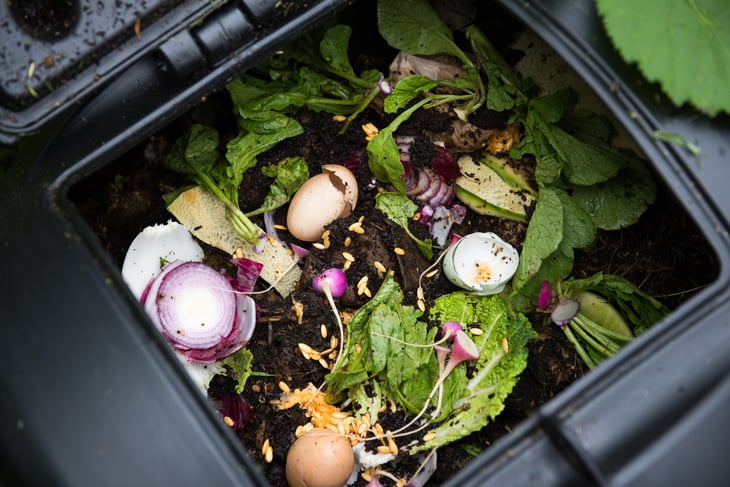
For the microbes to work efficiently, having an appropriate ratio of brown and green items in your bin is crucial. If the ratio is off, the process will slow down or stop.
Aim for a 30:1 ratio of carbon to nitrogen. In terms of volume, this is usually about two-thirds brown material and one-third green.

What can you use compost for?

There are many ways to use compost in your yard. Compost is chock-full of nutrients, beneficial microorganisms, and other great things like carbohydrates and organic compounds.
You can use it as a soil amendment in your garden and flowerbeds, as topdressing to nurture your lawn, as mulch around trees and shrubs, and to prevent hillside erosion.

Does composting smell?

The composting process will produce some smells, but when composting is done correctly, the smells shouldn’t be terrible. When enough oxygen is in the bin, aerobic microbes do the bulk of the work, giving off minimal odors.
But when the oxygen is depleted, anaerobic microbes take over the breakdown of organic matter and produce foul-smelling gases like ammonia, methane, and hydrogen sulfide.
Keeping your pile regularly aerated and full of oxygen will help keep smells to a minimum!

Add a Comment