


Editor's Note: This story originally appeared on LawnStarter.
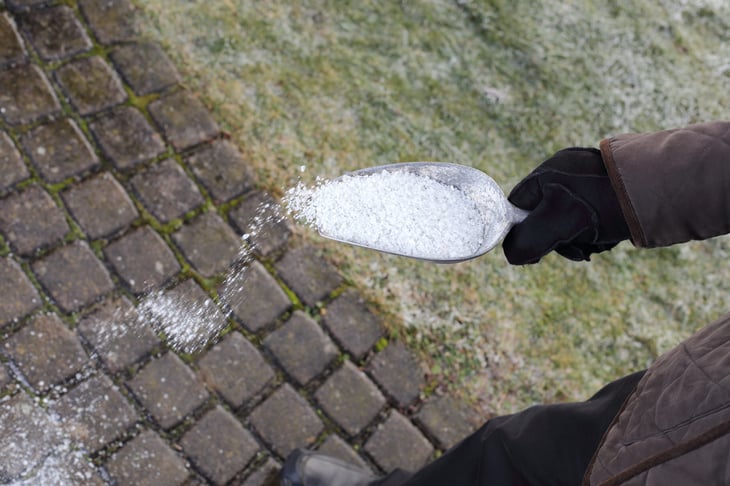
Ice melt is an invaluable resource during winter when the weather creates treacherous conditions on your walkways and driveway, but it can also damage your lawn.
To repair salt damage on your grass, you’ll want to move any residual salt out of the root zone with gypsum and water and fix any bare spots that occurred by topdressing and overseeding.
In this article, we’ll walk you through the steps, from leaching salts out with water, to overseeding.
What Salt Does to Your Lawn

Salt from de-icing products can wreak havoc on your lawn, mainly when the sodium or chloride — depending on what product you are using — builds up in the soil.
- Dehydrates the grass: Salt in the soil draws moisture from the grass blades and roots through a process called osmosis, leading to dehydration and desiccation. It causes the grass to turn brown, wither, and die, even when adequate water is in the soil. This phenomenon is known as “physiological drought.”
- Toxicity problems: The sodium and chloride in salt products can quickly build to toxic levels within the grass, as neither is needed by the plant for growth and other metabolic functions. They also can damage the roots of the grass, inhibiting its ability to take up water and nutrients.
- Nutrient deficiencies: Excess sodium competes with ions such as magnesium and calcium, fighting for attachment sites on soil particles. When sodium replaces these ions, they are less available for plant uptake, causing nutrient deficiencies.
- Lowers plant defenses: Excess sodium, coupled with the other effects mentioned, causes stress in your grass. A stressed lawn cannot ward off diseases and insect problems and is less capable of tolerating drought and heat.
Telltale symptoms of salt on your lawn include brown or discolored grass, visible patches of dead or thinning turf, delayed spring green-up, a wilted or dry appearance, and white crusty residue on the soil surface. These signs are usually more prominent along the edges of sidewalks, driveways, and streets, where road salt may accumulate as snow melts from these surfaces.
Here are steps to fix salt damage to grass.
1. Leach Salts out of the Soil Solution

First, use your garden hose to flush as much salt from the root zone as possible. This step will remove the sodium dissolved in the water found in the pore spaces between the soil particles.
Once that is leached further into the soil profile, you’ll get rid of the sodium attached to the soil particles.
Turn it on a setting similar to a rain shower or shower head to distribute water in a natural pattern without much force. The water will move sodium in the soil further down into the ground, where your lawn’s roots can’t access it.
My tip: You must use a lot of water in this step. I typically water the entire spot until water starts pooling on the soil. Allow it to soak in, and repeat three to four times. I’m not usually one to promote overwatering as I technically live in the desert, but in this case, water, water, and water some more!

2. Apply Gypsum
Now, you need to “knock” the sodium off the soil particles and organic matter (soil particles like silt and clay, as well as organic materials, have a net negative charge and hold onto positively charged nutrients like sodium, potassium, calcium, and magnesium) and replace it with nutrients your plants need.
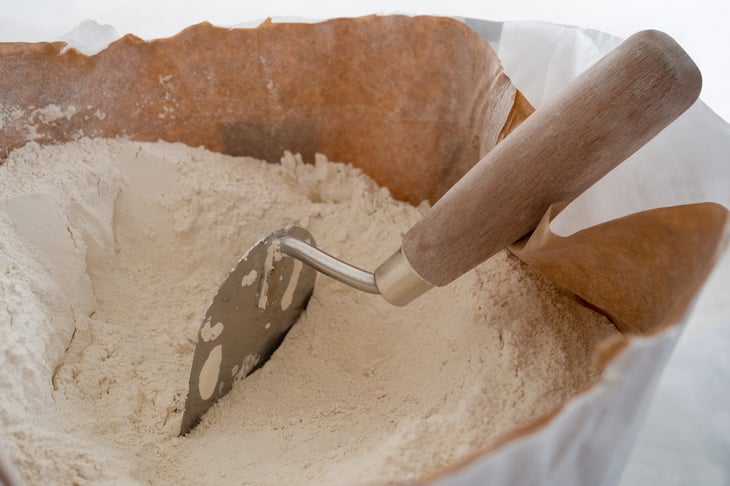
Gypsum, or calcium sulfate, is the best soil amendment and should be applied at 20 to 40 pounds per 100 square feet of soil.
The calcium in gypsum replaces the sodium on the soil particles, freeing the sodium to react with the sulfate, forming sodium sulfate. The sodium sulfate rapidly dissolves in the soil solution, where it can be easily flushed or leached from the root zone.
According to Complete Land Organics, “the calcium in gypsum displaces salt residues which help to reduce the uptake of damaging salts through the plants root zone. For best results, put pelletized gypsum in your lawn spreader making two passes (full open rate) around street curbs, driveways, sidewalks or wherever ice melter will be repeatedly used this winter.”

3. Leach the Sodium Sulfate out of the Soil

Pull out your garden hose again for leaching, round two. Following the same procedure above, soak the soil several times to move the sodium sulfate out of the root zone.
Turn on your hose sprayer to a setting similar to a rain shower or shower head to distribute water in a natural pattern without using so much force it washes the soil away. Wet the entire spot until water starts pooling, allow it to soak in, and repeat a couple of times.

4. Rake Out the Damaged and Dead Grass

After you’ve removed as much of the sodium in the root zone as possible, it’s time to switch gears and start fixing the damaged areas of your lawn.
Dead or damaged grass from salt isn’t going to repair itself, so use a garden or leaf rake to remove the grass to prepare the spots for overseeding.

5. Top-Dress Bare Spots

With the dead and damaged grass removed, it’s time to focus on top-dressing the bare spots. Before you start, determine the soil type you’re working with to choose the best topdressing material.
The most common options are sand, topsoil similar to your existing soil, high-quality finished compost, or a custom-blended mix of materials.
According to the late James Beard, a leading authority on turfgrass, choosing the wrong material as a topper soil can create serious problems.
“The use of top-dressing mixes containing textures drastically different from the underlying soil results in the development of a distinct layer that impairs air and water movement considerably and results in an overall reduction of turfgrass quality.”
Once you choose your material, use your garden rake to loosen the top inch or two of soil and then spread one-eighth to one-half inch of top-dressing material over the spot. Gently rake the material into the existing soil or water it well.

6. Overseed Affected Areas
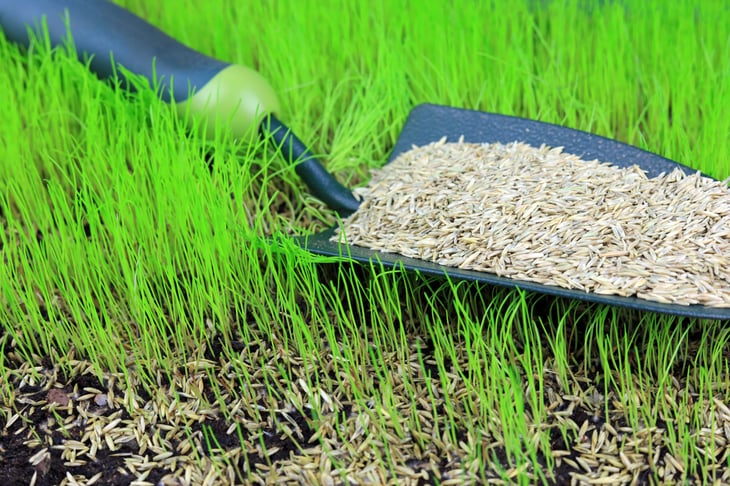
Now that you have a thin layer of top-dressing down on the salt-affected areas, it’s time to overseed new grass.
At this point, you can either use the same type of seed you’re already growing or grow a salt-tolerant grass species compatible with your lawn.
- The best salt-tolerant cool-season grasses include perennial ryegrass, tall fescue, and creeping red fescue. They have moderate salt tolerance — which isn’t as good as some warm-season turfs but is better than Kentucky bluegrass.
- Salt-tolerant warm-season grasses include St. Augustinegrass, Bermudagrass, and seashore paspalum.
Depending on the patch size you’re reseeding, use a handheld or walk-behind fertilizer spreader to spread the seed at the recommended reseeding rate on the product label. If your seed mixture doesn’t include a fertilizer, you can add a lawn starter fertilizer.
After seeding, keep the soil moist until germination and avoid heavy foot traffic until your new grass is a couple of inches tall.


Add a Comment