



Editor's Note: This story originally appeared on Live and Invest Overseas.
What’s the point of diversifying offshore?
“Why,” for example, as a consulting client asked me recently, “would someone want an offshore bank account?”
“And what,” this client continued, “can a second passport really do for me?”
Good questions.
Let’s start with the bank account

Fundamentally, an offshore bank account allows you to remove some of your money from your home country’s banking system. That’s the big-picture upside.
An offshore bank account, once in place, also can allow you access to alternative investment options not available back home … especially for Americans and Canadians.
Through your offshore bank account, you can invest in global stock markets, mutual funds and currencies. Diversifying your investment portfolio, therefore, is a second reason to think about setting up an offshore account.
A third compelling reason is that a bank account in another country can provide some modest level of asset protection. Money in an offshore account isn’t within easy grasp of some knucklehead suing you back home.
An offshore bank account, however, doesn’t provide a high level of asset protection, which is why, depending on your situation, you may want to graduate to offshore structures.
Offshore structures

An offshore structure — an LLC, for example — can provide much greater protection for your offshore investments than a bank or brokerage account. Holding offshore assets in an LLC also can translate to some estate-planning benefits.
I use an offshore LLC to hold much of my global real estate portfolio. Holding a piece of property you own in another country in your own name means your heirs will have to go through probate in that country when you die.
Holding property in your own name in five countries means your heirs will be forced to wade through probate in five countries. Put all those properties in an offshore LLC, and your heirs will have to transfer only one asset when you die … the LLC.
An offshore LLC provides a better level of asset protection than an offshore bank account, but if asset protection is your main goal you can go one step further.

Even better asset protection

The next level of asset protection after an offshore LLC is an offshore trust. An offshore trust provides the greatest possible level of asset protection and estate planning.
Structured correctly, an offshore trust can protect you as an individual from any judgment against your assets.
The reason being that, once you transfer the assets to the trust, they are no longer yours. They belong to the trust. You’re simply the beneficiary of that trust and the assets it owns.
What about a second residency or citizenship?
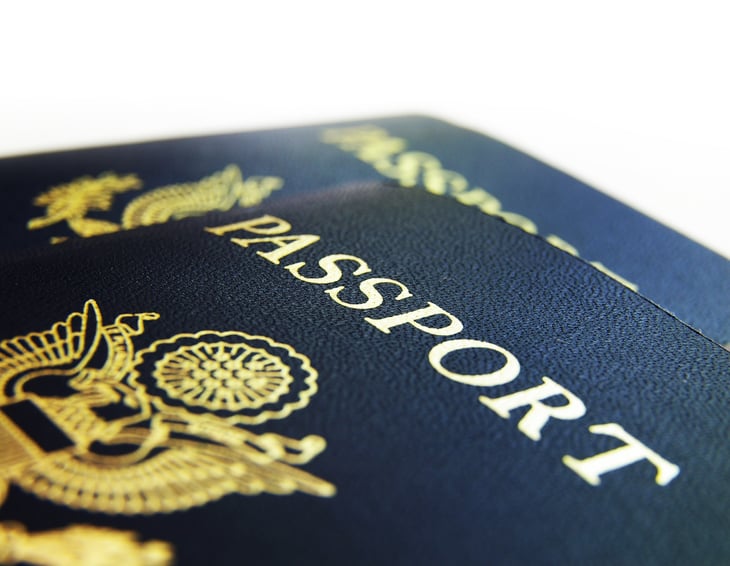
Then there’s back-up residency and second citizenship.
Back in 2020, Kathleen and I were in France when the pandemic lockdowns hit around the world. With our residency in Panama and our U.S. and Irish passports, we had options.
We decided to remain in France for several months, as the lockdown there wasn’t as severe as the one put in place in Panama and had no compelling reason at the time to be in the States or Ireland.
Citizenship options

Another benefit of having residency in another country is that it means you won’t have to have a return ticket to leave the country every time you decide to visit.
A colleague decided to spend an undetermined time in Colombia. As he didn’t know when he was going to return to the United States, he bought a one-way ticket.
When he tried to check in for his flight at the airport in the States, they wouldn’t give him a boarding pass because he didn’t have a return or onward ticket and he wasn’t a citizen or legal resident of Colombia. He had to go online and buy a ticket out of Colombia so he could board his flight.
A second citizenship provides similar benefits, as well as the option to get rid of your current citizenship if you decide that’s something you’d like to do. Thanks to FATCA (the Foreign Account Tax Compliance Act, which requires foreign financial Institutions to report on foreign assets held by U.S. account holders), more and more Americans are taking the step to renounce their U.S. citizenship.
For some, it comes down to not wanting to pay a U.S. tax accountant a few thousand dollars a year to file all the required forms … when the upshot of all that reporting is to tell the IRS that they don’t owe them any money.
However, you can’t give up your current citizenship if it’s the only one you have. You need a second citizenship first.

Add a Comment