


Editor's Note: This story originally appeared on LawnStarter.
Winter leaves most gardens as bare echoes of their summer splendor. But what if the cold season could be just as captivating?
The experts I spoke with revealed how to design a beautiful landscape by working with what winter offers: structure, texture, and the subtle interplay of light and shadow.
Most of the winter landscaping ideas they shared, you can implement yourself. Some might need a professional touch. The goal isn’t perfection — it’s creating a garden that shows up beautifully even when half the plants are dormant.
Here’s how to put it all together (with tips for low-budget plans).
1. Create Structure With Evergreens
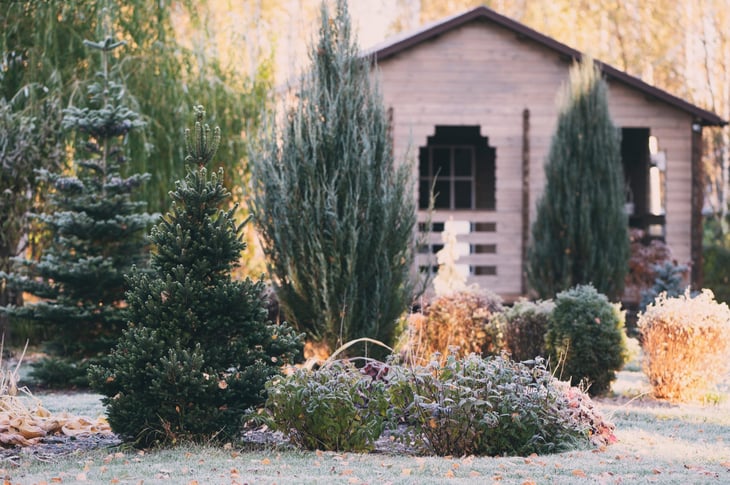
Offering both color and structure, evergreens are the best way to keep your landscape attractive when everything is covered in snow. But here’s the thing: Dotting them around like green lollipops never quite works. You need a plan.
Chris Desino, co-founder of Ocala Horse Properties in Florida and a real estate expert who also spearheads the design-build part of the business, recommends mixing “evergreens of different heights” to create “soft transitions.”
It’s a tested landscape technique that lets your eye travel through the garden without stumbling — what you see nature create at the edge of a forest. The formula is easy to apply in your winter yard:
- Tall conifers (pine, spruce, or upright juniper) anchor the background.
- Mid-sized shrubs (boxwood, yews, hollies) fill the middle layer.
- Ground covers (creeping juniper or evergreen sedges) carpet the front.
This layering transforms what could be a random collection of green things into a garden with year-round dimension.
2. Have Winter-Blooming Plants
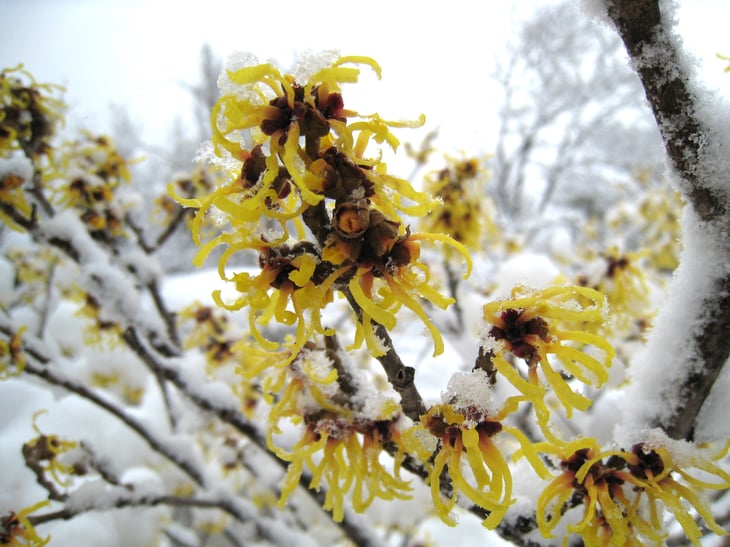
We’re used to thinking winter means white, brown, maybe some green from the conifers. But it doesn’t have to be that way.
You can have fresh, sparkling color with flowers that bloom through snow. Witch hazel blooms from October to March with spidery yellow petals on bare branches. Hellebores’ nodding blooms push through frozen ground starting in December.
And if your winters are mild (lucky you), winter camellias give you rose-like blooms while winter daphne offers that citrusy fragrance that hints at summer.
3. Leave Seed Heads and Dried Flowers

Most of us spend the fall cutting back ornamental grasses and deadheading flowering plants. But what if we didn’t? What if we let them stand through the winter, becoming sculptures against the snow?
Madison Plank, a landscape designer at Bath Landscaping & Irrigation in Fort Collins, Colorado, thinks we should. Yarrow is one of her favorites for winter landscapes. “Leaving the spent flower heads throughout winter offers beautiful interest,” she says, with an “almost dried flower look.”
Ornamental grasses are just as gorgeous in the winter with their upright silhouette and feathery seed heads. Plank’s favorite is ‘Karl Foerster’ feather reed grass, which she pairs with Arctic Fire red twig dogwood. The yellow tones in the grass blades complement those red dogwood stems beautifully.
Here’s the question people always ask: Can ornamental grasses survive harsh winters? Most go dormant, but, yes, they’ll survive. And those dry stems and seed heads aren’t just beautiful when glazed with snow or rimmed with frost — they’re also providing shelter and food for overwintering songbirds.
4. Pair Cool-Toned Greens with Warm-Toned Bark
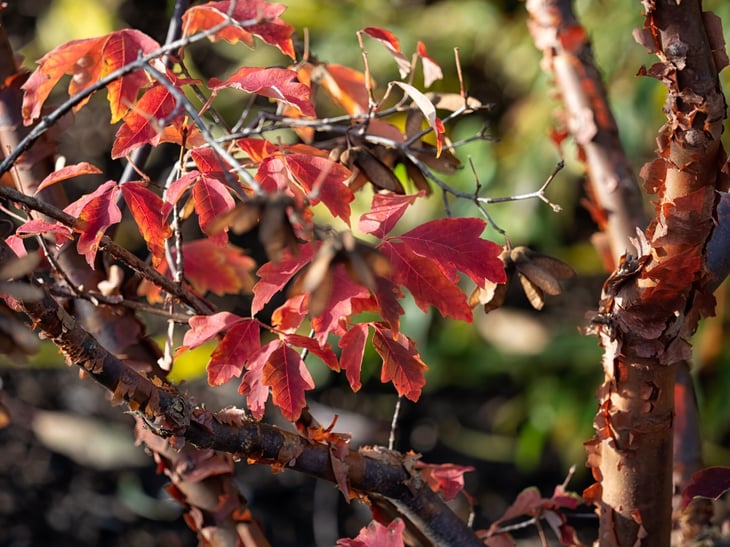
Here’s another trick I’ve come to appreciate: contrasting cool and warm colors. Professionals call it “color temperature,” and Desino says it’s an important detail that can make your plants actually stand out, especially when winter light goes flat and grey.
“Cool-toned greens paired with warm-toned bark look richer in low winter light,” explains Desino.
It’s subtle, but it works. Think of a paperbark maple against a juniper backdrop or tucked near silvery-blue ornamental grasses. The contrast does something, doesn’t it? Makes everything feel more intentional — like somebody actually thought about it (and you did).

5. Let Frost Do the Decorating
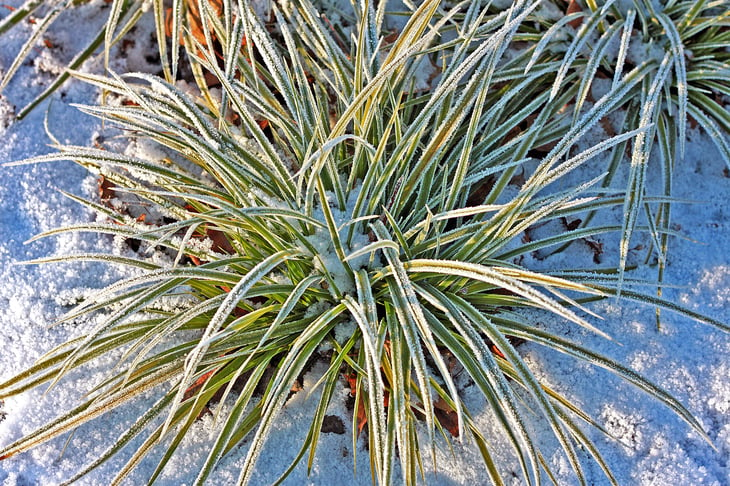
Some people see frost as a garden problem — something to protect against, to worry over. But, with the right plants in place, it can actually turn your winter landscape into a magical sight.
“A lot of my clients love red twig dogwood, winterberry holly, and ornamental grasses,” says Desino, “because they hold a unique character when the frost hits.”
I know exactly what his clients are responding to. Those red dogwood stems practically glow when rimmed with frost. And ornamental grasses? Most magical of all. Each seed head becomes a chandelier bearing frost crystals that catch whatever soft winter light there is.
Need more ideas? On boxwood, frost outlines every leaf. Pines and firs make for a classic Christmas card look when frosted. Beautyberry — its purple berries are stunning when glazed in frost.
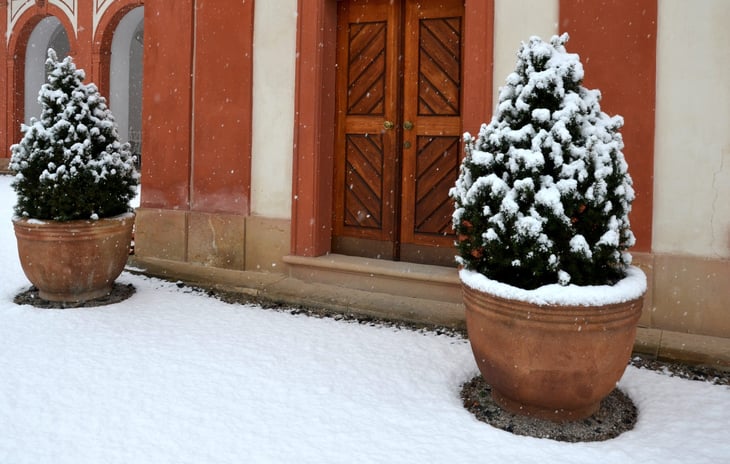
6. Grow Plants in Colorful Containers
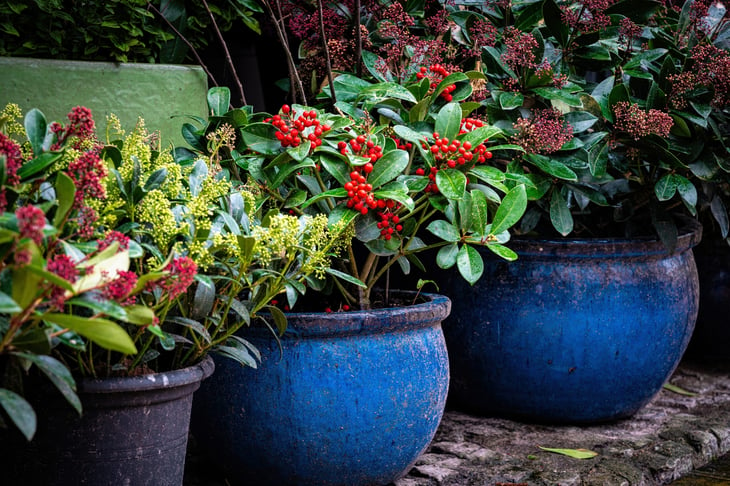
Dimitry Gatanas, third-generation garden designer and installer and the owner of Urban Garden Center in Manhattan, New York, reminded me that planting directly into the ground is not the only choice.
“Investing in a planter with a winter interest tree may add a huge impact on your garden space,” says Gatanas. “Using bright and shiny pottery is a great trick to use in any garden environment. The pottery alone makes the impact.”
Not the plant. The container itself.
I’m thinking glazed ceramic in cobalt blue or burnt orange that glows on gray January afternoons. Emerald green. Deep burgundy. Colors that don’t apologize for being there. Pair one of these with a small evergreen — maybe a dwarf conifer or a holly with berries.
And here’s the trick: The pot doesn’t have to be expensive to be effective. It just has to be bold…which is good advice for pots and gardeners alike.
7. Add Functional Hardscape Elements
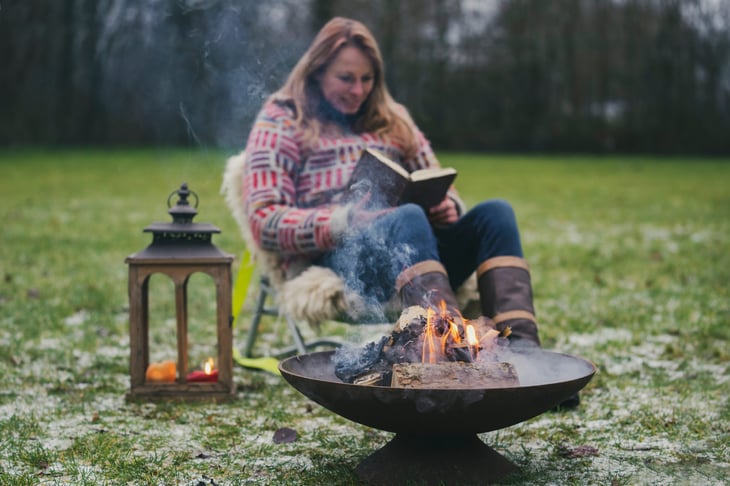
The best winter hardscaping is what you barely notice in the summer but can’t imagine living without in January.
A firepit, for instance, that actually gets you outside on cold days — wrapped in blankets with something warm to drink. Or a covered seating area with a chimney.
Even a simple stone patio with a propane heater extends your outdoor season by weeks, which feels like a small miracle when the temperature drops.
But here’s the thing: Cold-weather landscaping doesn’t have to provide heat to earn its keep. Basic elements can anchor a winter landscape:
- A bench that creates a focal point, even if you’re viewing it rather than sitting on it.
- An arbor or pergola whose structure becomes sculptural when bare.
- Pathways — gravel, stone, brick — that remain clean and visible, holding your garden composition together when color disappears.
8. Use Strategic Lighting
Working with a tight budget?
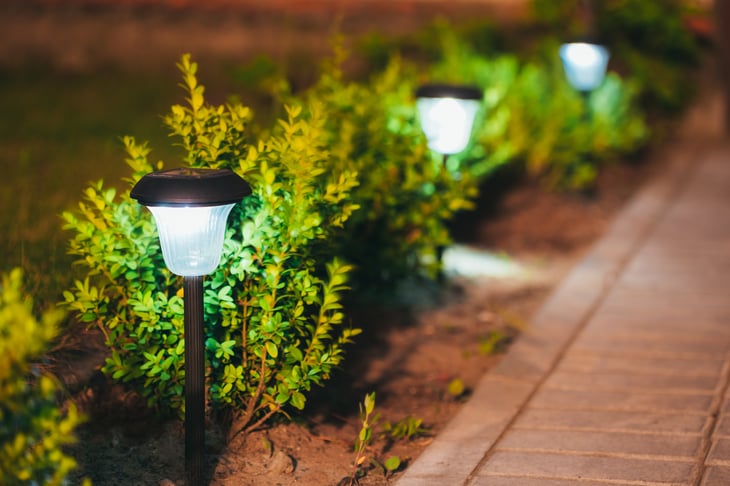
Desino says invest in outdoor lighting for maximum impact. “A few low-voltage path lights and a strong focal evergreen can completely transform how a yard feels in winter,” he says.
Warm, welcoming, festive — it’s what we’re usually aiming for during the cold season. It’s Thanksgiving and then it’s Christmas, and you’re having friends and family over, so you want your yard to say, “Welcome, we’re glad to see you. It’s warm inside. Come in.”
And nothing does this better than light.
It’ll also illuminate the shorter days. How lovely yard lighting can be when you’re fumbling for your keys at 6 p.m. in December.
9. Refresh Your Mulch (Yes, Really)

Plank has another low-budget suggestion. Actually, she has two. Hardscaping is expensive, so her first advice is to focus your efforts: Buy plants and “spruce up a specific bed or area of the yard.” The second advice is to “refresh mulch after leaf cleanup.”
Fresh mulch. About as thrilling as it sounds, which is why most of us ignore it — but the pros know better. “It’s important for the health of plant material and can also offer some color and textural interest in the winter months,” says Plank.
A clean layer of mulch (wood chips, bark) defines beds, protects roots, and gives the garden that tended look we’re after.
10. Take the Gradual Garden Approach
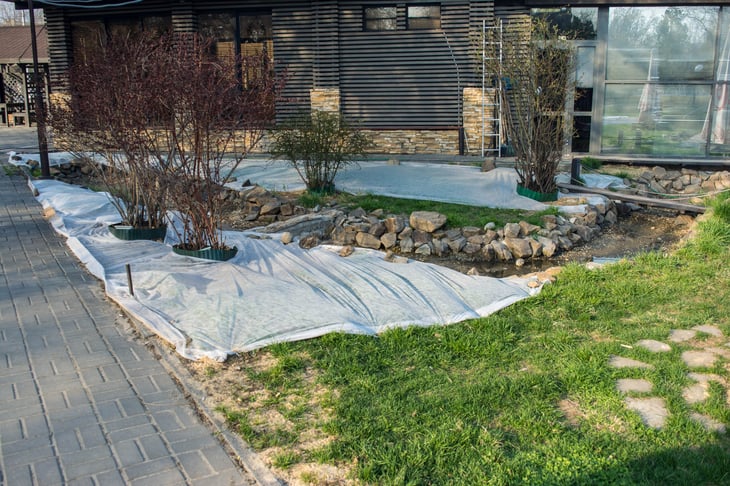
“The key is to know how and where to start your planting,” says Ciondre Pinnock, the owner of Full Cycle YDM, a landscaping business in New Jersey. His idea for landscaping on a budget: Start small, plant young, build over time. “This will save tons of money,” he says.
He followed this principle with his client Meg, landscaping her Verona yard in stages. “While Meg chose her desired shrubs and plants, we created a layered design with what she chose and created a budget of what she could afford to put in at that moment.”
Meg started with one boxwood and a holly olive for winter interest, plus two hydrangeas, thinking ahead to summer. Four plants. An affordable beginning for what will eventually become a four-season space.

Add a Comment