



Are you considering making a major financial decision as 2025 winds to a close? If so, you might want to think again.
End-of-the-year money moves can be wise, especially if they save you money on taxes. But experts also warn that in other cases, rushed financial decisions can turn into huge mistakes.
We recently reached out to financial advisors to get their take on the big money moves retirees should avoid before the end of the year. Here are their warnings about mistakes to avoid.
Offering large money gifts to family

The holidays are a time of good cheer, and such happy feelings can tug at our hearts and inspire us to be financially generous with family and friends.
However, make sure to do so intelligently, says Patrick Huey, a certified financial planner, accredited tax preparer and owner of Victory Independent Planning. Otherwise, you could end up unnecessarily paying more in taxes.
For example, gift-tax rules for 2025 state that one person can give up to $19,000 to any individual without having to file a gift tax return or use up any of your lifetime exemption, which currently stands at $13.99 million for individuals.
Also, don’t let your emotions push you to give away more than you can afford. Instead, keep your own long-term needs in mind, Huey says:
“Before transferring significant sums, confirm it fits your financial plan — and double-check relevant IRS limits.”
Making a hasty last-minute Roth IRA conversion
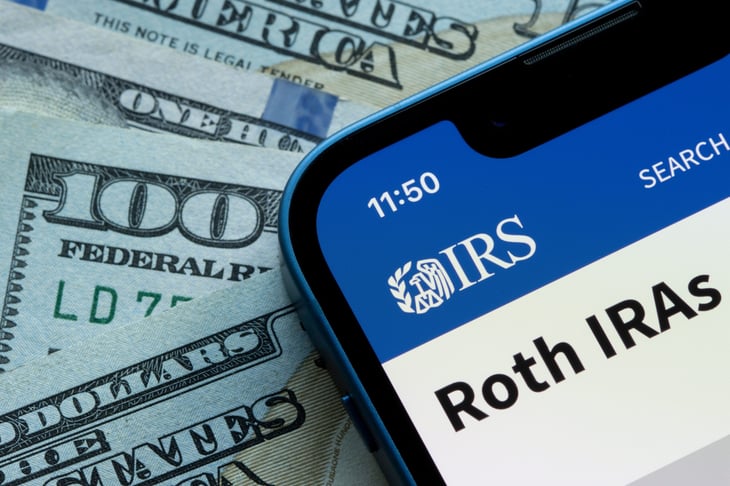
Some retirees use the end of the year to convert a traditional IRA to a Roth IRA. The goal is to minimize taxes later in retirement by paying some taxes now.
Making a Roth conversion near the end of the year is not inherently a bad idea. But it’s important to understand your current tax situation and the tax impact of a conversion before plunging ahead, says Desiree Kaul, a certified financial planner and founder of Kaul Financial Solutions in Satellite Beach, Florida.
“The converted amount is treated as ordinary income and can push someone into a higher tax bracket,” Kaul says.
As a result, you might increase taxes on Social Security benefits or trigger the high-income Medicare surcharge known as IRMAA (income-related monthly adjustment amount), she adds.
So, don’t rush the process if you are unsure of how a Roth conversion might impact your tax situation. “Roth conversions should be part of a multi-year strategy, not a last-minute decision,” Kaul says.
Dabbling in bitcoin or digital assets without a plan

Some retirees with extra cash on hand at the end of the year might be tempted to “try something new” and dabble in bitcoin or other digital assets, says Joshua Brooks, a certified financial planner and founder of Exponential Advisors in Weatherford, Texas.
“The mistake is treating it like a lottery ticket instead of a coordinated part of your financial plan,” he says.
A small, unguided investment can have an outsized impact on a retiree’s risk profile and tax situation, Brooks adds.
“Any investment in this space, especially for a retiree, must be fully coordinated with your overall financial roadmap, tax planning and estate plan,” he says.
Brooks adds that failing to carefully plan before plunging into digital assets is “like eating a Snickers bar when you’re attempting to lose 40 pounds — not helpful.”
Selling stocks or bonds based on emotion

The stock market has been very good to investors over the past three years. Some experts and others now worry that the good times cannot last much longer, however.
Even if you share such concerns, avoid selling investments at the end of the year strictly based on your fears, says Mark Stancato, a certified financial planner and founder of VIP Wealth Advisors in Atlanta.
“Don’t make emotional portfolio changes before January,” Stancato says. “Year-end market noise often leads to poor decisions.”
Selling winners to lock in gains or shifting to cash before January can “blow up your asset allocation” and cause you to miss any gains that might occur early in 2026, Stancato explains.
“Rebalance with purpose, not emotion, and only after reviewing your broader plan,” he says.

Giving cash or checks directly to a charity

Talk to your accountant before doing a little good for others as the year closes.
Giving cash or a check to a favorite charity might not be the best way to keep your tax bill in check, says Kyle Newell, a certified financial planner with Newell Wealth Management in Winter Garden, Florida.
“The standard deduction is so high [that] many won’t get any tax benefit by giving a check or cash directly to a charity,” Newell says.
Instead, he recommends giving appreciated securities — stocks, bonds or mutual funds — so the charity gets the benefit of the gift, and you avoid the capital gain and taxes that come with it.
If you are age 70.5 or older, another option is to distribute directly from your IRA to a charity using what is known as a qualified charitable distribution. Newell notes that those who use this strategy will find that it “satisfies the required minimum distribution but won’t add to their taxable income.”
Learn more about qualified charitable distributions in “15 Tax Deductions Anyone Can and Should Claim — No Itemizing Necessary.”
In addition, a change in the law means you might be better off holding any charitable donations until 2026. We explain the math in “Think Twice Before Donating to Charity This Holiday Season — Waiting a Few Weeks Could Save You Hundreds in Taxes.”
Forgetting to meet deadlines that can trim your tax bill

If you are a retiree who still works at least part time, you might have access to a flexible spending account at your job. This is a tax-advantaged perk that lets you set aside money for out-of-pocket health care or dependent care expenses.
However, you will not reap the benefits of an FSA if you do not respect the account’s deadlines, says Lauren Stansell, a San Francisco-based certified financial planner and chief planning officer of Yeske Buie.
“Don’t forget to submit FSA expenses incurred for reimbursement before the end of your employer plan year, or the two-month window after if your plan has a grace period,” Stansell says.
Similarly, if you have returned to school or are helping a grandchild pay for college, Stansell urges you to reimburse yourself from a 529 plan for any qualified expenses you incurred this year. Such costs must be reimbursed in the same calendar year they are incurred.
Ignoring the need to update beneficiaries

As your retirement stretches on, many things will change. For example, perhaps at the beginning of retirement, you named beneficiaries for your financial accounts who have since died, or whom you no longer want to receive an inheritance.
If this is the case for you, it is crucial to review and update your beneficiaries as the year comes to a close, says Laura Scholz, a certified financial planner with Educo Advisor Group in Canonsburg, Pennsylvania.
“Confirm your beneficiaries are current on all accounts, including retirement and bank accounts, life insurance policies and trusts,” she says.
Update last names after marriages or divorces and ensure new family members are included in your list of beneficiaries, Scholz says.
In addition, you might review how your funds are to be split if one of your beneficiaries predeceases you.
Scholz says they can be set up as “per stirpes” — with the late beneficiary’s share passing to the beneficiary’s heirs — or “pro rata,” with the beneficiary’s share divided among the remaining beneficiaries.

Add a Comment