


Hurricane Helene’s path of destruction across the eastern U.S. last year served as another reminder of how tropical tempests can uproot homes — and lives — overnight.
As the U.S. population has grown and more people have chosen to live in harm’s way, larger numbers of homeowners face the threat of destructive storms.
Unfortunately, many communities are not up to the task of surviving hurricane-force winds. But that is not true everywhere.
A handful of developments specifically built to withstand hurricanes appear to be performing splendidly. Here are some Florida towns that are proving to be hurricane-proof.
Cortez
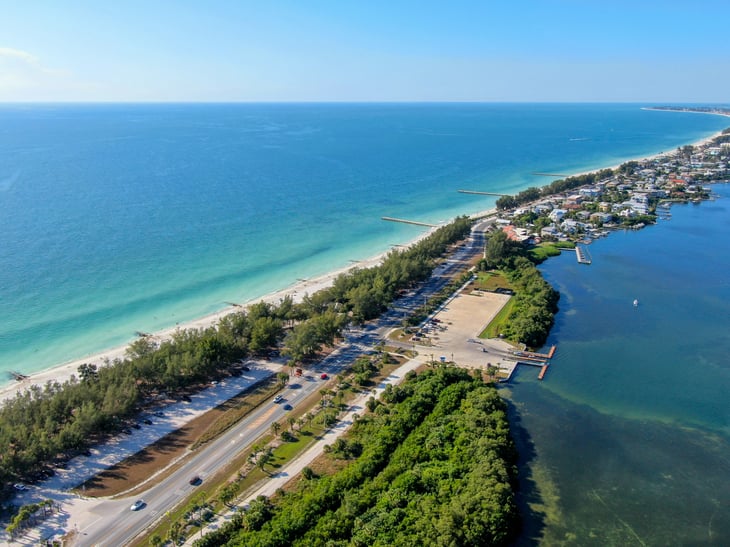
As Hurricane Helene whipped through northern Florida, the lights stayed on — and homes remained dry — in the Hunters Point neighborhood of the town of Cortez.
Since homeowners began moving into the new community in 2022, Hunters Point has stared down three hurricanes and hasn’t blinked.
Built to survive a Category 5 storm, the homes in the Gulf Coast community feature steel straps that connect each floor together. The first floor is made of concrete, thicker lumber is used in framing and roofs are made of steel.
The homes themselves sit in a flood zone, but the first floor of each sits 16 feet off the ground.
As soon as the power went out during Helene, homes in Hunters Point automatically switched to battery power. Water filled a retention system pond 7 feet deep, helping to keep floodwaters away from the community’s homes.
Babcock Ranch
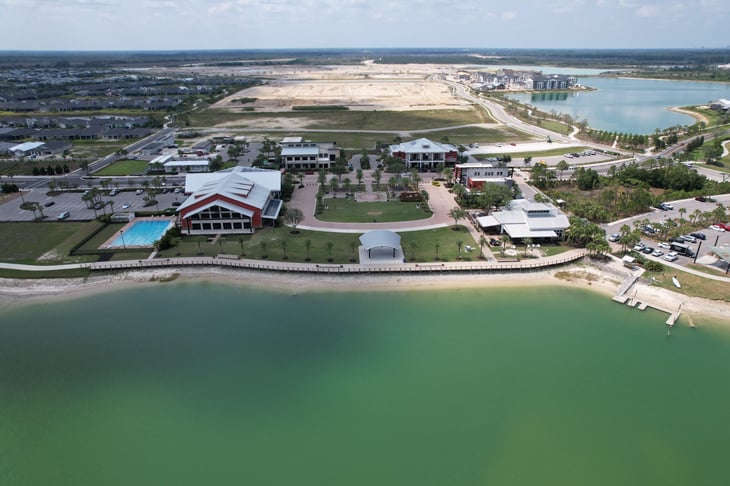
At Babcock Ranch, Hurricane Ian met its match.
Like Helene, Hurricane Ian was a Category 4 storm when it crashed into southwest Florida in 2022. It was one of the state’s deadliest and costliest storms, but the 5,000 residents of Babcock Ranch emerged almost completely unscathed.
The development was the first built in Florida specifically to survive hurricanes. A few miles inland from Fort Myers, the community runs almost exclusively on solar energy, and stormwater-control features surround the homes. Tough-as-nails hardened infrastructure also presents a formidable front to incoming storms.
During Ian, nobody in Babcock Ranch lost their power, suffered flooding or lost access to clean water. More importantly, there were no casualties in the development.

Las Olas Isles
When a strong hurricane moves in, people can quickly lose their power. It’s not unusual in Florida for millions of residents to see their homes go dark in a storm.
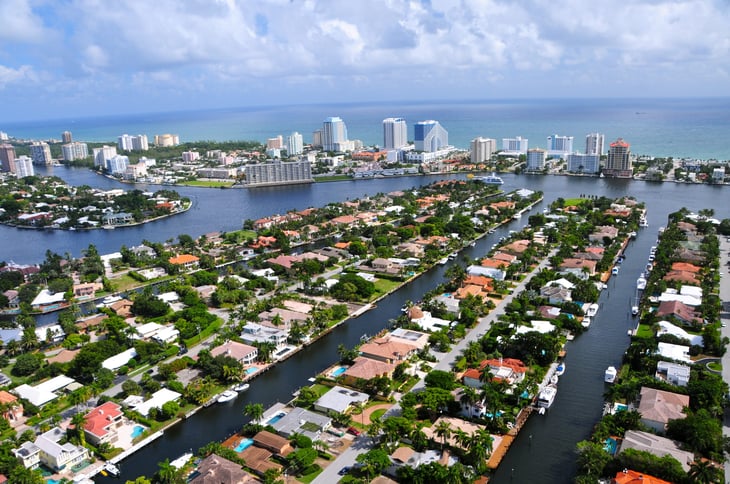
Hurricane Helene was a monster storm that caused folks living all across the state to lose power. But in Fort Lauderdale, on the Atlantic coast, residents of the community of Las Olas Isles were secure in the knowledge that they were likely to remain powered up despite the storm’s fury.
That’s because homeowners in Las Olas Isles had fought to get their utility lines buried. Soon, power poles made way for transformer boxes on the ground.
A hurricane can huff and puff, but there are no power lines to blow down in Las Olas Isles.
The cost of making the change was high: One resident estimated that if you spread out the expense over 30 years, each homeowner would pay $1,700 per year over that span. But at least 90% of homeowners in Las Olas Isles voted in favor of the initiative.
Medley
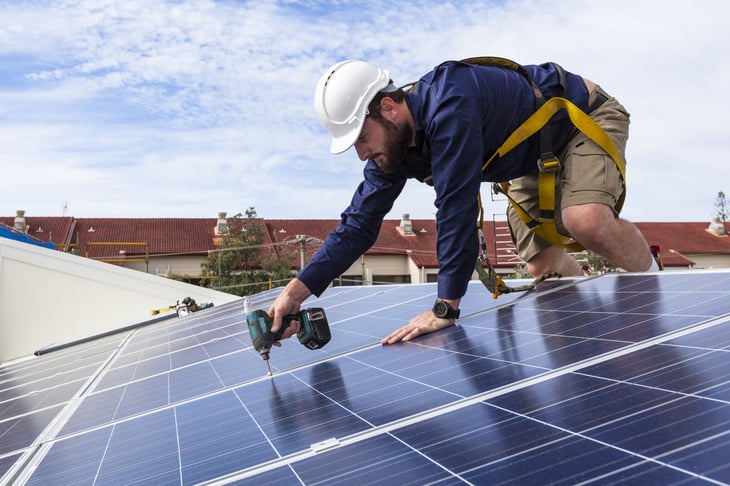
Hurricane Ian was such a fierce storm that about 2.7 million Floridians lost power in its wake. But lights continued to burn brightly in the 37 homes in the Medley at Southshore Bay community in Wimauma, a suburb of Tampa on the state’s west coast.
In Medley, a backup microgrid system has the ability to power homes. A network of batteries in the homes stores solar power gathered from panels on rooftops.
When Ian struck, homes quickly disconnected from the main power grid and turned to their batteries.
The microgrid system — dubbed BlockEnergy and developed by Emera Technologies — is part of pilot project that could eventually spread to other communities.

Add a Comment